Renting an apartment in Seoul is one of those things that looks simple until someone casually tells you the deposit is ₩10 million and everyone around you acts like that is a completely normal sentence.
The confusing part is not just the amount of money. Korea has its own rental vocabulary, its own deposit structures, neighborhood real estate offices, management fees, lease reporting, fixed dates, residence paperwork, and an entire set of steps designed to protect a deposit that might be worth years of someone's savings.
Once you understand the order, however, the process becomes much less intimidating. You decide whether you are looking for wolse or another deposit structure, search the market, work with an agent, view the unit, check the property and ownership, sign the lease, complete the required paperwork, move in, pay your monthly costs, and eventually coordinate moving out and getting the deposit returned.
This guide walks through that whole cycle. It is a practical overview, not individual legal advice, and rules can change, so major financial decisions should always be checked against current official guidance.
Read: How Seoul Became One of the World's Most Convenient Cities
Read: Why Korean People Don't Always Say Exactly What They Mean
1. First, Understand Wolse and Jeonse
♡ Renting in Seoul makes much more sense once you understand why the deposit can be almost as important as the monthly rent.

If you come from a country where renting normally means paying one month of rent plus a small security deposit, Seoul can be confusing immediately. Korean rental listings often show two numbers, such as 1000/70. That usually means a ₩10 million deposit and ₩700,000 in monthly rent. The deposit is written first, followed by the monthly rent.
The system most foreigners renting a smaller apartment will encounter is 월세 (wolse). You give the landlord a security deposit and then pay rent every month. Deposits can still be several million or tens of millions of won, so the word "deposit" should not make you imagine the much smaller amounts common in some other countries.
The other famous Korean system is 전세 (jeonse). Instead of paying normal monthly rent, the tenant gives the landlord a much larger lump-sum deposit for the lease period. At the end of the lease, that money is supposed to be returned. Jeonse can involve enormous sums, which is why deposit protection and checking the property carefully are so important.
There are also arrangements often called 반전세, or semi-jeonse, where both the deposit and monthly rent are substantial. In practice, the exact balance between deposit and rent varies from property to property. Sometimes a landlord may even agree to a higher deposit in exchange for lower monthly rent, or the reverse, but any change needs to be agreed upon rather than assumed.
Helpful picks for moving and everyday Seoul life:
Portable Charger Digital Camera
Some links may be affiliate links. The Seoul Edit Blog may earn a commission at no additional cost to you.
2. Apartment Hunting Usually Starts Online, Then Moves to a 부동산
♡ Online listings help you understand the market, but a neighborhood real estate office often becomes the person actually arranging the viewings.
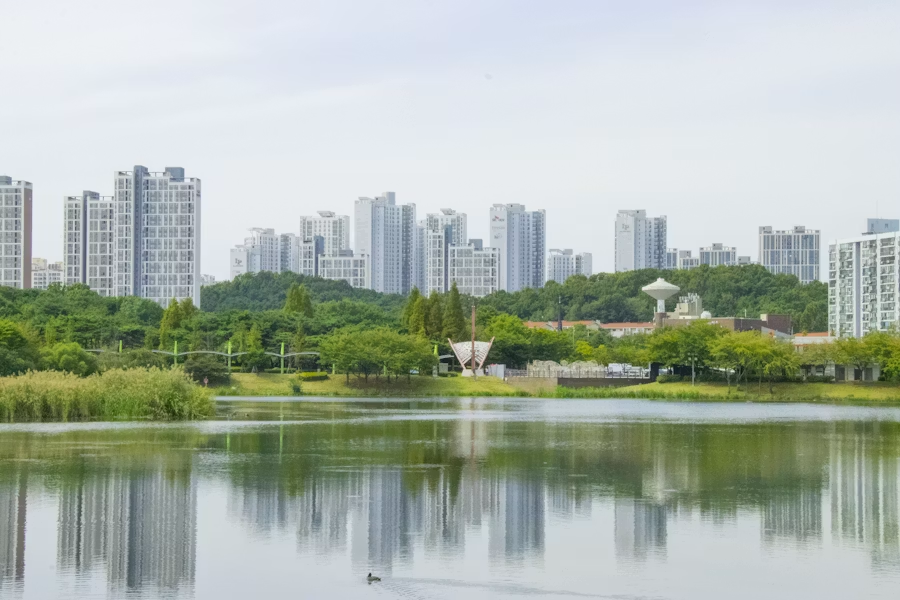
Most people begin by deciding where they want to live, what their maximum deposit is, how much monthly rent they can handle, and what kind of home they want. Seoul listings can include 원룸 studios, 투룸 apartments, officetels, villas, and larger apartment units, and the same budget can look completely different depending on the neighborhood.
Online listings are useful for getting a sense of prices, but do not become emotionally attached to one perfect photo before speaking to anyone. Listings can disappear quickly, photos may be old, and the unit you ask about may already be rented by the time you contact the agent. It is often more productive to tell an agent your budget, preferred area, move-in date, and non-negotiables and ask them to show you several realistic options.
Location matters in a very practical way in Seoul. Check the walk to the subway or bus stop, nearby supermarkets, convenience stores, hills, late-night noise, sunlight, building security, trash disposal, and how the street feels after dark. A place that looks perfect in photos can become much less appealing after you discover that the "five minute walk" to the station is actually five minutes straight uphill.
Helpful picks for moving and everyday Seoul life:
AirPods Mini Tripod
Some links may be affiliate links. The Seoul Edit Blog may earn a commission at no additional cost to you.
3. The 부동산 Is Usually the Middle Person Between You and the Landlord
♡ The real estate agent can arrange viewings, explain the contract, communicate with the owner, and handle much of the transaction, but they are not free.
A Korean real estate office is called a 부동산 (budongsan), and a licensed real estate agent is a 공인중개사. In many Seoul rental transactions, you interact with the agent much more than you interact with the landlord while searching. The agent unlocks properties, arranges viewings, relays questions, prepares or explains paperwork, and coordinates the signing.
This does not mean you should treat every agent as your personal lawyer or assume they are responsible for making every decision in your best interest. You should still read the contract, confirm what you are paying, check the property, and ask questions when something does not make sense. Seoul also certifies Global Real Estate Agencies that can provide rental guidance in foreign languages, which can be useful if negotiating a Korean contract feels overwhelming.
You also need to budget for 중개보수, the brokerage fee. Seoul sets maximum brokerage rates based on the transaction value and property type. For monthly rentals, the transaction value used for calculating the fee is generally based on the deposit plus monthly rent multiplied by a prescribed amount. The official Seoul Real Estate Information Plaza has the current fee table and calculator, so check the actual maximum for your contract instead of relying on a random number from an old blog post.
Helpful picks for moving and everyday Seoul life:
Portable ChargerROUND LAB Birch Juice Sunscreen
Some links may be affiliate links. The Seoul Edit Blog may earn a commission at no additional cost to you.
4. Do Not View the Apartment Like You Are Just Choosing a Cute Room
♡ The flooring and wallpaper matter less than mold, water pressure, sunlight, noise, heating, ventilation, security, and what is actually included.

Seoul apartment viewings can be quick, which makes it easy to look around for five minutes, decide the room is cute, and forget to check anything important. Slow yourself down. Open cabinets, look around windows, check the bathroom, inspect the ceiling and walls for signs of moisture, and pay attention to any strong smell that might be hiding mold or drainage problems.
Turn on the taps and shower if possible to see the water pressure. Ask how the heating works, whether there is air conditioning, and which appliances or pieces of furniture stay with the unit. If the listing includes a washing machine, refrigerator, induction stove, bed, wardrobe, or air conditioner, make sure you know whether those are landlord fixtures or simply things left by the previous tenant.
Also ask about 관리비 (gwanribi), the management fee. A cheap-looking monthly rent can become much less cheap once a management fee is added. Ask exactly what the fee includes, because one building might include water or internet while another includes almost nothing. Electricity, gas, heating, parking, and other costs may be billed separately.
Finally, look outside the unit. Check the elevator, hallway, building entrance, garbage area, parcel situation, parking, security, and surrounding street. You are renting the building and neighborhood as much as you are renting the room.
Helpful picks for moving and everyday Seoul life:
Digital CameraBeauty of Joseon Relief Sun
Some links may be affiliate links. The Seoul Edit Blog may earn a commission at no additional cost to you.
5. Before Paying a Huge Deposit, Check What You Are Actually Renting
♡ A Korean rental deposit can be a serious amount of money, so the paperwork behind the apartment matters just as much as the apartment itself.

This is the part of renting in Korea that deserves the least casual attitude. Before committing a large deposit, you want to know that the person renting the property to you is actually entitled to do so and understand what claims or debt may already be attached to the property. This becomes especially important as the deposit gets larger.
Ask the agent to explain the property's registration information and ownership. A commonly checked document is the 등기부등본, the real estate register. It can show ownership and registered rights or claims affecting the property. Do not be embarrassed to ask what you are looking at. If you are transferring tens or hundreds of millions of won, "the realtor said it is fine" should not be the only thing you understand.
Seoul has expanded housing and real estate counseling for international residents specifically because lease fraud and deposit loss can be serious. If a deal involves a very large deposit, an unusually cheap property, complicated ownership, or anything you do not understand, getting independent professional advice before transferring the money is much cheaper than trying to recover it later.
Helpful picks for moving and everyday Seoul life:
AirPodsPortable ChargerSome links may be affiliate links. The Seoul Edit Blog may earn a commission at no additional cost to you.
6. Signing the Rental Contract Is When Everything Needs to Become Specific
♡ Deposit, rent, dates, furniture, repairs, management fees, special promises, and move-out conditions should not live only in a KakaoTalk conversation.

Once you decide to take the apartment, the next step is the 임대차계약서, the lease agreement. Seoul's housing guidance notes that it is common for part of the deposit to be paid when the contract is signed, with the remainder paid around move-in. The exact payment schedule should be written clearly into your contract.
Read the address, landlord information, tenant information, deposit, monthly rent, payment date, lease period, management fee, move-in date, and any special conditions carefully. If the landlord promises to replace an air conditioner, remove furniture, repair a leak, allow a pet, repaint something, or include a particular appliance, ask for the important promise to be written into the contract or its special clauses.
Korea has a standard residential lease agreement, and Seoul has published translated reference versions for foreign residents. A translation can help you understand the structure, but the actual Korean contract you are signing controls the transaction. Do not sign a document simply because everyone else at the table looks ready to leave.
This is also the time to ask what happens if you need to leave before the lease ends. Early termination can create financial and practical problems, and the exact result depends on the contract and circumstances. If you already know there is a serious possibility that you will leave Korea early, discuss it before signing rather than hoping the problem disappears later.
Helpful picks for moving and everyday Seoul life:
Mini TripodLip Tint
Some links may be affiliate links. The Seoul Edit Blog may earn a commission at no additional cost to you.
7. After Signing, Do Not Forget the Administrative Steps That Protect You
♡ The apartment keys are not the end of the rental process. Reporting your lease and protecting the deposit matter too.

One of the most important things a new renter can misunderstand is thinking that signing the lease is the last legal step. Depending on the contract, the housing lease reporting system may require the lease to be reported within 30 days. In Seoul, leases covered by the current reporting rules include qualifying residential contracts where the deposit exceeds ₩60 million or the monthly rent exceeds ₩300,000.
The report can be made through the relevant community service center or the government's Real Estate Transaction Management System. Seoul's current guidance also explains that submitting the lease agreement for the required report can result in a 확정일자, or fixed date, being issued automatically.
The fixed date is especially important because it is part of the system used to protect a tenant's priority over the deposit if the property later goes through auction or another serious creditor situation. Current Korean legal guidance explains that preferential repayment protection generally depends on taking possession of the home, completing the required residence registration procedure, and obtaining the fixed date.
Foreign residents are not simply excluded from these protections because they do not use Korean resident registration in exactly the same way as citizens. Korean legal guidance explains that qualifying foreign registration or change-of-place-of-stay procedures can serve the relevant residence-registration function for housing lease protection. Because this is the part of the process protecting potentially enormous deposits, confirm the correct procedure for your own status instead of putting it off.
Helpful picks for moving and everyday Seoul life:
ROUND LAB Birch Juice SunscreenPortable ChargerSome links may be affiliate links. The Seoul Edit Blog may earn a commission at no additional cost to you.
8. Moving In Is When the Apartment Becomes Your Problem to Document
♡ Take photos before unpacking, figure out the utilities, learn the building rules, and report existing damage before anyone can blame you for it later.
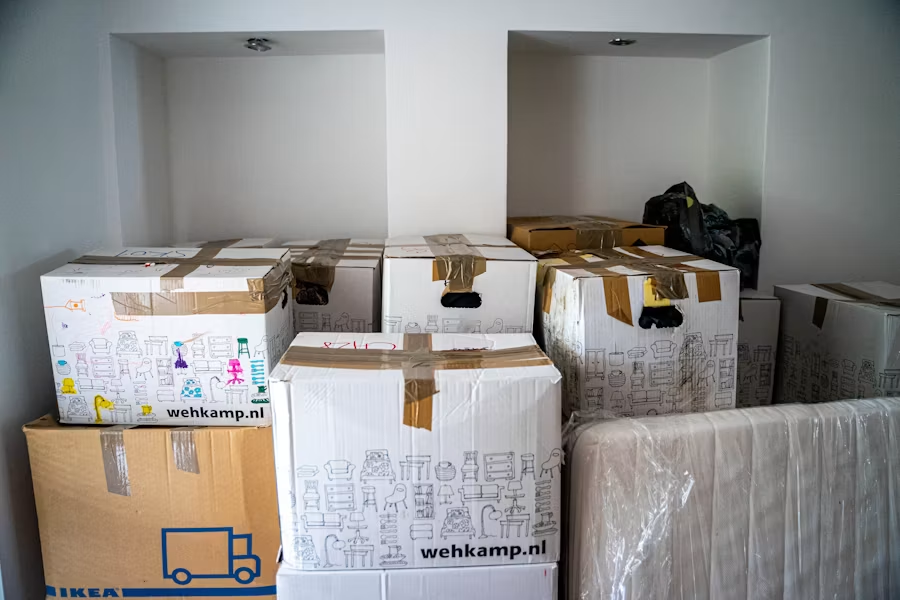
Before filling the room with boxes, take photos and videos of the apartment. Photograph scratches, stains, cracked tiles, damaged furniture, broken appliances, wall marks, mold, and anything else that was already there. Send important existing problems to the agent or landlord in writing so there is a record that you did not create them.
You also need to learn how the utilities work. Depending on the building, electricity, gas, water, heating, internet, and other services may be individually billed, partly included in management fees, or handled through the building. Do not assume the arrangement is the same as the last apartment you lived in. Ask which bills you need to register or pay yourself and which arrive through management.
Learn the boring building rules during the first week too. Seoul trash systems can require designated bags and separate recycling, food waste may have its own system, parcel deliveries may have a preferred location, and some buildings have rules about parking, bicycles, entrances, pets, or rooftop access. These details are easier to understand before your first angry message from a building manager.
Helpful picks for moving and everyday Seoul life:
Digital CameraAirPodsSome links may be affiliate links. The Seoul Edit Blog may earn a commission at no additional cost to you.
9. Your Real Monthly Housing Cost Is More Than the Number in the Listing
♡ Rent is only one line. Management fees, electricity, gas, heating, water, internet, parking, and other building costs can change the real budget.
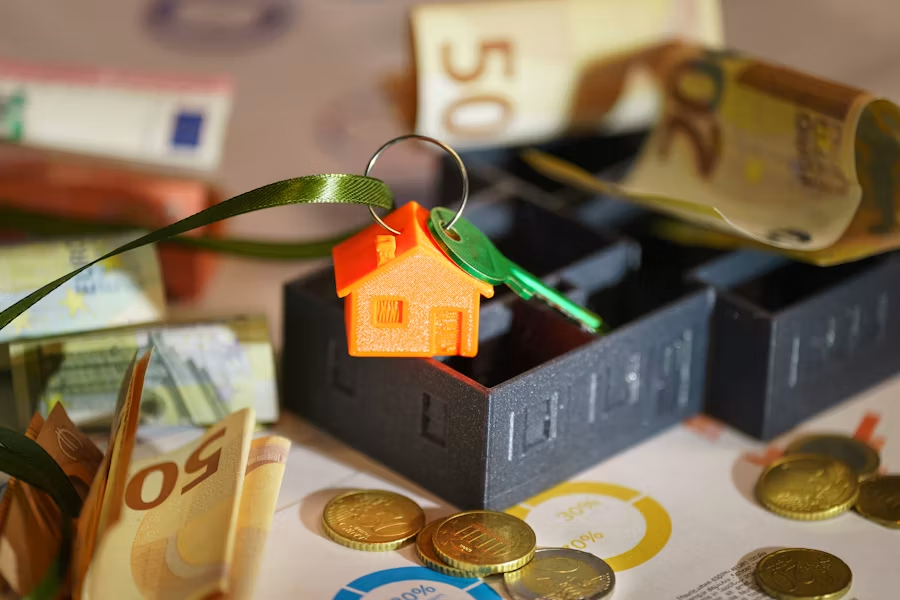
Once you are settled, the recurring payment everyone focuses on is 월세, but your real housing cost can be higher. Management fees can cover different things depending on the building, and electricity or heating bills can change significantly with the season. A cheap studio that is badly insulated may not feel cheap after a freezing Seoul winter or a humid August.
Keep track of the date rent is due and how the landlord expects to receive it. Bank transfer creates a useful payment record, so keep your transaction history. If the management fee is paid separately, know whether it goes to the landlord, building management, or another account.
It is also worth understanding which expenses are fixed and which are based on your usage. If a listing says 관리비 ₩100,000, that does not automatically mean every utility is included forever. Ask for the breakdown before signing and keep the contract or written explanation so you can refer back to it later.
Helpful picks for moving and everyday Seoul life:
Beauty of Joseon Relief SunLip TintSome links may be affiliate links. The Seoul Edit Blog may earn a commission at no additional cost to you.
10. When Something Breaks, Your Landlord Relationship Suddenly Matters
♡ The easiest rental is one where you barely need the landlord, but boilers, leaks, appliances, mold, and plumbing eventually force the conversation.
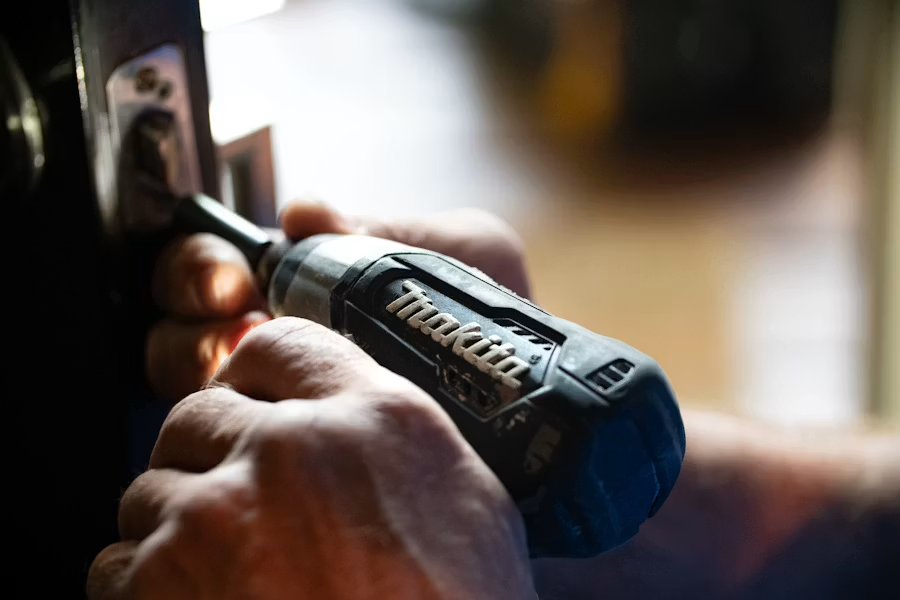
During a normal month you may barely speak to the landlord, especially if the real estate agent or building manager handles communication. That changes very quickly when the boiler stops producing hot water, water starts leaking through the ceiling, or an appliance included with the apartment suddenly dies.
When something happens, document it and report it clearly. A useful Korean message does not need to be complicated. Explain what is broken, when you noticed it, whether it is urgent, and include a photo or video. Avoid repairing or replacing expensive landlord-owned equipment first and asking for money afterward unless the situation genuinely requires emergency action.
Who ultimately pays can depend on what broke, why it broke, what the lease says, and whether the problem comes from ordinary deterioration or tenant-caused damage. That is exactly why documenting the condition at move-in helps. There is a big difference between "this washing machine stopped working after years of normal use" and "I broke the door off the washing machine."
If you are nervous about communicating in Korean, keep the messages polite and factual rather than overly apologetic. You are not causing trouble by reporting a genuine problem with the home you are paying to rent.
Helpful picks for moving and everyday Seoul life:
Portable ChargerAirPodsSome links may be affiliate links. The Seoul Edit Blog may earn a commission at no additional cost to you.
11. Moving Out Starts Before the Day You Carry Out the Boxes
♡ Notice, cleaning, final bills, new tenants, keys, and the deposit all need to line up, so do not wait until moving day to start talking.
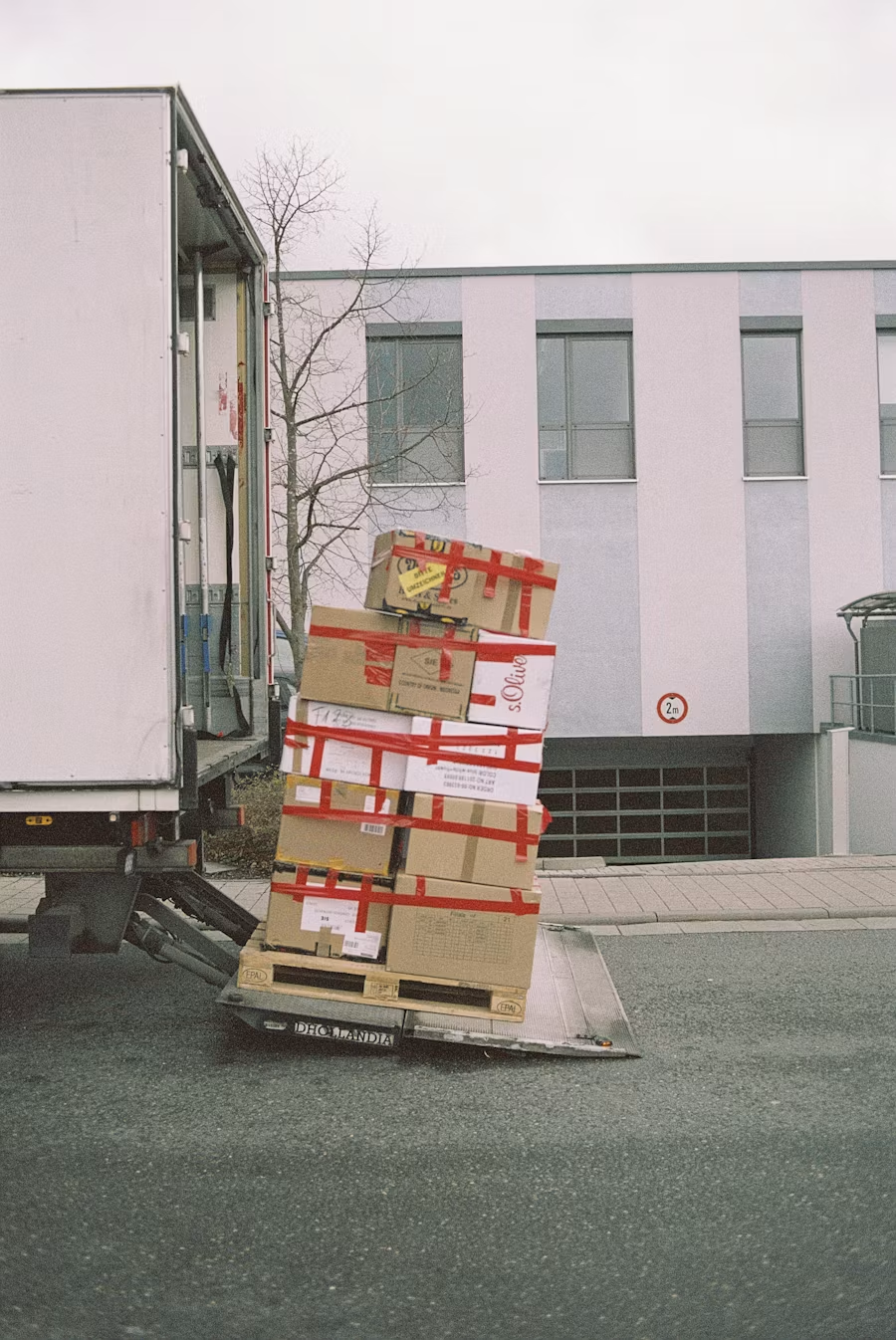
When the lease is approaching its end, communicate with the landlord or agent early enough to confirm what is happening. Are you leaving on the original end date? Are you renewing? Does the landlord expect access for viewings before you leave? When will the deposit be returned? When are the final rent, utilities, and management fees settled?
If you want to leave before the contract ends, the situation is more complicated. In practice, early moves can involve negotiating with the landlord and sometimes finding or waiting for a new tenant, depending on the contract and circumstances. Do not assume that simply moving your belongings out automatically ends your financial obligations under the lease.
Before handing back the keys, take a final set of photos and videos. Clean the apartment reasonably, remove your belongings, and settle outstanding charges. Compare the condition with the photos you took when you first moved in. That record can become useful if there is later an argument over whether something was pre-existing damage or happened during your tenancy.
Helpful picks for moving and everyday Seoul life:
Mini TripodDigital CameraSome links may be affiliate links. The Seoul Edit Blog may earn a commission at no additional cost to you.
12. The Rental Is Not Really Over Until Your Deposit Is Back
♡ With Korean deposits, moving out and getting your money back are two parts of the same transaction.

This is one of the biggest differences between a casual rental mindset and the reality of Korean housing. If your deposit is ₩10 million, ₩50 million, or much more, you do not want to treat its return like an afterthought. Confirm the timing and method of repayment before moving out and keep communication about the deposit in writing.
Normally the deposit should be returned after the lease ends, although legitimate outstanding amounts such as unpaid rent or utilities may affect the final settlement. A serious warning sign is a landlord who suddenly becomes vague about when a large deposit will be available or says they cannot return it until some undefined future event.
Current Korean legal guidance provides procedures for tenants whose lease has ended but whose deposit has not been returned, including a leasehold registration order that can be relevant when a tenant needs to move while preserving certain protections. That is already dispute territory, so get professional advice rather than trying to solve a major deposit problem through casual text messages.
Seoul currently offers real estate transaction counseling for international residents, including assistance related to jeonse fraud, deposits, and housing lease disputes. If something feels wrong, using an official consultation service early is much better than waiting until the landlord stops answering.
Helpful picks for moving and everyday Seoul life:
ROUND LAB Birch Juice SunscreenBeauty of Joseon Relief SunSome links may be affiliate links. The Seoul Edit Blog may earn a commission at no additional cost to you.
13. FAQ: Renting an Apartment in Seoul
How does renting an apartment in Seoul work?
Most renters first choose a neighborhood and budget, search listings, work with a licensed real estate agent, view apartments, agree on the deposit and rent, sign a lease, pay the agreed contract amount, complete the required lease and residence paperwork, pay the remaining balance at move-in, and then settle rent, utilities, and management fees during the tenancy.
What does 1000/70 mean on a Korean rental listing?
It generally means a ₩10 million security deposit and ₩700,000 in monthly rent. Korean wolse listings commonly show the deposit first and monthly rent second.
What is wolse in Korea?
월세, or wolse, is a rental arrangement where the tenant pays a security deposit and also pays rent every month. The size of the deposit varies significantly by property.
What is jeonse in Korea?
전세, or jeonse, is a Korean lease structure based primarily on a large lump-sum deposit instead of ordinary monthly rent. The landlord is expected to return the deposit when the lease ends, making deposit protection especially important.
Do I need a real estate agent to rent in Seoul?
Not every rental transaction legally has to begin through an agent, but licensed real estate offices are extremely common in Seoul. They arrange viewings, communicate with landlords, prepare transaction paperwork, and charge a brokerage fee subject to applicable maximum rates.
How much is the real estate agent fee in Seoul?
The maximum depends on the property type and transaction value. Seoul publishes an official brokerage-fee table. For monthly rentals, the transaction value used in the calculation generally includes the deposit plus a prescribed multiple of the monthly rent.
What is 관리비 in a Korean apartment?
관리비 is a management or building fee. What it covers differs by property. It may include some shared building costs or certain utilities, while electricity, gas, heating, internet, parking, or other expenses may still be separate.
What is a fixed date, or 확정일자?
A fixed date is an officially recognized date attached to a lease agreement. Together with the other required conditions, it can be important for a tenant's preferential right to recover a deposit if the property later goes through auction or public sale.
Do foreigners get rental deposit protection in Korea?
Foreign residents can qualify for protections under Korea's housing lease system. Current legal guidance explains that qualifying foreign registration or change-of-place-of-stay procedures can have the relevant effect of resident registration for housing lease protection. The exact process depends on the person's status and circumstances.
Do I have to report my Seoul rental contract?
Certain residential leases are subject to Korea's housing lease reporting system. Current Seoul guidance says qualifying contracts must be reported within 30 days when the security deposit exceeds ₩60 million or monthly rent exceeds ₩300,000, provided the other reporting requirements are also met.
What should I check before renting an apartment in Seoul?
Check the actual property condition, mold, water pressure, heating, ventilation, appliances, sunlight, noise, management fees, utilities, ownership and registration information, contract terms, deposit protection, building rules, and the walk to transportation before committing.
When do I get my Korean rental deposit back?
The deposit is generally returned when the lease has ended and the property is handed back, after legitimate outstanding amounts are settled. Because Korean deposits can be very large, confirm the timing before moving and seek professional help quickly if repayment becomes a dispute.
14. Sources and Official Housing Resources
Rental rules, reporting requirements, brokerage fees, and deposit-protection procedures can change. The legal and procedural information in this guide was checked against current Seoul Metropolitan Government, Seoul Foreign Portal, Seoul Real Estate Information Plaza, and Korean Easy Law guidance.
Seoul Metropolitan Government: Wolse and Jeonse
Seoul Metropolitan Government: Types of Residence
Seoul Foreign Portal: Housing Lease Contract Reporting System
Seoul Real Estate Information Plaza: Official Brokerage Fees
Seoul Metropolitan Government: English Guide to Real Estate Brokerage Fees
Seoul Global Real Estate Agencies for International Residents
Seoul Foreign Portal: Translated Standard Residential Lease Agreement
Easy Law Korea: Housing Lease Deposit Protection
Seoul also provides real estate transaction counseling for international residents, including help related to lease disputes and jeonse fraud. If a large deposit is at risk or a landlord is refusing to return money, use professional legal or official housing support rather than relying only on general online information.
Want More Living in Korea Guides?
Join the list for Seoul housing, Korean landlords, rental contracts, everyday life, Korean culture, food, cafés, K-beauty, and practical guides for actually living here.
Planning a trip to Seoul?
15. Final Thoughts
Renting in Seoul sounds complicated at first because several unfamiliar systems arrive at the same time. You are learning wolse and jeonse, dealing with a real estate office, calculating a large deposit, understanding management fees, signing a Korean lease, and then hearing that you still need to think about a fixed date and residence paperwork.
The process becomes much easier once you treat it as a sequence rather than one giant decision. First understand the rental type and your true budget. Then search and view carefully. Check the property and the paperwork before sending serious money. Make important promises part of the written contract. Complete the required reporting and deposit-protection steps after signing. Document the apartment when you move in and keep records of rent, repairs, and communication while you live there.
The biggest thing I would never be casual about is the deposit. Korean rentals can involve amounts that would be considered enormous security deposits in many other countries. If you understand only one part of the paperwork properly, make it the part protecting your money.
After that, Seoul apartment life becomes surprisingly normal. You pay your rent, complain when the boiler acts up, figure out recycling, collect too many packages at the door, and eventually start thinking about whether the next apartment should have more sunlight.