
Apartment hunting in Seoul gets confusing before you even start comparing prices because the housing vocabulary itself is different. You open a listing and see 원룸, 투룸, 오피스텔, 빌라, 아파트, 반지하, and 옥탑방 as if you are already supposed to know exactly what kind of home each word describes.
Some of those words translate easily and some absolutely do not. A Korean "villa" is not a luxury mansion. A two-room is not necessarily a two-bedroom. An officetel may look like an apartment but sits in a different building category. A rooftop room can look adorable in a drama and then become an oven in August.
The type of building matters because it affects much more than appearance. It can change the deposit, monthly rent, management fee, amount of space, insulation, security, elevator access, sunlight, parking, appliances, and how much responsibility the building management takes for everyday problems.
This guide is about understanding what each housing type actually feels like to live in, not just translating the Korean word beside the listing.
Read: How Renting an Apartment in Seoul Actually Works
Read: Jeonse vs Wolse Explained
Read: How Seoul Became One of the World's Most Convenient Cities
1. 원룸: The Classic Seoul One-Room
♡ One room usually means exactly what it sounds like: your bed, kitchen, desk, and living space all exist in one main room.
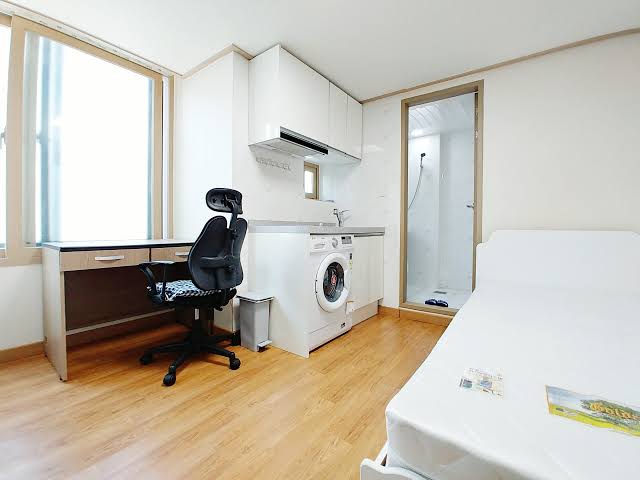
원룸 (one-room) is probably the housing type most single renters encounter first in Seoul. It is basically a studio apartment, although the exact layout can vary a lot. Your bed, table, storage, and kitchen are usually arranged in one main living space, while the bathroom is separate. Some units are tiny and extremely basic, while newer buildings can feel more like compact modern studios.
One-rooms are especially common near universities, office districts, and neighborhoods with lots of young single residents. Seoul's official housing guide specifically notes that one-room studios are common around universities and generally have lower monthly rent than officetels. That does not mean every one-room is cheap, though. A newer studio beside a popular Gangnam subway station can cost far more than a larger older unit in an outer district.
The biggest advantage is simplicity. One-rooms are usually easier to clean, heat, furnish, and afford than larger apartments. The downside is storage and separation. Cooking smells can reach your bed immediately, working from home can mean staring at the same room all day, and having someone stay over can make a small unit feel even smaller.
When viewing one, pay more attention to storage, sunlight, ventilation, mold, kitchen space, and the size of the bathroom than you do to decorative wallpaper. A well-designed 20-square- meter room can feel much better than a slightly larger one with terrible storage and no natural light.
Helpful picks for moving and everyday Seoul life:
Portable Charger Digital Camera
Some links may be affiliate links. The Seoul Edit Blog may earn a commission at no additional cost to you.
2. 투룸: What Koreans Mean by a Two-Room
♡ A Korean two-room usually means two separate main rooms, not necessarily the two-bedroom apartment you may imagine from another country.
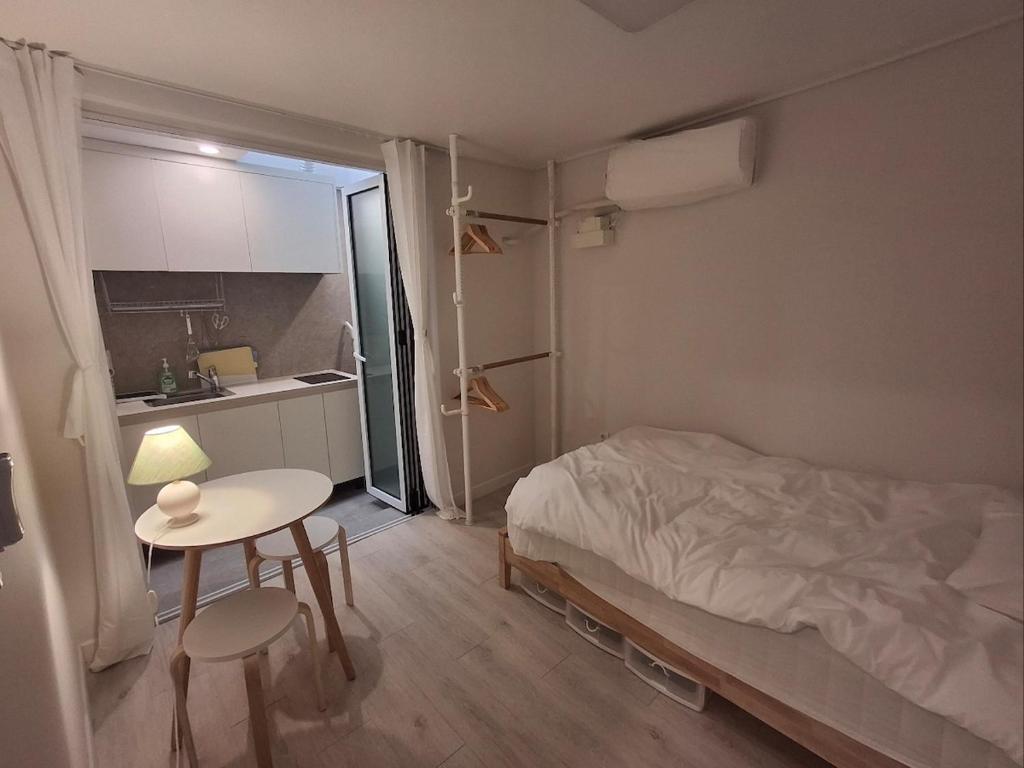
투룸 (two-room) is where translation can cause confusion. In everyday Korean real estate language, the term generally refers to a home with two separate main rooms. Depending on the layout, that might mean a bedroom plus a living room, or two rooms with a separate kitchen area. It does not automatically mean the same thing as a Western two-bedroom apartment.
A two-room can be a huge quality-of-life upgrade if you live alone and can afford it. You can separate sleeping from working, hide laundry from visitors, or actually close a door between your bed and the kitchen. Couples often prefer this kind of layout too because one-room living gets crowded very quickly when two people own actual belongings.
The tradeoff is usually higher rent, deposit, heating costs, and sometimes a less central location for the same budget. Older villa-style buildings can offer surprisingly spacious two-room layouts at prices below newer officetels, but the building itself may have fewer amenities, weaker sound insulation, or no elevator.
Helpful picks for moving and everyday Seoul life:
AirPods Mini Tripod
Some links may be affiliate links. The Seoul Edit Blog may earn a commission at no additional cost to you.
3. 오피스텔: The Modern Studio That Looks Like a Tiny Apartment Tower
♡ Officetels are popular with single professionals because they are often modern, secure, furnished, and close to transport.
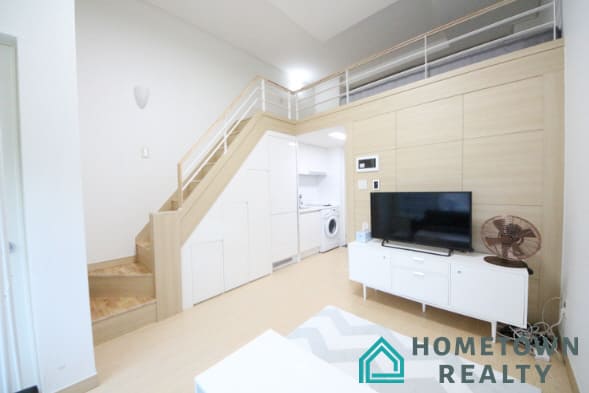
오피스텔 (officetel)literally comes from "office" and "hotel." Legally and structurally, officetels are not exactly the same category as ordinary apartments, but many are used as residences. Seoul's official housing guide describes them as residence-like office spaces that are often furnished and located in accessible areas.
If you picture a tall modern building near a subway station with a lobby, elevator, security, built-in cabinets, induction stove, refrigerator, washing machine, and maybe a café or convenience store downstairs, you are probably picturing the kind of officetel many young professionals rent.
They can be extremely convenient, but that convenience costs money. Rent and management fees are often higher than older one-room buildings, and the management fee can surprise renters who focus only on the advertised monthly rent. Some officetels also have layouts that look beautiful in photos but devote a lot of space to hallways, built-ins, or dramatic high ceilings rather than actual usable floor area.
Officetels are a good option if you care about security, elevators, newer facilities, transportation, and having appliances already installed. They are less attractive if your priority is getting the largest possible space for the lowest possible monthly cost.
Helpful picks for moving and everyday Seoul life:
ROUND LAB Birch Juice Sunscreen Portable Charger
Some links may be affiliate links. The Seoul Edit Blog may earn a commission at no additional cost to you.
4. 빌라: Korea's Villa Does Not Mean a Luxury Mansion
♡ In Seoul real estate language, villa usually means a low-rise multi-unit residential building.
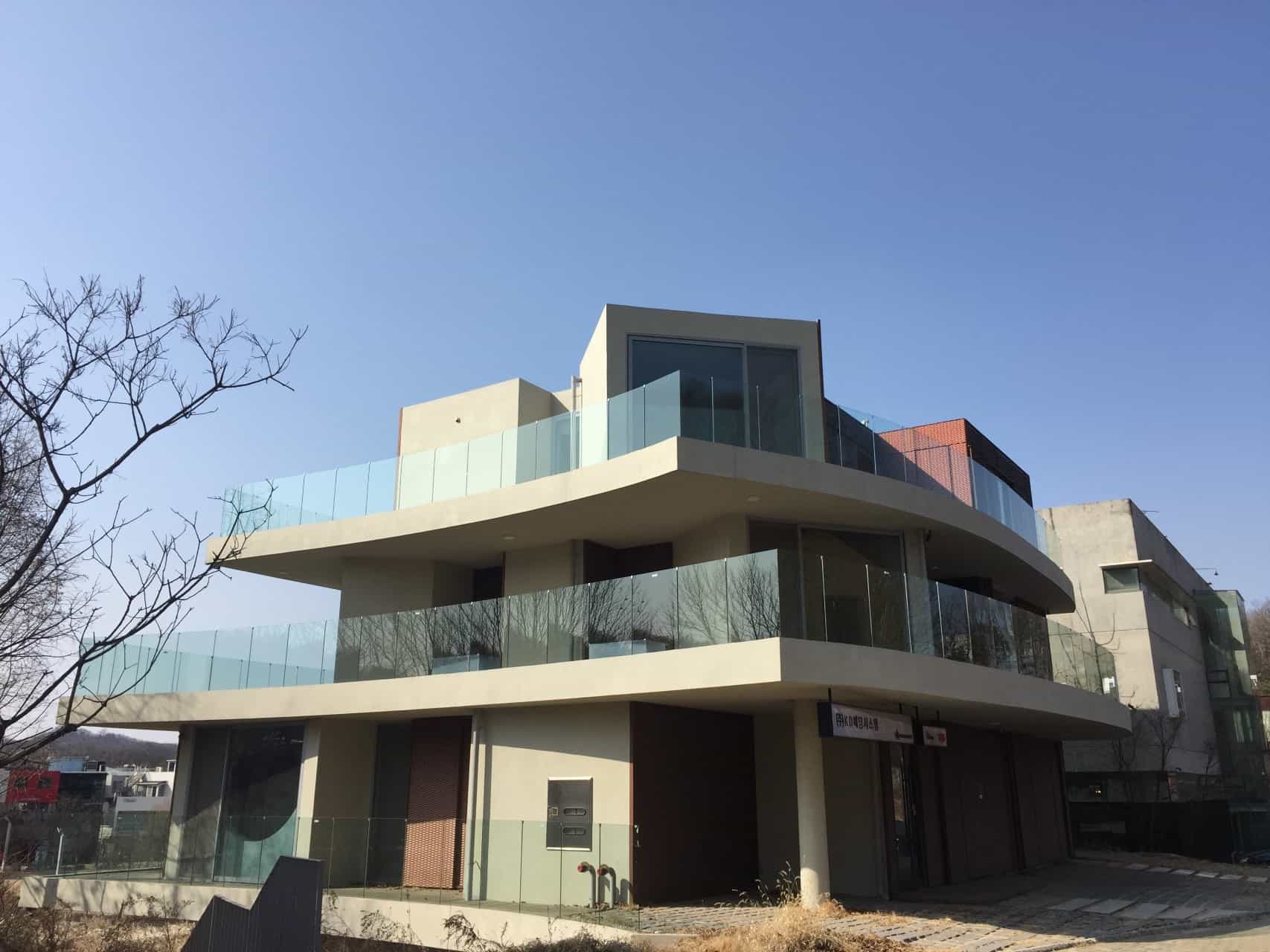
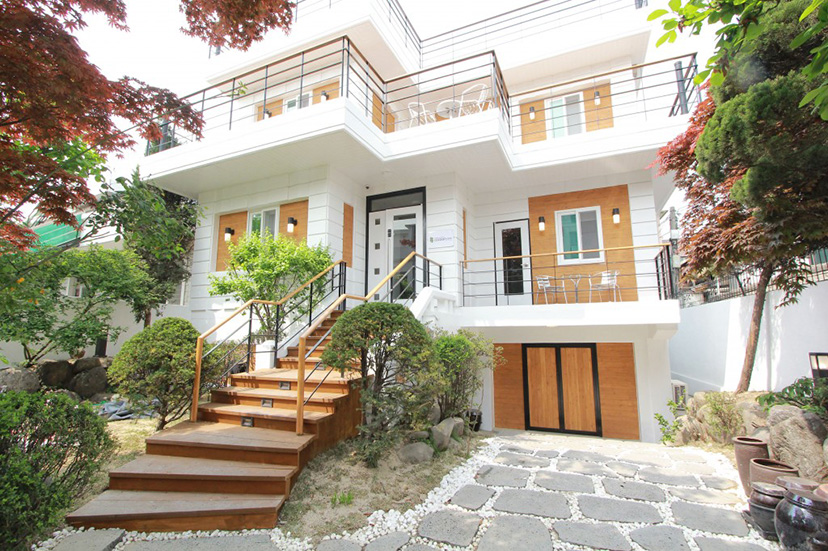
This is one of the funniest translation traps in Korean housing. If someone says they live in a 빌라 (villa), do not imagine a huge Mediterranean mansion with a swimming pool. In everyday Korean usage, villa usually refers to a relatively small low-rise residential building containing multiple separate homes.
Korean law more formally distinguishes categories such as 다세대주택 and 연립주택, both forms of low-rise multi-family housing. Current legal guidance generally places these buildings at four residential floors or fewer, with distinctions based partly on total floor area. Everyday listings, however, frequently use the much broader word "villa."
Villas can offer some of the best value for space in Seoul. Older buildings may have larger bedrooms, separate kitchens, balconies, and more practical layouts than similarly priced modern studios. This is especially attractive for couples, families, or anyone who owns more than one suitcase of belongings.
The downside is inconsistency. One villa may be renovated, sunny, quiet, and spacious. Another may have no elevator, poor insulation, damp walls, old plumbing, difficult parking, and almost no building management. You have to judge the actual unit and building, not the word villa itself.
Helpful picks for moving and everyday Seoul life:
Digital CameraBeauty of Joseon Relief Sun
Some links may be affiliate links. The Seoul Edit Blog may earn a commission at no additional cost to you.
5. 아파트: The Housing Type Many Koreans Actually Aspire To
♡ Large apartment complexes are one of the defining features of Seoul's residential landscape.
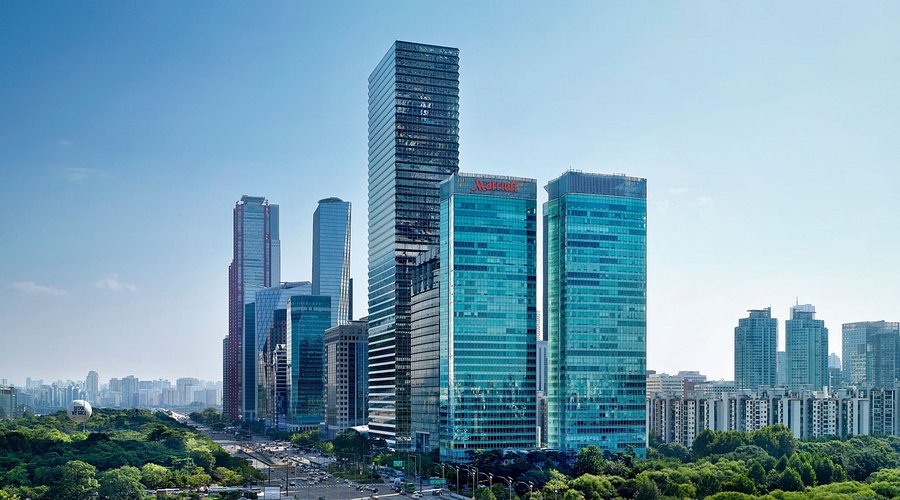
아파트 (apartment)has a more specific meaning in Korea than simply "any rented flat." Legally, apartments are a type of multi-unit residential housing with five or more residential floors. Visually, these are the large towers and apartment complexes you see across Seoul's skyline.
Seoul's official housing guide describes apartments as the most popular housing type among Koreans, largely because of their convenience. Large complexes often sit close to schools, supermarkets, public offices, playgrounds, transportation, and other everyday services. Many also have security offices, elevators, organized recycling areas, underground parking, and professional management.
Apartments are especially popular with families, but renting one can require a much larger deposit and budget than a one-room or older villa. Even when the unit itself is not huge, desirable apartment complexes can command high prices because of the neighborhood, school district, transportation, building age, brand, and surrounding infrastructure.
For someone living alone, a full apartment can be financially excessive unless you have a large budget or are sharing. For couples and families who want stable management, elevators, parking, security, and a more standardized residential environment, apartments can make much more sense.
6. 고시원: The Tiny Room That Exists at the Extreme End of Seoul Housing
♡ Gosiwons can be cheap and flexible, but the tradeoff is extremely limited space and, in older buildings, serious quality and safety concerns.
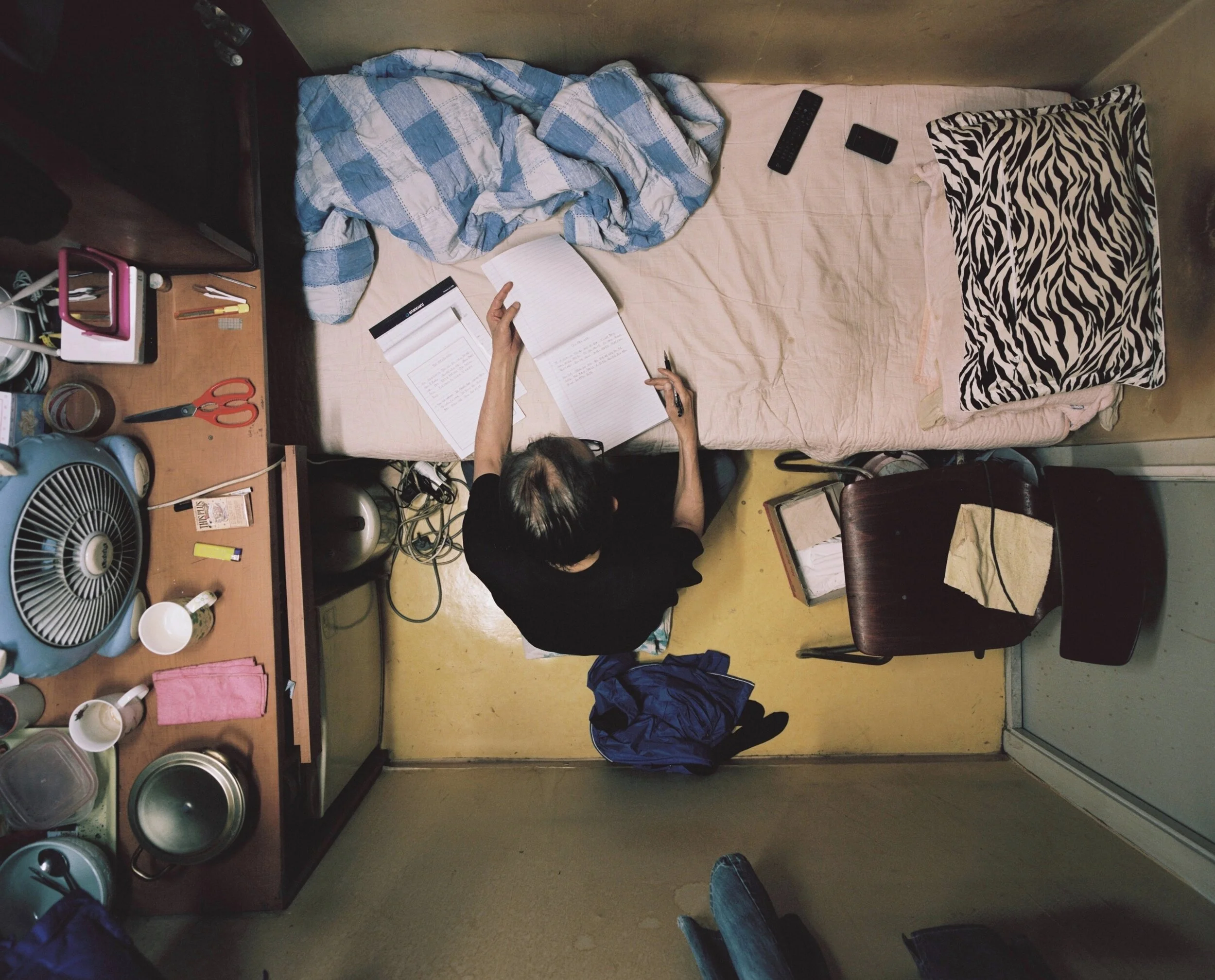
고시원 (goshiwon)originally developed as tiny rooms for people studying for demanding exams. Today the term covers a wider range of very small accommodation, often rented by students, workers, newcomers, and people who need somewhere inexpensive without a huge deposit.
A gosiwon room may be only large enough for a bed, desk, small refrigerator, and storage. Some have a private bathroom, while others use shared bathrooms and showers. Kitchens and laundry facilities are commonly shared. Contracts can also be more flexible than conventional apartments, which makes them useful for short stays or people who cannot put down a large 보증금.
The affordability comes with a serious tradeoff. Older gosiwons became known for extremely small rooms, poor ventilation, lack of windows, and fire safety problems. Seoul introduced its own gosiwon housing standards in response to those issues, including minimum room-size and window standards for applicable city remodeling projects.
I would treat a gosiwon as practical budget housing rather than an aesthetic Seoul living experience. Always inspect the room, emergency exits, window, bathroom, ventilation, fire safety, kitchen, laundry, and building condition before committing.
Helpful picks for moving and everyday Seoul life:
Portable ChargerMini TripodSome links may be affiliate links. The Seoul Edit Blog may earn a commission at no additional cost to you.
7. 쉐어하우스: Private Bedroom, Shared Everything Else
♡ Share houses can make moving to Seoul easier if you want lower upfront costs and do not mind living with other people.
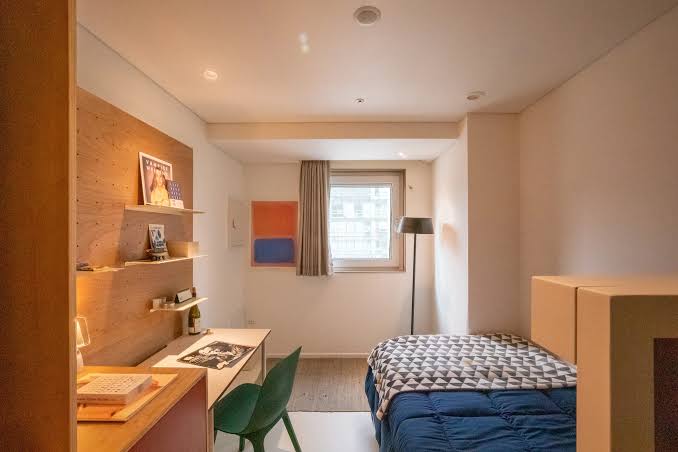
쉐어하우스 (share house)is exactly what the English name suggests. You normally rent a private bedroom while sharing spaces such as the kitchen, living room, laundry area, and sometimes bathrooms with other residents.
Share houses can be especially useful for foreigners, exchange students, young workers, and anyone who wants to move into Seoul without immediately buying furniture or handling a large apartment deposit. Some are professionally operated and fully furnished, while others feel closer to ordinary roommates sharing a converted house.
The social aspect can be either the biggest advantage or the reason you leave. Living with other people can make Seoul feel less lonely, and having shared furniture and appliances lowers setup costs. On the other hand, you are also sharing refrigerator space, cleaning responsibilities, noise, guest rules, bathrooms, and the consequences of someone else never replacing the toilet paper.
Before signing, ask exactly what is private, what is shared, whether utilities are included, how cleaning is handled, whether guests are allowed, and what happens if you want to move out early.
Helpful picks for moving and everyday Seoul life:
Digital CameraROUND LAB Birch Juice SunscreenSome links may be affiliate links. The Seoul Edit Blog may earn a commission at no additional cost to you.
8. 옥탑방: The Famous Seoul Rooftop Room
♡ Rooftop rooms can look romantic in dramas, but real life includes summer heat, winter cold, stairs, leaks, and whatever the roof decides to do during monsoon season.
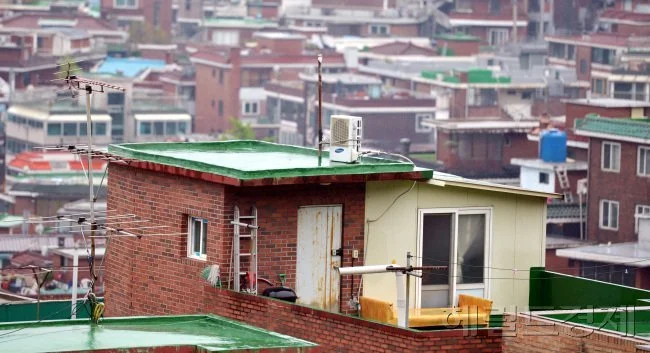
옥탑방 (oktapbang)literally refers to a rooftop room. These are small homes or rooms built on the roof level of low-rise buildings, and they became culturally recognizable partly because Korean dramas often use them as the home of a struggling but charming young character.
The appeal is easy to understand. Some rooftop rooms have open views, private outdoor space, fewer upstairs neighbors, and rents below comparable conventional units. On a pleasant spring evening, having a little rooftop outside your door can genuinely feel amazing.
The problem is that Seoul does not have pleasant spring weather all year. Rooftop rooms can become brutally hot in summer and cold in winter because they are directly exposed to the elements. Waterproofing, insulation, air conditioning, boiler condition, water pressure, stairs, and roof drainage all matter enormously.
Seoul itself has grouped rooftop rooms with semi-basements and gosiwons when discussing vulnerable housing conditions. So do not let a K-drama rooftop sunset convince you to ignore the physical condition of the actual property.
Helpful picks for moving and everyday Seoul life:
Beauty of Joseon Relief SunPortable ChargerSome links may be affiliate links. The Seoul Edit Blog may earn a commission at no additional cost to you.
9. 반지하: The Semi-Basement Apartment
♡ Banjiha can be cheaper, but low light, dampness, privacy, pests, ventilation, and flood risk are serious concerns.
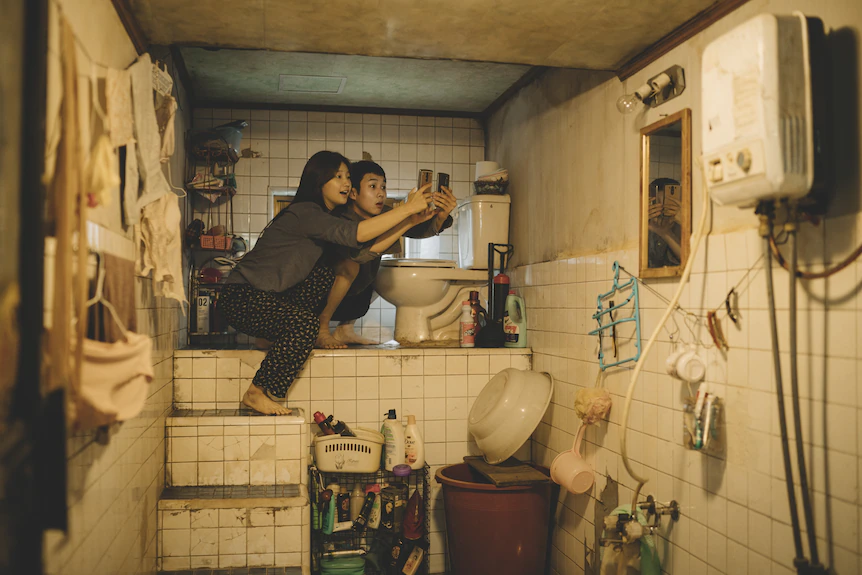
반지하 (banjiha)means semi-basement. These are units where part of the home sits below ground level but windows may still open near street level. International audiences became especially familiar with this housing type through Korean films and news, but semi-basements have existed as part of Seoul's lower-cost housing market for decades.
The biggest advantage is usually price. A semi-basement may give you more space than an above-ground unit at the same budget. The disadvantages can be much more serious: limited sunlight, humidity, mold, insects, street noise, reduced privacy, poor ventilation, and water entering the home during extreme rain.
Flood risk is not theoretical. Seoul has specifically pursued policies to reduce flood-vulnerable semi-basement housing and improve conditions for residents in this type of accommodation. If you are viewing one, look carefully at the elevation of the windows and entrance, signs of previous water damage, drains, wall discoloration, dehumidifiers, and whether the room smells damp.
A cheap banjiha is not automatically a terrible home, but I would never choose one based on price alone. The difference between an acceptable lower-level unit and a genuinely unhealthy one can be enormous.
10. 단독주택 and 다가구주택: Renting Inside a House Instead of a Tower
♡ Not every Seoul resident lives in a high-rise. Older neighborhoods still contain detached and multi-unit houses with very different layouts.
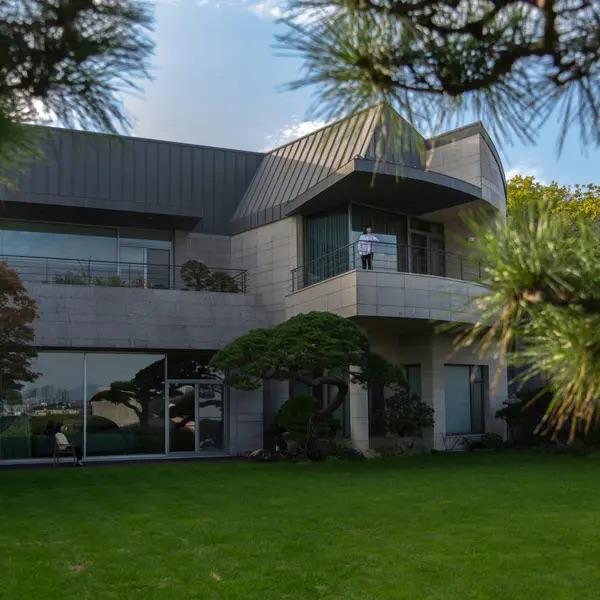
Seoul has plenty of lower-rise residential neighborhoods where the buildings look more like houses than apartment towers. A 단독주택 is broadly a detached house, while 다가구주택 refers to a multi-household structure that can contain several separate living spaces under one ownership structure.
These buildings can offer unusual layouts, larger kitchens, terraces, yards, balconies, or more character than standardized apartment units. They are common in older residential areas and can be particularly appealing if you like neighborhoods with narrow streets, local shops, and a less tower-dominated atmosphere.
The tradeoff is that building quality varies enormously. Heating efficiency, insulation, parking, security, waterproofing, garbage areas, and maintenance can be very different from what you get in a professionally managed apartment complex.
Helpful picks for moving and everyday Seoul life:
Digital CameraMini TripodSome links may be affiliate links. The Seoul Edit Blog may earn a commission at no additional cost to you.
11. Serviced Apartments: Easier, Furnished, and Usually More Expensive
♡ Serviced residences are useful when you want an apartment without committing to the full Korean rental process immediately.
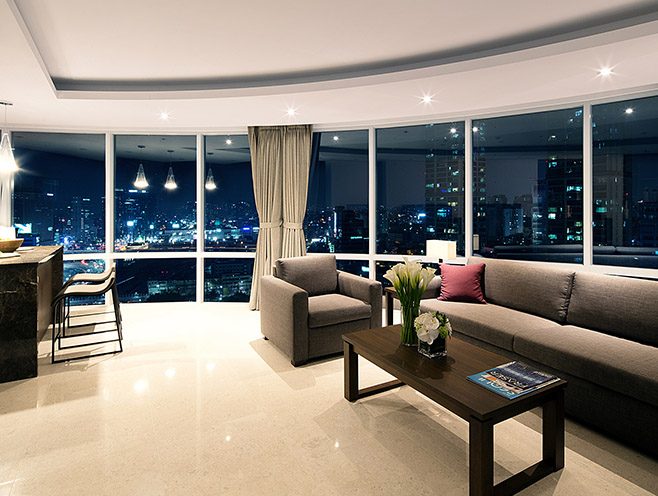
A serviced apartment or serviced residence sits somewhere between a hotel and a normal rental. Seoul's official housing guide describes these as furnished residences aimed at both short-term and longer-term visitors, often with kitchens and hotel-like facilities such as a front desk, business center, or communal spaces.
The obvious benefit is convenience. You can arrive with luggage and have furniture, appliances, internet, and building services already arranged. There is less need to buy a bed, set up an empty room, or immediately understand every part of the Korean deposit system.
The tradeoff is cost. You are paying for flexibility and services, so this is usually not the cheapest long-term way to live in Seoul. It makes the most sense for business stays, temporary relocations, people testing out a neighborhood, or anyone who wants a softer landing before signing a normal Korean lease.
Helpful picks for moving and everyday Seoul life:
Portable ChargerROUND LAB Birch Juice SunscreenSome links may be affiliate links. The Seoul Edit Blog may earn a commission at no additional cost to you.
12. 한옥: Yes, You Can Live in a Traditional Korean House Too
♡ Hanok rentals are beautiful and distinctive, but old-house charm comes with practical differences from a modern apartment.
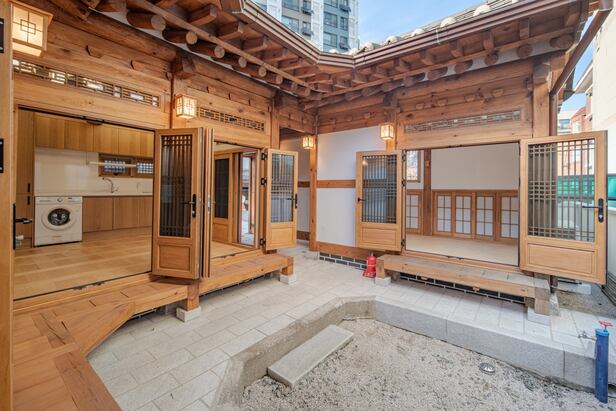
한옥 (hanok)is a traditional Korean house, known for features such as tiled roofs, wooden structures, courtyards, and ondol floor heating. Seoul's official housing guide includes hanok among the city's residence types and notes that many traditional homes have been remodeled with modern amenities.
Renting one can be incredible if you care about atmosphere, architecture, privacy, and living somewhere that feels completely different from a standard tower apartment. Neighborhoods with preserved or renovated hanok can also feel quieter and more intimate than Seoul's major high-rise districts.
But a hanok is not automatically the romantic dream its photos suggest. Older buildings may require more attention to heating, drafts, insects, moisture, maintenance, storage, sound, and security. Renovated luxury hanok can also be extremely expensive.
I would choose one because you specifically want the experience of living in a traditional house, not because you assume it will be cheaper than a normal apartment.
Helpful picks for moving and everyday Seoul life:
Beauty of Joseon Relief SunDigital CameraSome links may be affiliate links. The Seoul Edit Blog may earn a commission at no additional cost to you.
13. FAQ: Seoul Housing Types
What is a one-room in Korea?
A 원룸 is essentially a studio apartment. The bedroom, living area, and usually the kitchen are in one main room, with a separate bathroom.
What is a two-room in Korea?
투룸 generally means a home with two separate main rooms. It does not necessarily mean a Western-style two-bedroom apartment. The layout may instead be one bedroom plus a living room.
What is an officetel?
An officetel is a building type combining office and residential-style functions. Many officetel units are rented as compact homes and often include built-in furniture, appliances, elevators, security, and convenient transportation access.
What does villa mean in Korea?
In everyday Korean real estate language, villa usually means a low-rise multi-unit residential building. It does not mean a luxury detached mansion.
What is the difference between a villa and an apartment in Korea?
Korean apartments are generally larger multi-unit buildings with five or more residential floors and often belong to organized complexes. Villas usually refer informally to smaller low-rise multi-unit buildings and can vary much more in age, maintenance, layout, and facilities.
What is a goshiwon?
A 고시원 is a very small private room in a building with shared or partly shared facilities. Some rooms have private bathrooms while others use communal bathrooms, kitchens, and laundry areas.
What is a banjiha apartment?
반지하 means semi-basement. Part of the home sits below ground level. These units can be cheaper but may have problems with sunlight, humidity, mold, ventilation, privacy, pests, and flood risk.
What is an oktapbang?
옥탑방 is a rooftop room, usually located on the roof level of a low-rise building. Some have attractive outdoor space and views, but insulation, summer heat, winter cold, leaks, and stairs can be major drawbacks.
Are share houses common in Seoul?
Yes. Share houses are especially popular with students, young workers, and some foreign residents. Residents typically rent a private bedroom while sharing kitchens, living rooms, laundry areas, and sometimes bathrooms.
What housing is cheapest in Seoul?
Gosiwons, some share houses, older one-rooms, semi-basements, and certain rooftop rooms can be among the cheaper private-market options, but the lowest price often comes with major tradeoffs in space, building quality, location, privacy, or safety.
What type of Seoul housing is best for one person?
For many single renters, a one-room or officetel is the easiest option. A one-room usually offers lower costs, while an officetel often provides newer facilities, security, elevators, and built-in appliances.
What type of Seoul housing is best for couples?
Couples often find a two-room, larger villa unit, officetel, or apartment more comfortable because the living and sleeping areas can be separated.
14. Sources and Official Housing Resources
Korean housing terms do not always match their everyday English translations. This guide uses current Seoul Metropolitan Government housing information and Korean legal housing classifications for the formal distinctions, while also explaining how terms such as villa, one-room, rooftop room, and share house are commonly used in everyday rental searches.
Seoul Metropolitan Government: Types of Housing
Seoul Metropolitan Government: Housing in Seoul
Easy Law Korea: Legal Housing Categories
Easy Law Korea: Building and Residential Types
Seoul Metropolitan Government: Gosiwon Housing Standards
Seoul Metropolitan Government: Semi-Basement, Rooftop Room, and Gosiwon Housing Policy
Housing quality varies enormously even within the same category. An old villa and a newly renovated villa can feel like completely different housing types, and the same is true for one-rooms, officetels, gosiwons, and rooftop rooms. Always inspect the actual property rather than judging it only by the category name.
Want More Living in Korea Guides?
Join the list for Seoul housing, Korean landlords, rental contracts, jeonse and wolse guides, Korean culture, food, cafés, K-beauty, and practical everyday life in Korea.
Planning a trip to Seoul?
15. Final Thoughts
The best type of housing in Seoul depends much more on your actual life than on which building looks nicest in photos. A student trying to keep costs low may be perfectly happy in a one-room or share house. A young professional might gladly pay more for an officetel beside the subway. A couple may get much better value from an older two-room villa than a tiny modern tower.
Apartments make sense when you want standardized management and family infrastructure. Gosiwons work when price and flexibility matter more than space. Rooftop rooms can offer privacy and character, but weather exposure matters. Semi-basements can save money, but the risks involving moisture, sunlight, ventilation, and flooding deserve serious attention.
The useful thing about understanding these names is that you stop comparing every listing as if it were the same product. A ₩600,000 one-room, a ₩600,000 villa unit, and a ₩600,000 share-house bedroom can offer completely different amounts of privacy, space, management, furniture, and monthly expenses.
Once you know what the Korean terms mean, apartment hunting becomes much easier. Instead of asking which housing type is objectively best, you can ask the question that actually matters: which one gives you the right combination of space, cost, location, comfort, and risk for the way you plan to live in Seoul?