Seoul can spoil you surprisingly quickly.
After enough time here, waiting fifteen minutes for transportation can feel long. Walking more than a few minutes to find a convenience store starts to feel unusual. A package that takes several days suddenly feels slow.
It is easy to assume Seoul was simply designed this way from the beginning. It was not.
What feels effortless today is the result of layers of infrastructure and habits built over decades: a huge transit network, integrated payment systems, extremely dense commercial neighborhoods, widespread smartphones, delivery logistics, digital public services and constant competition to make things faster.
That combination is what turned Seoul into a city where convenience is no longer treated as a luxury.
It is simply what people expect.
Read: Best Things to Do in Seoul at Night
Read: Why Korean People Don't Always Say Exactly What They Mean
1. Why Does Seoul Feel So Convenient?
♡ The answer is not one futuristic technology. It is thousands of small systems that remove friction from everyday life.
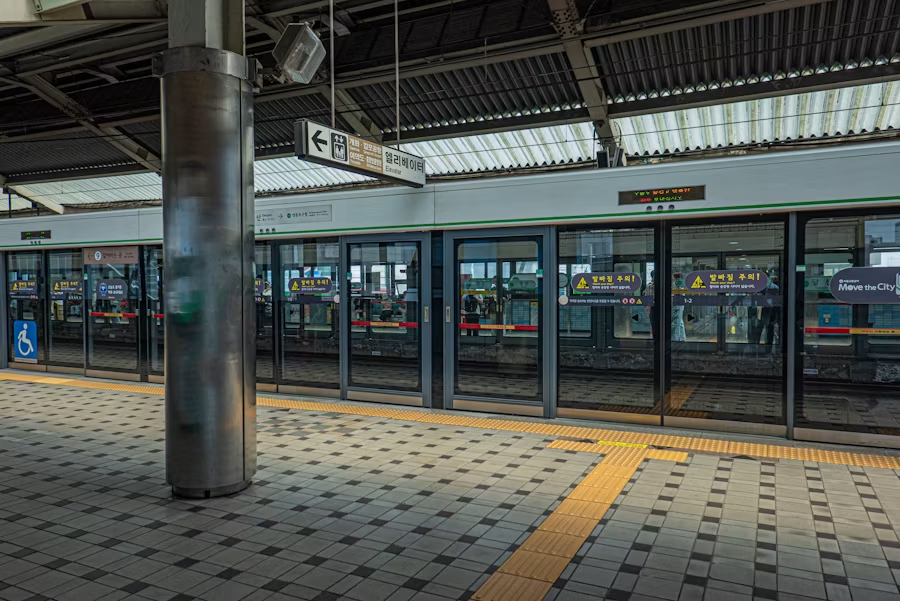
One of the first things people notice after living in Seoul is how little effort many everyday tasks seem to require.
Need food late at night? There is probably a convenience store nearby. Need to cross the city? A subway or bus route can usually get you remarkably close. Forgot a charger, umbrella, toiletries, or snack? You can often buy it within minutes.
Even things that sound complicated on paper — transferring between buses and subways, getting official documents, receiving packages, ordering food, or finding real-time transit information — have been designed around reducing waiting and unnecessary steps.
That is what makes Seoul's convenience feel different from simply having lots of technology.
The city has spent decades layering dense infrastructure, public transport, digital services, private businesses, logistics networks, smartphones, apartment systems, and a culture that strongly values speed.
The result is a city where many tiny annoyances have quietly been engineered out of daily life.
Helpful picks for everyday life in Seoul:
Portable Charger AirPods
Some links may be affiliate links. The Seoul Edit Blog may earn a commission at no additional cost to you.
2. Public Transportation Was Built Around Connections, Not Just Individual Lines
♡ Seoul's convenience starts with a transit network designed to make buses, subways and transfers work together.
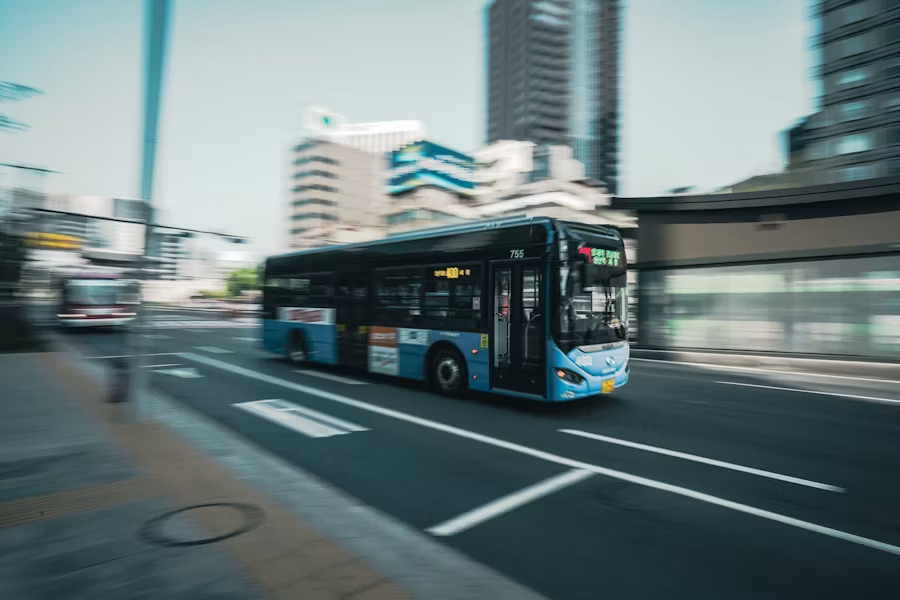
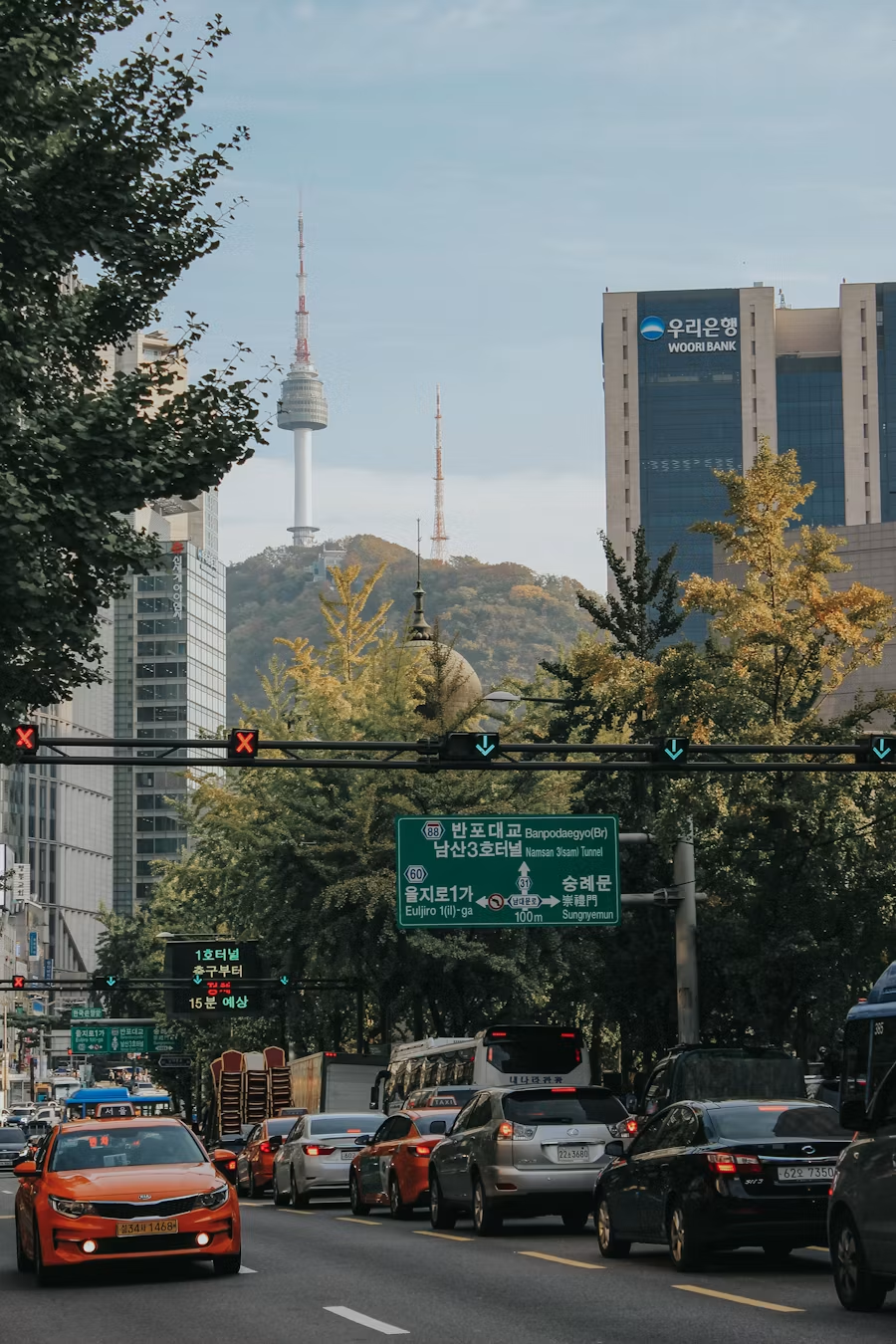
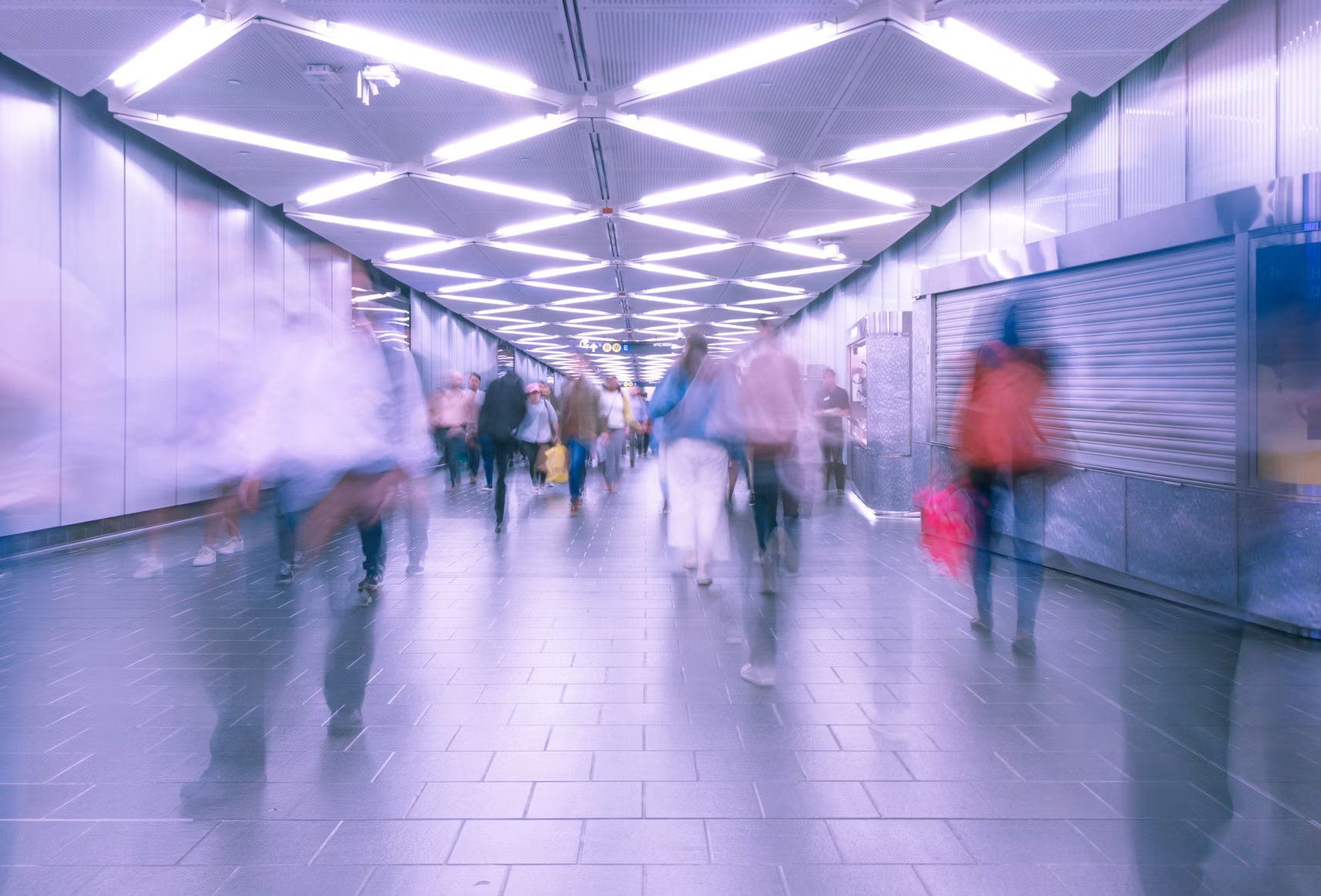
Public transport is probably the biggest reason Seoul feels easy to navigate without owning a car.
The subway system reaches across the capital and into the surrounding metropolitan region, while buses fill in the gaps between stations and neighborhoods.
What matters even more is that these systems are designed to connect.
Seoul's official transportation guidance allows riders to use transportation cards across buses and subways and receive transfer benefits when they tap correctly when getting on and off.
That sounds ordinary if you already live here, but it changes the psychology of moving around a city.
You do not have to think of a bus ride, subway ride, and another bus ride as three completely separate purchases. They function as parts of one journey.
The city also provides real-time route and transportation information, and Seoul's official subway app includes route recommendations, station information, exits, nearby attractions, and even train-car congestion information.
Convenience comes not only from having lots of trains. It comes from removing uncertainty about how the pieces fit together.
Helpful picks for everyday life in Seoul:
AirPodsPortable ChargerSome links may be affiliate links. The Seoul Edit Blog may earn a commission at no additional cost to you.
3. Convenience Stores Became Part of Seoul's Everyday Infrastructure
♡ In Seoul, a convenience store is not just somewhere to buy chips. It can function like a tiny neighborhood utility room.
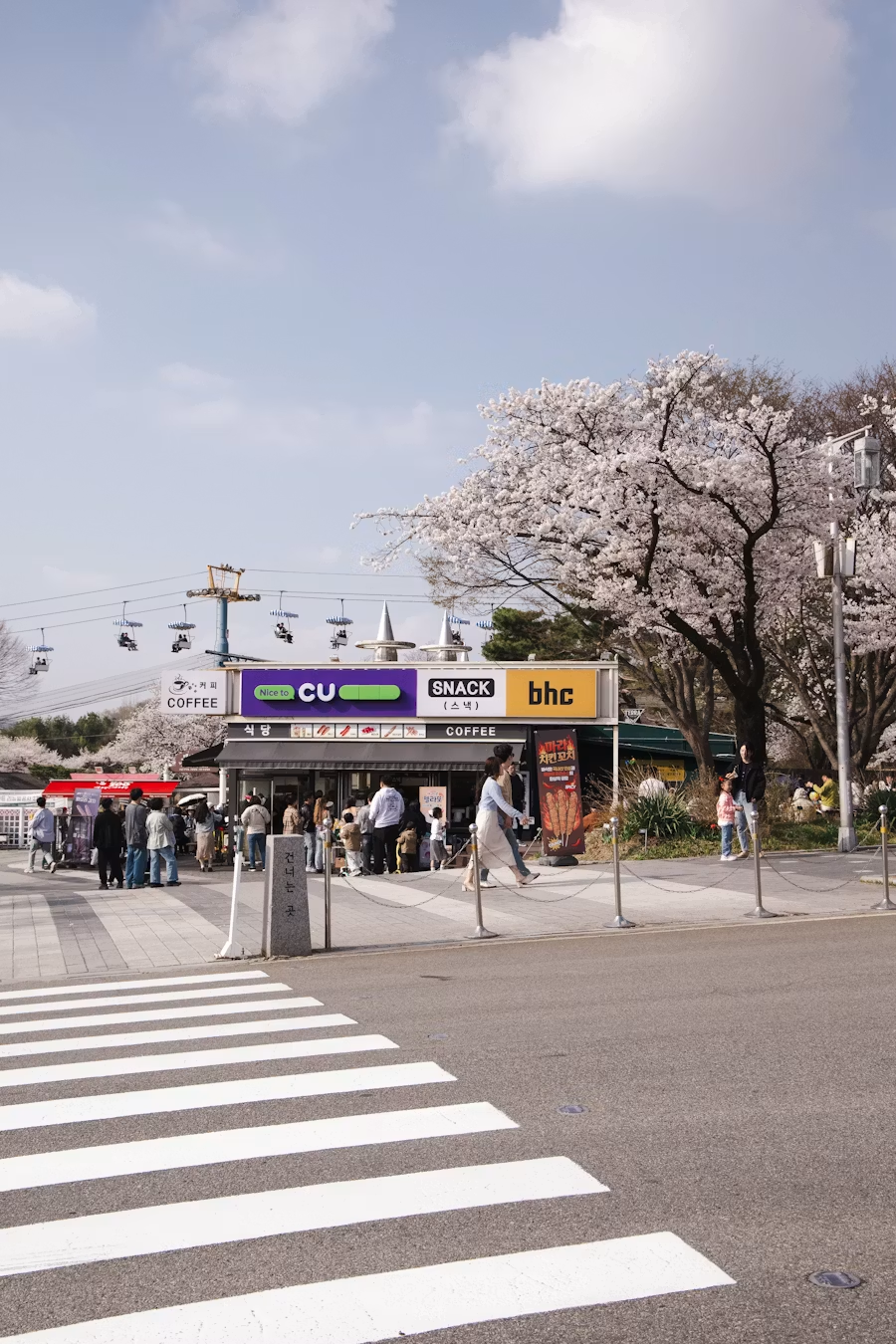
Convenience stores are one of the most visible examples of how Seoul is built around immediacy.
CU, GS25, 7-Eleven, emart24 and other stores are woven into residential neighborhoods, subway areas, office districts, university streets and nightlife zones.
You can walk in for bottled water and leave with a full meal, toiletries, medicine-like everyday health products, phone accessories, an umbrella, household basics, parcel services, or a transportation-card recharge.
Some stores also provide microwaves, hot water, seating, parcel pickup or shipping, ATMs, and other small services that make them feel less like traditional shops and more like neighborhood infrastructure.
Their value becomes especially obvious late at night.
In many cities, forgetting one basic item after normal retail hours creates a problem until tomorrow. In Seoul, the answer is often simply to walk a few minutes.
Convenience compounds when those stores are placed beside apartment buildings, stations and bus stops people already use every day.
Helpful picks for everyday life in Seoul:
Digital Camera Mini Tripod
Some links may be affiliate links. The Seoul Edit Blog may earn a commission at no additional cost to you.
4. Delivery Culture Turned the Entire City Into a Storefront
♡ Seoul's density made fast delivery practical, while smartphones made ordering almost effortless.
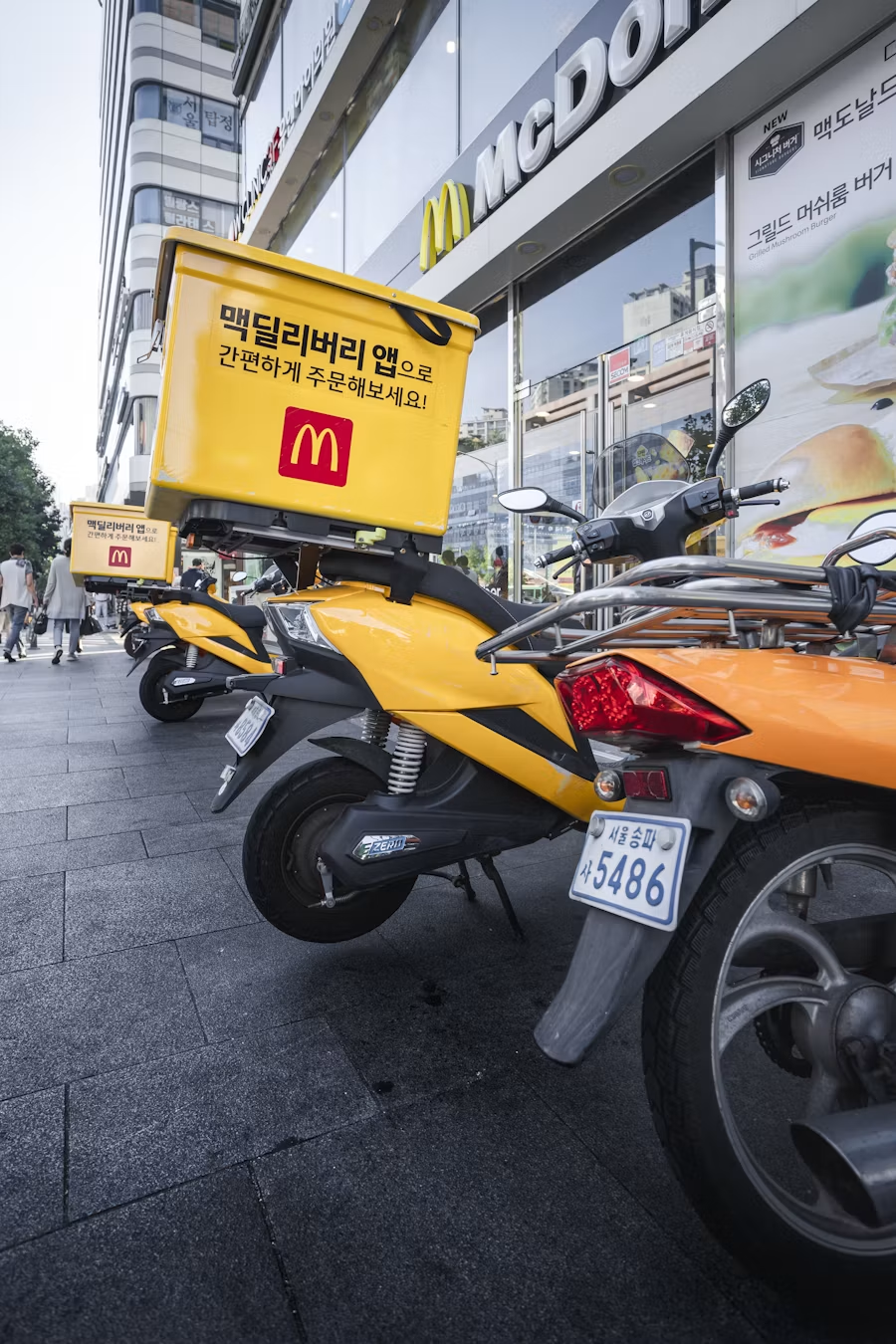
Seoul's delivery culture is another piece of the convenience puzzle.
Dense neighborhoods mean huge numbers of customers and businesses exist within relatively small geographic areas. That makes it much easier for delivery networks to serve many orders without traveling enormous distances.
Food delivery is the most obvious example. A meal can travel from a restaurant several neighborhoods away directly to an apartment lobby or front door.
But the same expectation has spread far beyond restaurant meals.
Groceries, cosmetics, household goods, fashion, electronics and everyday necessities can increasingly be ordered through apps and delivered with very little friction.
The cultural expectation matters almost as much as the technology.
Once consumers become accustomed to quick delivery, retailers compete by making ordering, payment, tracking and fulfillment even faster.
Convenience then becomes self-reinforcing: the easier a system becomes, the more people use it, which creates even more pressure to improve it.
Helpful picks for everyday life in Seoul:
Portable ChargerLip Tint
Some links may be affiliate links. The Seoul Edit Blog may earn a commission at no additional cost to you.
5. Seoul Normalized Doing Things Without Waiting for a Person
♡ Kiosks, QR codes, apps and self-service systems remove another layer of friction from everyday errands.
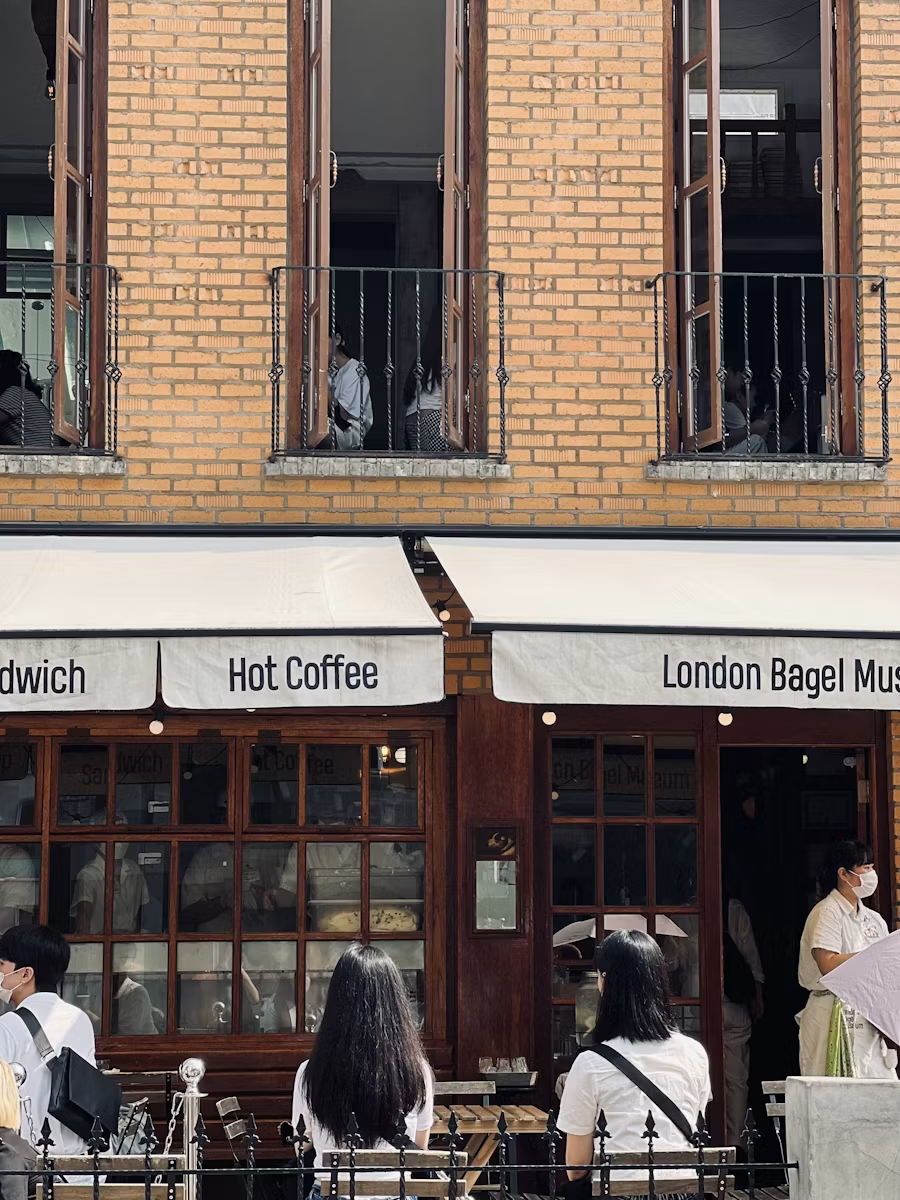
Walk into a café, fast-food restaurant, cinema or casual restaurant in Seoul and there is a good chance you will encounter a touchscreen kiosk.
The same logic appears in parking garages, subway stations, hospitals, banks, government offices, apartment buildings and shops.
The goal is usually the same: let people complete a predictable task without standing in an unnecessary line.
Mobile ordering pushes that even further. You can choose, customize and pay before you reach the counter.
That system can feel impersonal, and it is not always easier for elderly people, tourists or anyone unfamiliar with Korean-language interfaces.
But when it works, it dramatically reduces the number of tiny interactions required to get through a normal day.
Seoul's convenience is often built from exactly these small reductions in friction.
Helpful picks for everyday life in Seoul:
Lip TintDigital CameraSome links may be affiliate links. The Seoul Edit Blog may earn a commission at no additional cost to you.
6. Being Connected Everywhere Became Part of the City's Infrastructure
♡ Fast mobile networks and public Wi-Fi make Seoul's digital services useful while people are actually moving around the city.
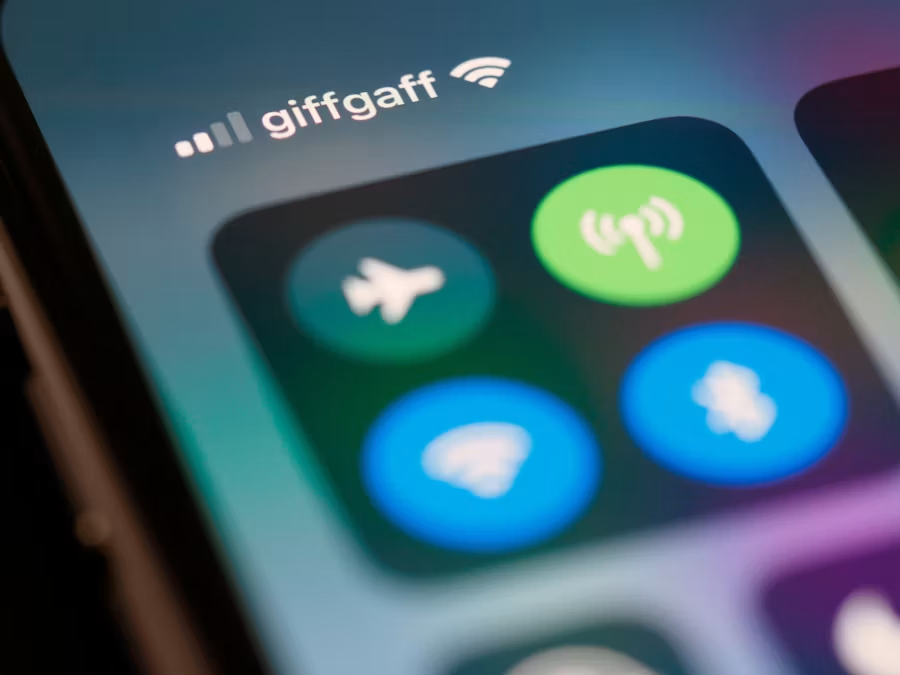
None of Seoul's app-based convenience would matter very much if people could not reliably get online.
Connectivity has gradually become part of the city's physical infrastructure. Public Wi-Fi appears at transportation facilities, public spaces and other high-traffic areas, while widespread mobile connectivity allows smartphones to function as maps, payment tools, tickets, identity tools and personal service counters.
In 2026, the Seoul Metropolitan Government announced another major public Wi-Fi upgrade, including the replacement of older units across all 25 districts and the introduction of newer high-speed equipment at selected locations.
The city has also expanded free connectivity in busy public areas, making it easier for residents and visitors to stay online while moving around Seoul.
That matters because many of the systems that make Seoul feel convenient assume you have a working smartphone in your hand.
Transit directions, QR codes, maps, delivery tracking, payment, reservations, government services and messaging all become significantly easier when connectivity is treated like basic urban infrastructure.
Helpful picks for everyday life in Seoul:
Portable ChargerAirPodsSome links may be affiliate links. The Seoul Edit Blog may earn a commission at no additional cost to you.
7. Korea Put Government Services Online Too
♡ Convenience in Seoul is not limited to private apps. Korea's public services have also been pushed heavily toward digital access.

One of the less glamorous but genuinely important parts of Korean convenience is digital government.
Government24 and related public platforms allow residents to search for services, apply for documents, track applications and handle tasks that once required a physical visit to an office.
Korea's Ministry of the Interior and Safety describes Government24 as an integrated civil-service platform that brings a large number of public services and administrative functions together online.
More recent efforts have continued that integration by connecting additional public-service platforms and expanding mobile access to official documents, applications and personalized service information.
Korea also uses self-service document kiosks in locations such as public offices and subway stations, extending the same idea into physical space.
This is one of the reasons everyday administration in Seoul can feel oddly fast once you understand how the systems work.
There can absolutely be a learning curve, especially for foreigners dealing with identity verification, Korean phone numbers or Korean-language websites.
But the underlying philosophy is clear: routine government tasks should increasingly be accessible without spending half a day sitting in an office.
Helpful picks for everyday life in Seoul:
ROUND LAB Birch Juice Sunscreen Beauty of Joseon Relief Sun
Some links may be affiliate links. The Seoul Edit Blog may earn a commission at no additional cost to you.
8. Apartment Living Created Its Own Convenience Ecosystem
♡ Seoul's dense apartment neighborhoods concentrate transport, stores, schools, deliveries and services around where people live.
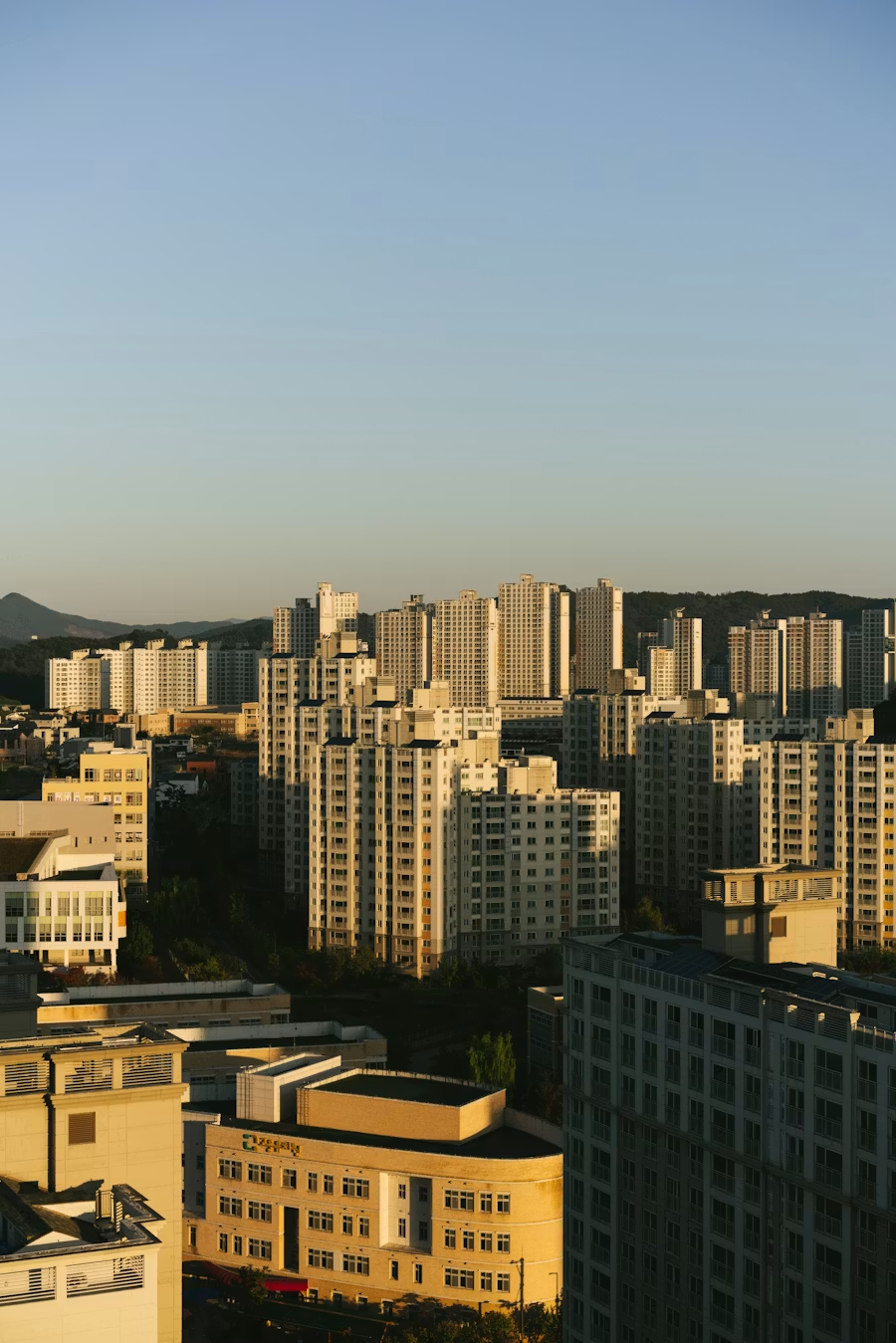
Seoul's apartment culture also helps explain why convenience feels so concentrated.
Large residential complexes put thousands of people within walking distance of the same entrances, roads and commercial areas.
Businesses naturally form around those populations.
A typical residential area may have convenience stores, cafés, pharmacies, restaurants, supermarkets, academies, salons, clinics and bus stops clustered around apartment complexes.
Delivery infrastructure also works especially well in this environment because huge numbers of households are concentrated into predictable addresses.
Parcel lockers, security desks, building entrances and standardized apartment addresses make receiving large numbers of deliveries more manageable.
This is another recurring theme: Seoul's density does not only create crowds.
Density also creates enough customers in a small area to support services that would be difficult to sustain in a much more spread-out city.
Helpful picks for everyday life in Seoul:
Digital CameraMini TripodSome links may be affiliate links. The Seoul Edit Blog may earn a commission at no additional cost to you.
9. Seoul Is Convenient Because So Much of It Stays Available Late
♡ A city feels very different when food, transport, stores and services remain accessible long after a traditional workday ends.
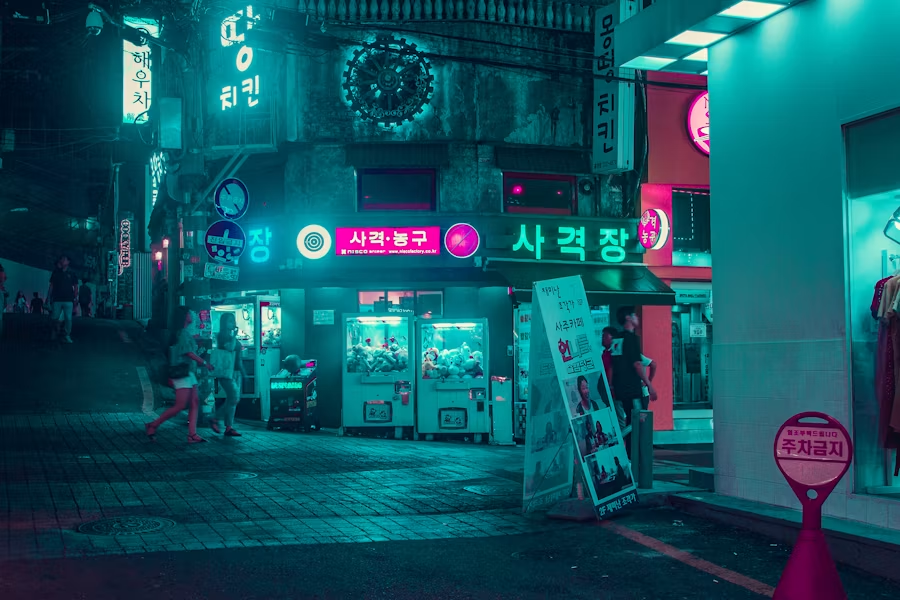
Seoul's convenience becomes especially obvious after dark.
The subway does eventually stop, and not every business operates late, but the city does not suddenly become unusable when office hours end.
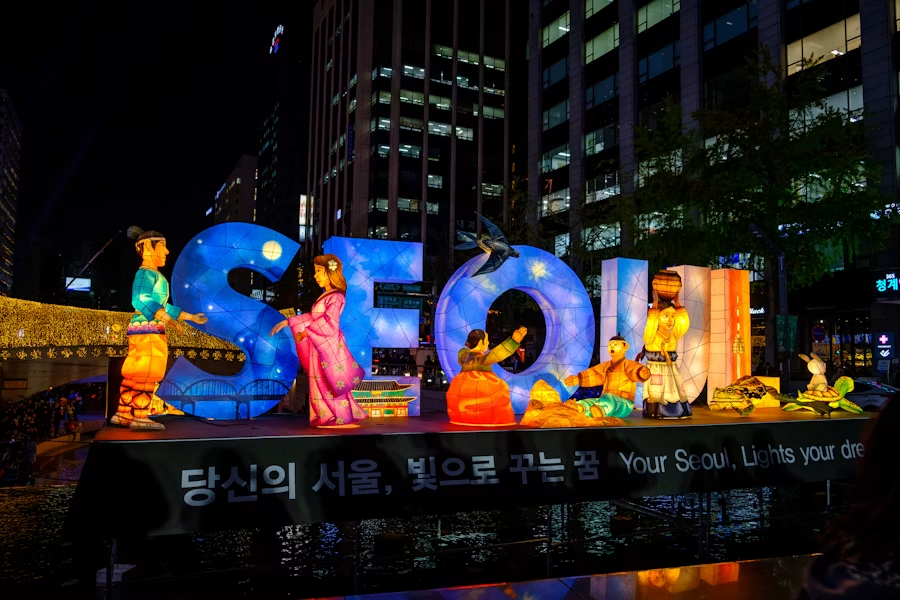
Convenience stores remain available, restaurants serve late dinners, cafés often stay open into the evening, delivery continues, taxis can be called through apps, and nightlife districts stay active far beyond sunset.
That creates flexibility for people who work late, study late, socialize late or simply do not live according to a nine-to-five schedule.
This availability changes planning.
You do not have to organize every small purchase around narrow opening hours. You can often solve the problem when it appears.
That ability to deal with everyday needs immediately is a major reason Seoul feels so convenient compared with cities where services disappear much earlier.
10. And Then There Is Korea's Famous Ppalli-Ppalli Culture
♡ Infrastructure explains a lot, but Korea's cultural expectation that things should happen quickly also shaped the systems people now take for granted.
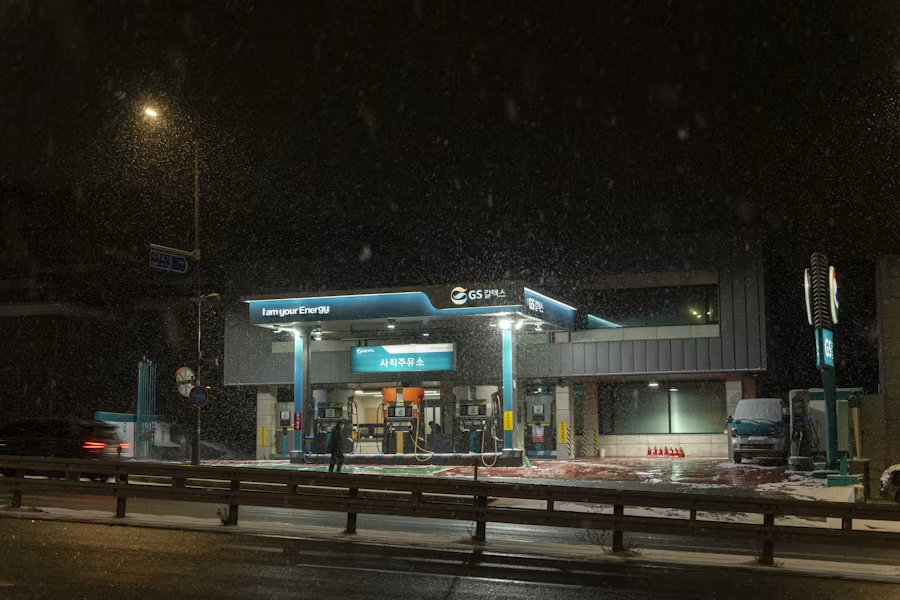
You cannot talk about convenience in Korea without eventually encountering the expression 빨리빨리 (ppalli-ppalli), meaning roughly "quickly, quickly."
It is often used jokingly, but it points to a real cultural expectation around speed.
People expect fast internet, fast delivery, fast service, efficient transport and quick responses.
Businesses compete within those expectations, and public systems are judged by them too.
That does not mean faster is always better.
A culture built around speed can create pressure on workers, delivery riders, service employees and anyone who cannot move at the same pace.
Convenience is not free. Someone is usually doing the labor that makes your order, package, train connection or late-night purchase feel effortless.
But historically, the combination of dense urban development, technological adoption, competition and a strong cultural preference for speed has helped make Seoul's systems continually more efficient.
That is probably the real answer to how Seoul became so convenient: no single invention transformed the city.
Thousands of systems simply kept getting faster, more connected and easier to use until convenience became the expectation.
Helpful picks for everyday life in Seoul:
Beauty of Joseon Relief SunPortable ChargerSome links may be affiliate links. The Seoul Edit Blog may earn a commission at no additional cost to you.
11. FAQ: Why Seoul Is So Convenient
Why is Seoul considered such a convenient city?
Seoul combines dense urban development with integrated public transportation, widespread convenience stores, delivery services, digital payments, strong mobile connectivity, online government services, and businesses that often operate late. The convenience comes from how these systems work together rather than from one single technology.
Can you live in Seoul without a car?
Yes. Many Seoul residents rely primarily on subways, buses, walking and taxis. The city's public transportation network connects residential neighborhoods, business districts and major destinations, and transfer systems allow buses and subways to function as parts of the same journey.
Why are convenience stores so useful in Korea?
Korean convenience stores sell far more than snacks. Depending on the location, they may offer ready-to-eat meals, drinks, toiletries, household basics, ATMs, parcel services, microwaves, hot water, seating and transportation-card services.
Why is delivery so fast in Seoul?
Seoul's high population density places enormous numbers of customers and businesses close together. That geography, combined with strong logistics networks, smartphones and intense competition among delivery services, makes rapid delivery practical.
Does Seoul have free public Wi-Fi?
Yes. Seoul operates public Wi-Fi infrastructure in many public areas and continues to upgrade the network in high-traffic parts of the city.
What is Government24 in Korea?
Government24 is Korea's integrated online civil-service platform. It provides information on public services and allows residents to handle many applications, documents and administrative tasks digitally.
What does ppalli-ppalli mean?
빨리빨리, pronounced roughly ppalli-ppalli, literally means 'quickly, quickly.' The expression is often used to describe Korea's strong cultural preference for speed and efficiency.
Is Seoul convenient for foreigners too?
Many parts of Seoul are extremely convenient for foreigners, especially transportation, shopping and everyday services. However, some Korean apps, payment systems, identity-verification processes and government websites can still be more difficult without a Korean phone number, Korean-language ability or local account.
Is Seoul open 24 hours?
No. The subway closes overnight and many businesses have normal closing hours. However, convenience stores, some restaurants, delivery services, taxis and nightlife businesses can remain available much later than in many other cities.
What makes Seoul different from other smart cities?
One of Seoul's strongest advantages is that digital systems are layered onto dense physical infrastructure. Apps, transit cards, public Wi-Fi, online services and delivery networks work alongside walkable neighborhoods, subways, buses, apartment complexes and local businesses.
12. Sources and Further Reading
This article combines everyday observations about living in Seoul with official information from the Seoul Metropolitan Government and Korea's Ministry of the Interior and Safety.
Seoul Metropolitan Government — Public Transportation
Seoul Metropolitan Government — Transportation Policy
Seoul Metropolitan Government — Subway Information
Seoul Metropolitan Government — Public Wi-Fi
Seoul Metropolitan Government — Smart City
Ministry of the Interior and Safety — Government24
Ministry of the Interior and Safety — Korea's Digital Government
Ministry of the Interior and Safety — Digital Government Service Experience
Want More Korean Culture and Seoul Guides?
Join the list for Seoul guides, Korean culture, cafés, K-beauty, seasonal travel tips and everyday things about Korea that are easy to miss until you live here.
Planning a trip to Seoul?
13. Final Thoughts
Seoul did not become convenient because someone invented one magical app or built one perfect subway line.
Its convenience comes from layers.
Public transportation connects with buses. Transportation cards connect the journeys. Smartphones connect people to maps, payments and services. Dense neighborhoods make convenience stores and delivery economically practical. Apartment complexes concentrate customers. Digital government moves paperwork online. Public Wi-Fi and mobile networks keep everything connected.
Then Korea's expectation for speed pushes every one of those systems to keep improving.
The result is not a city where everything is perfect.
Kiosks can be frustrating. Apps can be difficult for foreigners. Delivery speed creates pressure on workers. Digital services can still require confusing identity verification.
But once you become accustomed to the way Seoul works, the overall experience is hard to unnotice.
The city has built an enormous number of tiny shortcuts into everyday life.
And those tiny shortcuts are what make Seoul feel like one of the most convenient cities in the world.