One of the weirdest parts of apartment hunting in Korea is realizing that two people can live in very similar homes while paying for them in completely different ways. One person might put down ₩10 million and transfer rent every month. Another might give the landlord ₩200 million upfront and pay no normal monthly rent at all.
Both can be perfectly ordinary Korean rental contracts. The first is likely some form of 월세 (wolse). The second is 전세 (jeonse). Somewhere in between, you may also encounter 반전세, where the tenant pays both a larger deposit and monthly rent.
The system sounds much more complicated than it actually is once you understand the role of 보증금, or the deposit. Korea essentially allows renters and landlords to trade off upfront capital against monthly rent. The more money that sits in the deposit, the lower the monthly rent can become, until you reach full jeonse and normal monthly rent disappears.
What makes the decision difficult is that cheaper monthly housing does not automatically mean a better financial deal. Jeonse can tie up an enormous amount of money and introduces serious deposit risk. Wolse costs more every month but lets you keep more cash available. This guide is about that tradeoff.
Read: How Renting an Apartment in Seoul Actually Works
Read: Why Korean People Don't Always Say Exactly What They Mean
Read: How Seoul Became One of the World's Most Convenient Cities
1. Jeonse vs Wolse: The Difference in One Minute
♡ Wolse means paying a deposit plus monthly rent. Jeonse means putting down a much larger deposit and normally paying no regular monthly rent.

The easiest way to understand Korea's rental system is to stop thinking of every apartment as having one fixed monthly price. In Korea, the amount of money you give the landlord upfront can dramatically change how much you pay each month. That is why rental listings focus so heavily on 보증금 (bojeunggeum), meaning the security deposit.
With 월세 (wolse), you pay a deposit and then pay rent every month. This is the structure that will feel most familiar to people coming from countries where monthly rent is the standard. The unfamiliar part is that the Korean deposit can still be much larger than the one or two months of rent you might expect elsewhere.
With 전세 (jeonse), the monthly rent is normally replaced by a very large lump-sum deposit. Seoul describes jeonse as a system where the tenant entrusts the landlord with a large amount for a lease of around one to two years, and the landlord is expected to return that money when the contract ends.
So the basic tradeoff is simple even if the numbers are not. Wolse requires less money upfront but creates an ongoing monthly housing expense. Jeonse can eliminate normal monthly rent, but you may need to lock an enormous amount of cash into the property and take the return of that deposit extremely seriously.
Helpful picks for moving and everyday Seoul life:
Portable Charger Digital Camera
Some links may be affiliate links. The Seoul Edit Blog may earn a commission at no additional cost to you.
2. 보증금 Is the Number You Need to Pay Attention To
♡ The Korean word for deposit sounds innocent until you realize it can mean anything from a few million won to an amount large enough to buy property somewhere else.
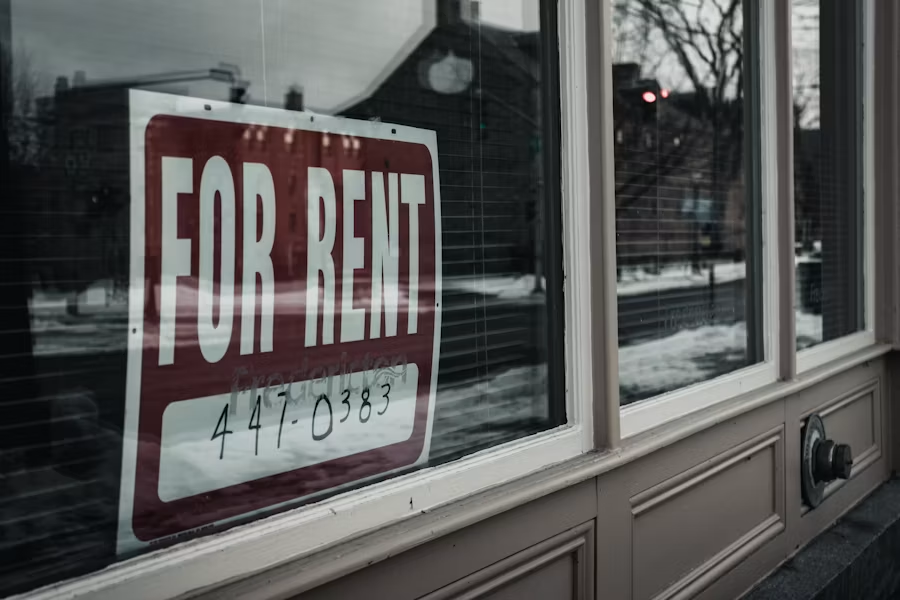
보증금 (bojeunggeum)simply means deposit, but it is central to almost every discussion about Korean renting. In a typical wolse contract, the tenant pays a deposit, pays monthly rent during the lease, and then receives the deposit back at the end after any legitimate outstanding amounts are settled.
Seoul's current housing guide says that wolse deposits are generally around ten to twenty times the monthly rent, although real listings vary widely. That means even a fairly ordinary monthly rental can require millions or tens of millions of won upfront. This is why foreigners sometimes look at Korean listings and wonder whether they misread an extra zero.
The deposit also gives the landlord and tenant room to change the balance between upfront money and monthly rent. A property might be advertised at one deposit and monthly-rent combination, but some landlords will consider a larger deposit in exchange for lower monthly rent, or a smaller deposit with higher monthly rent. That is not automatic, but it is a normal enough part of Korean rental negotiations that it is worth asking.
The important thing is to treat the deposit as real money that must come back to you, not as an abstract number written on a contract. The bigger it gets, the more important ownership checks, deposit protection, contract reporting, and proper documentation become.
Helpful picks for moving and everyday Seoul life:
AirPods ROUND LAB Birch Juice Sunscreen
Some links may be affiliate links. The Seoul Edit Blog may earn a commission at no additional cost to you.
3. How Wolse Actually Works
♡ Wolse is the easier system to understand, but the combination of deposit, rent, and management fees can still make the real monthly cost confusing.
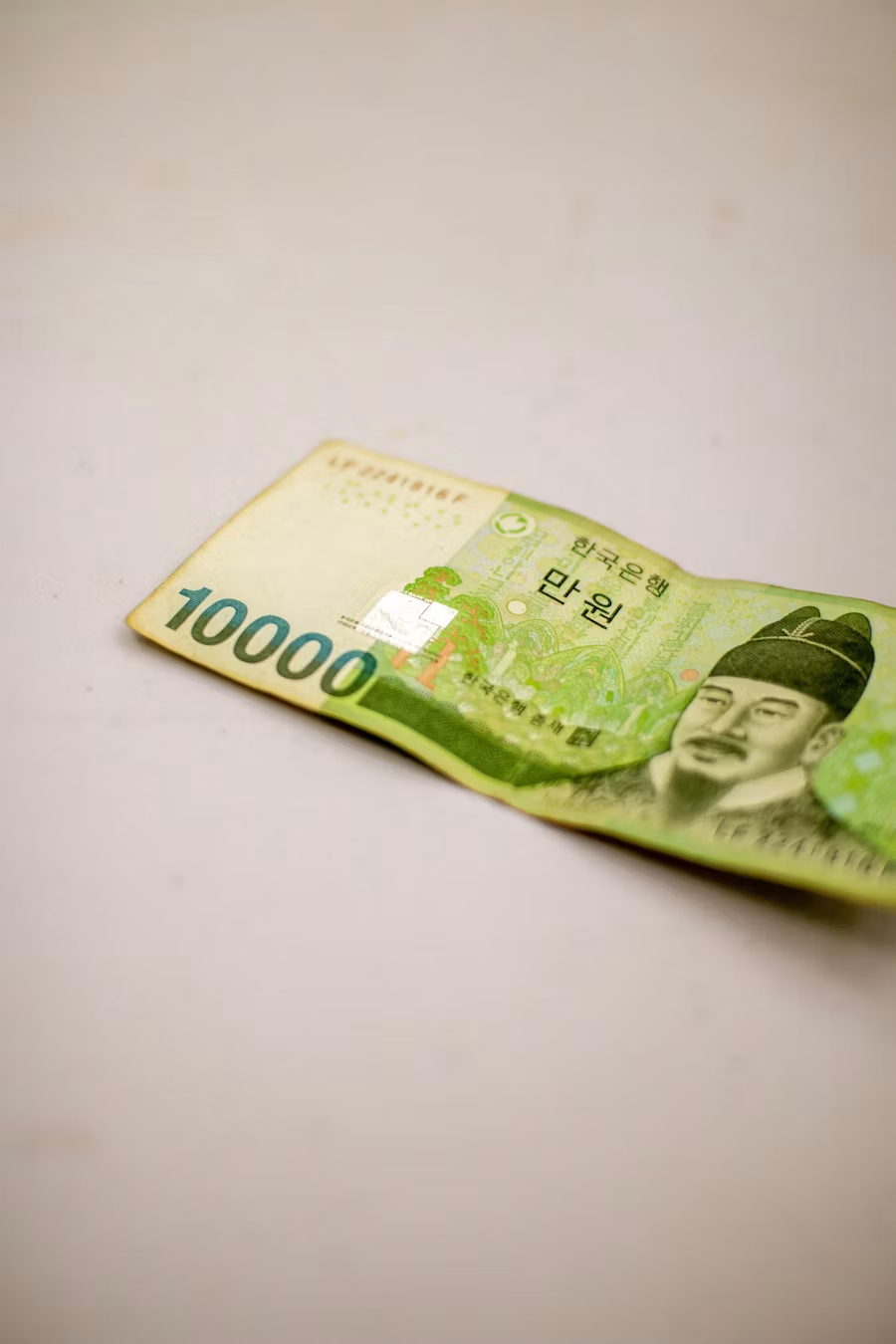
Wolse is the closest Korean equivalent to the monthly-rent system most foreigners already know. You sign a lease, put down a security deposit, and then transfer a set amount of rent to the landlord every month. Seoul's official housing guide describes wolse leases as commonly lasting around one to two years.
Imagine an apartment listed as 1000/70. In common Korean listing shorthand, that means a ₩10 million deposit and ₩700,000 in monthly rent. A listing written 5000/45 would usually mean a ₩50 million deposit and ₩450,000 monthly rent. The first number represents the deposit in units of ten thousand won, while the second represents the monthly rent in the same unit.
The important part is that monthly rent is not necessarily your entire monthly housing bill. Many Seoul rentals also charge 관리비 (gwanribi), or a management fee. Depending on the property, utilities such as electricity, gas, heating, water, parking, or internet may also be separate. So a listing that says ₩700,000 per month does not automatically mean your final housing expense is ₩700,000.
Wolse is attractive because the upfront barrier is lower than jeonse. You keep more of your cash available instead of locking it into the apartment. The downside is obvious too: every month, part of your income permanently leaves your account as rent.
Helpful picks for moving and everyday Seoul life:
Mini Tripod Lip Tint
Some links may be affiliate links. The Seoul Edit Blog may earn a commission at no additional cost to you.
4. How Jeonse Actually Works
♡ Instead of sending rent every month, you hand over a huge amount of money upfront and expect to receive it back when the lease ends.
Jeonse is the rental system that tends to make foreigners stop mid-conversation and ask, "Wait, how much money do I give the landlord?" The answer can be an enormous percentage of the property's value. Instead of collecting normal monthly rent, the landlord receives a very large deposit for the lease period.
Seoul's current guidance describes the basic structure as a one to two year lease where part of the jeonse amount is paid when the contract is signed and the rest is paid around move-in. When the lease ends, the landlord must return the jeonse amount according to the lease obligations.
From the tenant's perspective, the appeal is obvious. Once the deposit is in place, there is normally no regular monthly rent draining your income every month. If you already have access to substantial savings or qualifying financing, your monthly housing expense can look dramatically lower than a comparable wolse apartment.
The problem is that the money is still yours. You are effectively trusting the rental system and the landlord with a massive amount that you expect to recover later. If anything goes wrong with ownership, debt, the property, or the landlord's ability to repay, the financial consequences can be much more serious than losing a small security deposit.
Helpful picks for moving and everyday Seoul life:
Digital CameraPortable ChargerSome links may be affiliate links. The Seoul Edit Blog may earn a commission at no additional cost to you.
5. 반전세 Sits Somewhere Between Jeonse and Wolse
♡ Not every Korean rental fits neatly into one category. Plenty of contracts combine a large deposit with a meaningful monthly payment.
Once you understand jeonse and wolse, Korea adds another term to make things slightly more confusing: 반전세 (banjeonse). The name literally suggests something like "half jeonse," but there is no single universal mathematical formula that makes a contract officially half of anything.
In practice, the term is commonly used for arrangements where the tenant pays a substantial deposit and also pays monthly rent. Korean legal guidance recognizes this broader structure as a lease where the tenant pays both a deposit and rent, sometimes described as a partial lump-sum deposit lease with monthly rent.
Imagine that full jeonse on an apartment would require a deposit that is too high for you, but you also want a lower monthly payment than standard wolse. A larger deposit combined with a smaller monthly rent can create a middle ground. From the landlord's side, it also provides both upfront capital and monthly income.
This is why it is more useful to think of Korean renting as a spectrum than as two completely separate boxes. On one end you have relatively low-deposit wolse with higher monthly rent. On the other you have full jeonse with a huge deposit and normally no monthly rent. Many real contracts sit somewhere between those two points.
Helpful picks for moving and everyday Seoul life:
Beauty of Joseon Relief Sun AirPods
Some links may be affiliate links. The Seoul Edit Blog may earn a commission at no additional cost to you.
6. How to Read Korean Rental Numbers Without Panicking
♡ Once you know what the two numbers mean, apartment listings become much easier to compare.

Korean real estate listings often compress the entire financial structure into a pair of numbers. Something like 500/60 commonly means a ₩5 million deposit and ₩600,000 monthly rent. A listing written 3000/40 generally means a ₩30 million deposit and ₩400,000 monthly rent.
A jeonse listing, by comparison, may simply show a much larger deposit price with no monthly-rent number because the deposit is the primary payment structure. This is why two units in the same neighborhood can appear to have completely different prices even when they are similar in size.
Do not compare apartments using monthly rent alone. One apartment might cost ₩800,000 per month with a ₩5 million deposit, while another costs ₩550,000 with a ₩50 million deposit. The second one is cheaper every month, but it also requires you to lock away another ₩45 million.
Your real question is therefore not simply, "Which apartment has the lowest rent?" It is, "How much money can I safely place into the deposit, how much monthly cash flow do I want to preserve, and what am I giving up by tying that money to the lease?"
Helpful picks for moving and everyday Seoul life:
Digital CameraMini TripodSome links may be affiliate links. The Seoul Edit Blog may earn a commission at no additional cost to you.
7. Why Would Anyone Give a Landlord That Much Money?
♡ Jeonse sounds bizarre until you look at the tradeoff from both sides of the lease.

The first time someone explains jeonse, the obvious question is why a tenant would voluntarily hand over an enormous amount of money instead of simply paying rent. From the tenant's perspective, the historical appeal is that the deposit comes back at the end while monthly rent does not.
If you compare two years of high monthly rent with two years of living in a jeonse property, the difference in cash flow can be substantial. The tenant gives up access to the deposit during the lease, but in exchange avoids or greatly reduces the normal monthly rental payment.
The landlord, meanwhile, receives access to a large pool of capital for the lease period and is obligated to return the deposit at the end. That structure made particular economic sense in periods when landlords could put the capital to work elsewhere and earn returns from it.
For a modern renter, though, the tradeoff should be evaluated much more personally. Money sitting in a jeonse deposit is money you cannot keep in an emergency fund, invest elsewhere, use toward a home purchase, or spend on other goals. Jeonse can reduce monthly housing costs, but that does not make the upfront money economically free.
Helpful picks for moving and everyday Seoul life:
Portable ChargerROUND LAB Birch Juice SunscreenSome links may be affiliate links. The Seoul Edit Blog may earn a commission at no additional cost to you.
8. Wolse Gives You More Liquidity but Higher Monthly Costs
♡ With wolse, you keep more cash available today, but you pay for that flexibility every month.
Wolse has almost the opposite financial profile. Instead of locking a huge amount into the property, you keep more of your savings accessible and accept a recurring monthly housing cost. For someone who has just moved to Korea, does not want to borrow heavily, or needs financial flexibility, that can be much easier to manage.
The downside is that rent is an ongoing expense. If you pay ₩800,000 each month, that is ₩9.6 million over one year and ₩19.2 million over two years before management fees and utilities. Unlike a properly returned security deposit, that money is simply the cost of occupying the home.
This does not automatically make wolse financially worse. You have to compare the monthly rent against what you would need to do to fund jeonse. If obtaining a jeonse deposit means draining your savings, taking a large loan, paying interest, or accepting more deposit risk than you are comfortable with, lower monthly rent may not be worth it.
Wolse can also make moving between homes psychologically simpler because less of your net worth may be tied to the landlord at any one time. You still need to protect the deposit, but the absolute amount at risk may be much smaller than under a large jeonse agreement.
9. The Biggest Jeonse Problem Is That Your Deposit Has to Come Back
♡ Jeonse feels cheap monthly because so much of the financial risk is concentrated in the deposit.

Jeonse looks incredibly attractive if you focus only on monthly cash flow. The danger is forgetting that the deposit is not a fee. It is your money, and the entire arrangement depends on receiving that money back when the lease ends.
Korean legal guidance says that when a residential lease ends, the landlord has an obligation to return the deposit. It also explains that if the deposit has not been returned, the lease relationship is treated as continuing for certain purposes until repayment. There are legal procedures available if repayment becomes a dispute.
This is why jeonse fraud and deposit protection receive so much attention in Korea. A tenant may have a very large percentage of their savings tied to one property and one repayment obligation. Before taking a large-deposit lease, ownership, registered debt, the property value, contract terms, and the tenant's legal protections deserve much more attention than they would with a tiny deposit.
Foreigners can also qualify for protection under Korea's housing lease system when the required registration and residence procedures are completed. Korean legal guidance specifically explains that alien registration and reporting a change of residence can have the relevant legal effect for qualifying foreign tenants.
Helpful picks for moving and everyday Seoul life:
Digital CameraBeauty of Joseon Relief SunSome links may be affiliate links. The Seoul Edit Blog may earn a commission at no additional cost to you.
10. Jeonse Can Be Cheaper Monthly Without Necessarily Being Cheaper Overall
♡ The monthly payment tells only part of the story. Cash, loan interest, opportunity cost, management fees, and deposit risk all matter.

Imagine Apartment A requires a ₩10 million deposit and ₩800,000 monthly rent. Apartment B is jeonse and requires a ₩200 million deposit with no normal monthly rent. Apartment B looks far cheaper on a monthly budget because you have eliminated ₩800,000 in rent.
But that comparison is incomplete. If you already have ₩200 million sitting safely in cash, the tradeoff is one thing. If you need to borrow most of that deposit, then loan interest becomes part of the real housing cost. If you could otherwise invest the money, the return you give up is another economic cost.
Wolse makes its cost very obvious because the rent leaves your account each month. Jeonse hides more of the economic cost inside the capital you have committed. Neither structure is automatically better for everyone.
A useful comparison therefore looks at your total situation: the cash deposit, monthly rent, any financing interest, management fees, expected lease length, financial flexibility, and how comfortable you are putting a large amount of money into one rental contract.
Helpful picks for moving and everyday Seoul life:
Portable ChargerMini TripodSome links may be affiliate links. The Seoul Edit Blog may earn a commission at no additional cost to you.
11. Which System Is Easier for Foreigners?
♡ For many newcomers, wolse is easier simply because finding a gigantic deposit is harder than understanding monthly rent.

There is no rule saying foreigners must use wolse, and foreigners can enter jeonse leases. The practical difficulty is usually financial rather than the basic concept. A newcomer may not have hundreds of millions of won available, may not qualify for the same financing options as a long-established resident, or may not want that much money tied to one property.
Wolse is therefore often the easier entry point. You still need a deposit, but the amount can be much more manageable. The monthly payment is also straightforward to budget if you have a regular salary and know roughly how long you plan to stay.
Jeonse can become more attractive for someone who expects to remain in Korea, understands the system, has access to sufficient capital or financing, and is prepared to do the deposit-protection homework properly. The fact that there is no ordinary monthly rent can make a major difference to long-term household cash flow.
Seoul also operates designated Global Real Estate Agencies and real estate consultation services for international residents. These services can help with foreign-language explanations of jeonse and wolse contracts and provide information aimed at preventing deposit losses and jeonse fraud.
Helpful picks for moving and everyday Seoul life:
ROUND LAB Birch Juice SunscreenAirPodsSome links may be affiliate links. The Seoul Edit Blog may earn a commission at no additional cost to you.
12. So Should You Choose Jeonse or Wolse?
♡ The better system depends less on which one sounds cheaper and more on your cash, income, risk tolerance, and plans in Korea.

Wolse probably makes more sense if you need to keep your savings liquid, have a predictable monthly income, are unsure how long you will remain in Korea, or simply do not want a massive percentage of your money tied to a landlord. It is financially painful to pay rent every month, but the structure is easy to understand and the upfront barrier can be much lower.
Jeonse becomes more interesting when you have substantial capital, expect to stay for the full lease, want to reduce monthly housing expenses, and are comfortable handling the additional due diligence and deposit risk. It can be especially attractive when the cost of funding the deposit is clearly lower than the monthly rent you would otherwise pay.
Banjeonse can be a useful compromise if full jeonse requires too much capital but standard wolse feels too expensive every month. A higher deposit with a lower monthly payment can let you move along the spectrum until the numbers better fit your situation.
The most important thing is not to treat "no monthly rent" as meaning "free housing." Jeonse ties up capital and concentrates risk in the deposit. Wolse creates an obvious monthly expense but preserves more liquidity. The better option is the one whose tradeoffs you can actually afford.
Helpful picks for moving and everyday Seoul life:
Lip TintDigital CameraSome links may be affiliate links. The Seoul Edit Blog may earn a commission at no additional cost to you.
13. FAQ: Jeonse vs Wolse
What is the difference between jeonse and wolse?
Wolse is a lease where the tenant pays a security deposit and monthly rent. Jeonse normally requires a much larger lump-sum deposit instead of regular monthly rent, with the deposit expected to be returned when the lease ends.
What does 보증금 mean?
보증금, pronounced bojeunggeum, means security deposit. It is the upfront amount a tenant gives the landlord and expects to receive back after the lease ends, subject to legitimate outstanding obligations.
What does 1000/70 mean in a Korean rental listing?
It commonly means a ₩10 million security deposit and ₩700,000 in monthly rent. The first number is the deposit and the second is the monthly rent, with both typically written in units of ₩10,000.
Does jeonse really have no monthly rent?
A traditional jeonse arrangement is based on a large lump-sum deposit without ordinary monthly rent. Tenants may still have other housing expenses such as management fees and utilities.
What is wolse?
월세, or wolse, is Korea's monthly rental system. The tenant pays a deposit and then pays rent every month during the lease.
What is banjeonse?
반전세 is a commonly used term for a rental arrangement that sits between full jeonse and ordinary wolse. The tenant pays a substantial deposit and also pays monthly rent.
Why are Korean rental deposits so high?
Korea's housing market developed rental structures where the deposit itself plays a much larger financial role than in many other countries. Under jeonse, the large deposit replaces ordinary monthly rent, while even wolse contracts can require deposits worth many months of rent.
Is jeonse cheaper than wolse?
Jeonse can produce much lower monthly housing costs, but it is not automatically cheaper overall. You must also consider the amount of capital tied up, financing interest if you borrow the deposit, opportunity cost, management fees, and deposit risk.
Can foreigners use jeonse?
Yes. Foreign residents can enter jeonse leases. Korean legal guidance also explains that qualifying foreign residents can obtain housing lease protections by completing the required foreign registration and residence procedures.
Is wolse better for foreigners?
Wolse is often easier for newcomers because it generally requires less upfront capital than jeonse and has a familiar monthly-rent structure. Whether it is financially better depends on your deposit budget, income, expected stay, and alternatives.
Do I get my jeonse deposit back?
The landlord is obligated to return the deposit when the lease ends according to the lease obligations. Because jeonse deposits can be extremely large, tenants should take deposit protection, property checks, and official registration seriously.
Do jeonse and wolse leases have to be reported?
Certain Korean housing leases are subject to the Housing Lease Contract Reporting System. In Seoul, current guidance says qualifying residential contracts must be reported within 30 days when the deposit exceeds ₩60 million or monthly rent exceeds ₩300,000, provided the other reporting conditions are met.
14. Sources and Official Housing Resources
Korean rental laws, reporting requirements, and deposit-protection rules can change. The legal and procedural information in this article was checked against current Seoul Metropolitan Government, Seoul Foreign Portal, and Korean Easy Law guidance.
Seoul Metropolitan Government: Wolse and Jeonse
Seoul Metropolitan Government: Housing in Seoul
Easy Law Korea: Lump-Sum Deposit Lease Agreements
Easy Law Korea: Housing Lease Deposit Refunds
Seoul Foreign Portal: Housing Lease Contract Reporting System
Seoul Global Real Estate Agency Program for International Residents
For leases subject to Korea's reporting system, current Seoul guidance says covered contracts must generally be reported within 30 days. In Seoul, one of the current monetary conditions is a deposit exceeding ₩60 million or monthly rent exceeding ₩300,000, together with the other applicable reporting conditions.
Large-deposit leases deserve professional attention. If you are considering jeonse, dealing with a complicated ownership structure, borrowing heavily for the deposit, or worried about getting the money back, use an official housing or legal consultation rather than relying only on general online information.
Want More Living in Korea Guides?
Join the list for Seoul housing, Korean landlords, rental contracts, jeonse and wolse guides, Korean culture, cafés, K-beauty, food, and practical everyday life in Korea.
Planning a trip to Seoul?
15. Final Thoughts
Jeonse and wolse sound like two strange Korean housing systems until you realize they are really two ends of the same financial tradeoff. Wolse asks for less money upfront and charges you more every month. Jeonse asks for dramatically more money upfront and normally removes the monthly rent.
The difficult part is that neither option is automatically cheaper or safer. Someone with a large amount of available cash may love the monthly freedom of jeonse. Someone who would need to empty their savings or borrow heavily to fund the deposit may be much better off paying wolse and keeping their money accessible.
Banjeonse makes the system even more flexible because the deposit and rent can meet somewhere in the middle. That is why you should never compare Seoul apartments using only the monthly-rent number. The deposit, rent, financing costs, management fees, lease length, and amount of money you are comfortable putting at risk all belong in the same calculation.
If I were explaining the whole system in one sentence, it would be this: Korea lets you trade cash now for lower rent later. The more cash you put into the lease, the lower your monthly housing cost can become, but the more seriously you need to think about protecting that cash and getting it back.