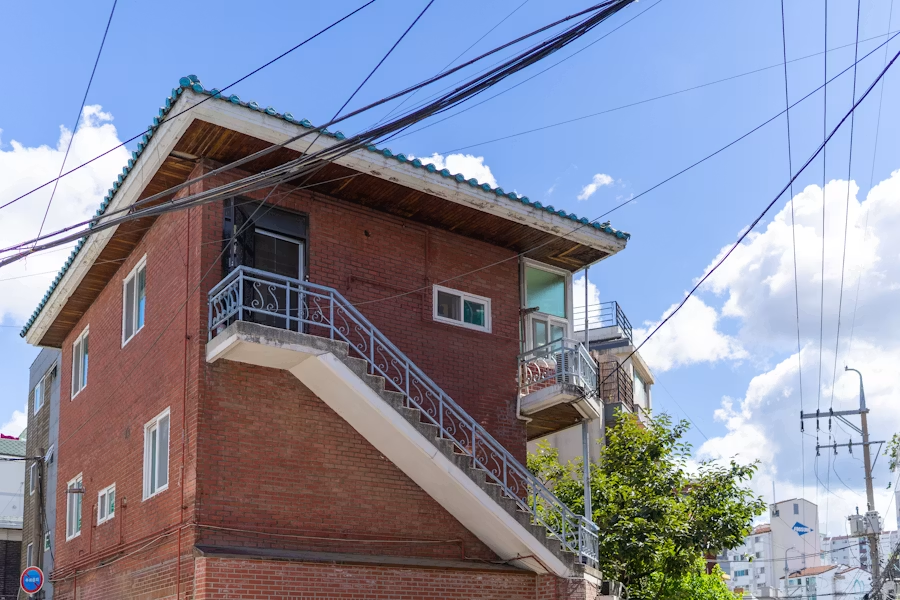
One of the strangest things about Seoul real estate is looking at an apartment building that does not appear particularly luxurious and then seeing how much the homes inside it can cost. From the outside, it is easy to think: what exactly am I looking at that is worth that much money?
The answer is that the apartment itself is only one part of what the market is valuing. Seoul housing prices are tied to geography, commuting, education, neighborhood reputation, redevelopment, apartment-complex culture, future expectations, and the fact that many buyers view property as both a home and a major financial asset.
That does not mean every expensive apartment is fairly priced or that prices can only rise. Housing markets change. The point is simply that understanding Seoul apartment prices requires looking far beyond the number of bedrooms.
1. A Seoul Apartment Is More Than Just a Place to Live
♡ Part of the confusion disappears once you realize that apartments in Korea are treated as homes, major financial assets, and signals of location all at once.
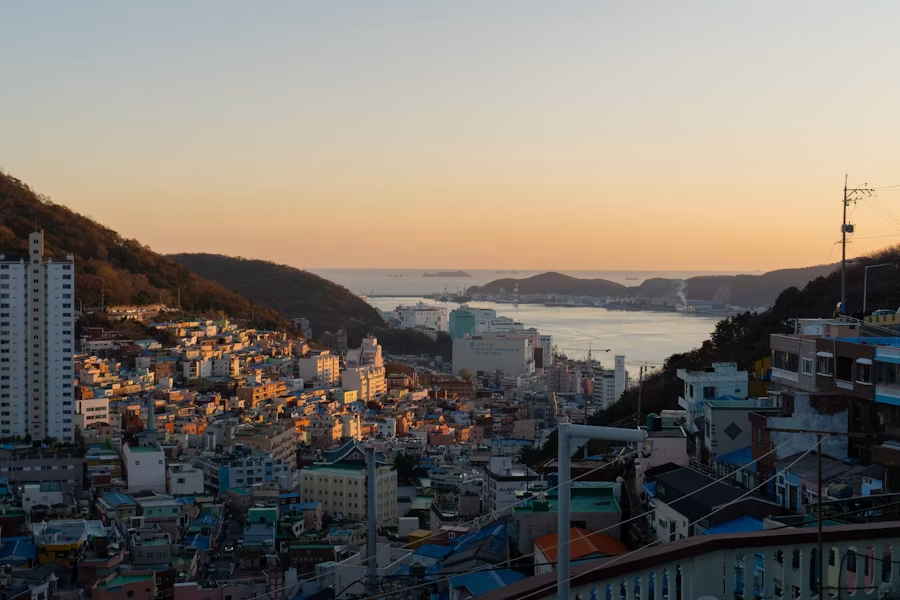
If you look at an ordinary apartment tower in Seoul from the outside, the price can seem almost impossible to understand. Two apartments can have a similar floor plan, similar number of bedrooms, and even a similar-looking concrete exterior, yet one may be valued dramatically differently because of where it is and what that location represents.
That is because the market is not pricing only the physical apartment. A home also comes with a district, subway access, nearby schools, commute times, neighborhood reputation, redevelopment expectations, apartment-complex management, brand name, surrounding businesses, and assumptions about what somebody else may be willing to pay for it in the future.
Housing also has a strong asset function in Korea. For many households, an apartment is not only the place where the family lives. It can represent a huge percentage of family wealth, which means people pay attention to resale value and future market conditions in a way that can feel very different from thinking about a home as pure consumption.
Seoul everyday essentials:
Digital Camera Portable Charger
Some links may be affiliate links. The Seoul Edit Blog may earn a commission at no additional cost to you.
2. Location in Seoul Can Be Worth More Than the Apartment
♡ A similar home in a different part of the city is not really the same product once commuting, schools, businesses, prestige, and daily convenience enter the equation.
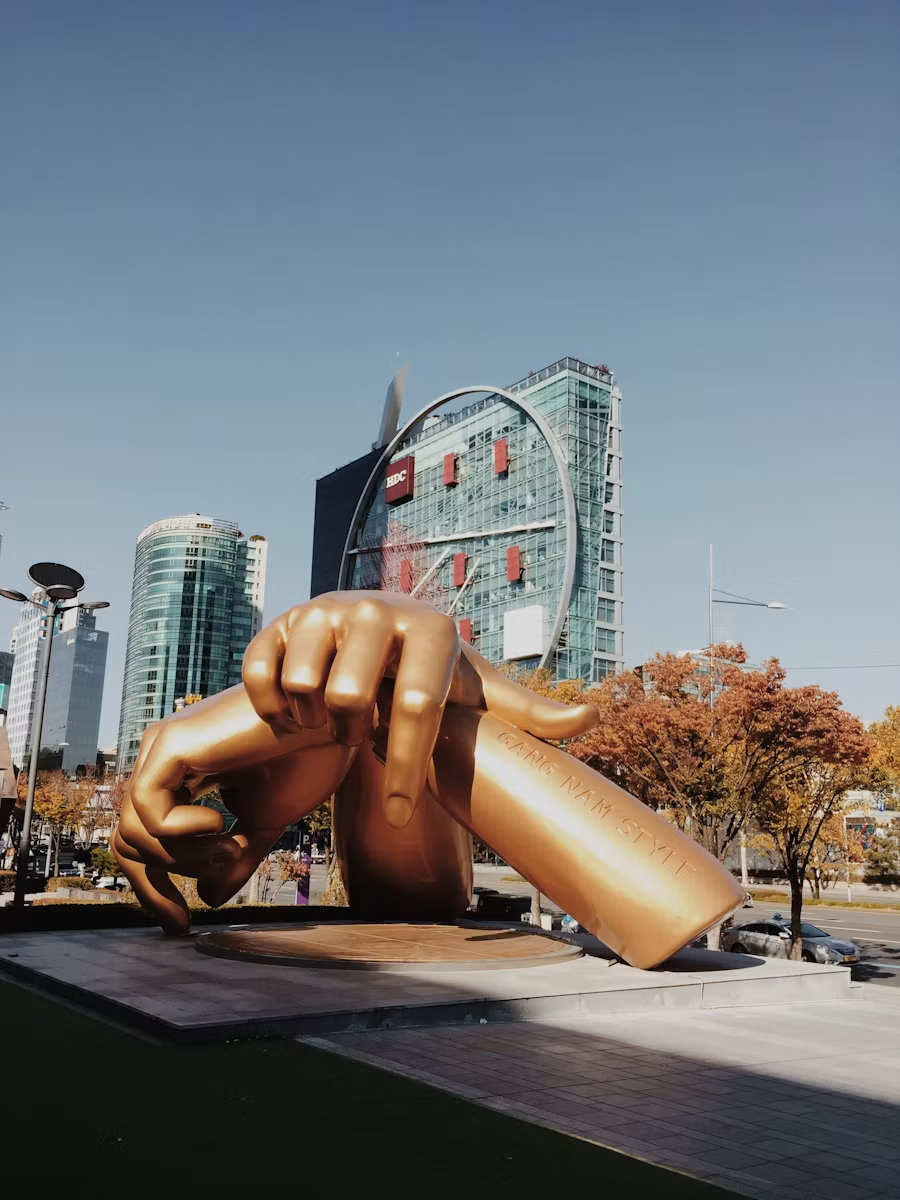
The phrase location, location, location may sound obvious, but in Seoul it explains an enormous amount. Living closer to major employment centers, popular commercial areas, strong transportation connections, schools, parks, and established services can affect daily life for years.
This is why comparing Seoul apartments only by square meters does not make much sense. A slightly smaller apartment in an extremely desirable location can be considered more valuable than a larger home farther away because buyers are purchasing access to the neighborhood as much as floor space.
Certain districts also develop reputations that become self-reinforcing. Once a neighborhood becomes known for expensive housing, strong services, desirable schools, convenient transportation, or high demand, buyers may become even more willing to pay for an address there.
Seoul everyday essentials:
AirPods ROUND LAB Birch Juice Sunscreen
Some links may be affiliate links. The Seoul Edit Blog may earn a commission at no additional cost to you.
3. Subway Access Can Change What a Location Is Worth
♡ In a huge metropolitan area, shaving time off a daily commute can become a major housing feature.
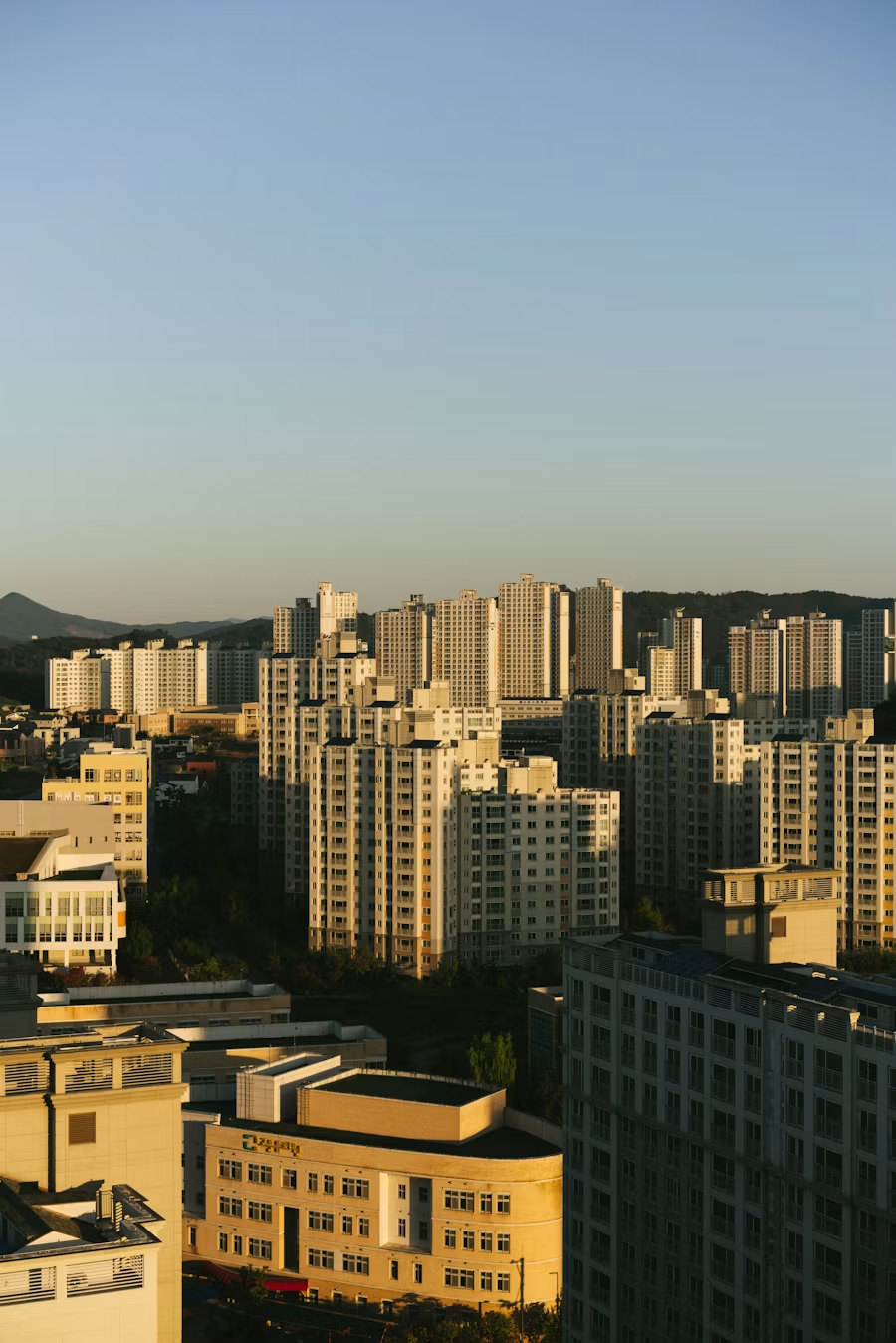
Transportation matters because Seoul is not a small city where everyone lives within a few minutes of work. People move across a massive metropolitan area for jobs, schools, shopping, healthcare, family, and everyday life.
That makes proximity to subway stations, useful lines, transfers, and major business areas much more than a convenience. If one apartment can remove a bus transfer or significantly shorten a commute in each direction, that difference repeats itself hundreds of times every year.
Future transit can matter too. New stations and rail connections are closely watched because improved accessibility can change how a neighborhood fits into the rest of Seoul. Redevelopment plans themselves regularly emphasize access to subway stations, pedestrian connections, and transport networks.
Seoul everyday essentials:
Portable ChargerAirPodsSome links may be affiliate links. The Seoul Edit Blog may earn a commission at no additional cost to you.
4. School Districts Add Another Layer of Demand
♡ For families with children, an address can affect far more than the trip to work.
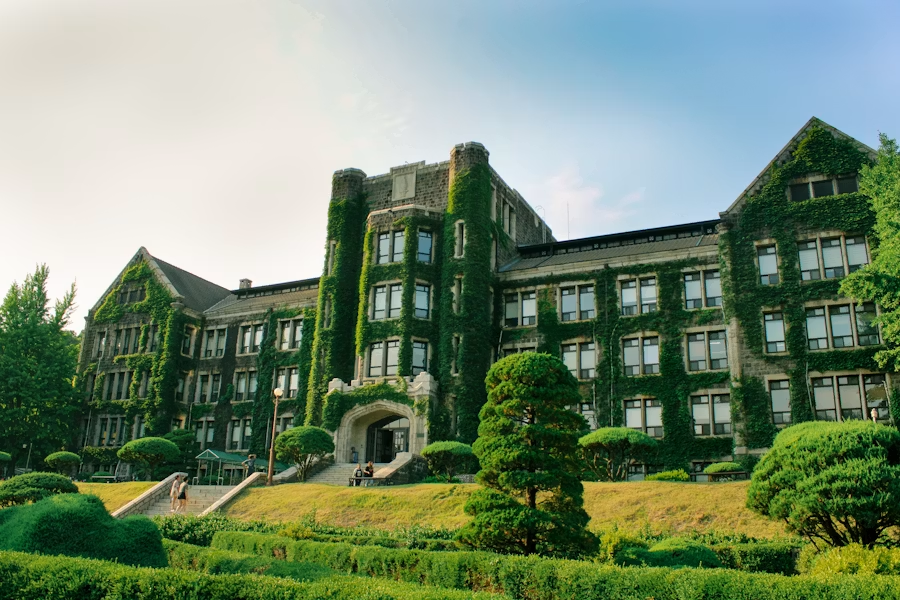
Education has enormous importance for many Korean families, which means residential decisions can become tied to schools and the educational environment around them. An area known for schools, academies, study infrastructure, and other education-focused families can attract demand that has little to do with how beautiful one apartment building looks.
This is one reason housing conversations in Seoul can sound strange if you are used to evaluating property mostly by size, age, and interior condition. A buyer with children may value educational access enough that the location outweighs features somebody without children would prioritize.
School-related demand can also become part of a neighborhood's broader reputation. Once families repeatedly target the same areas, the housing market reflects not only present amenities but the belief that those areas will continue attracting families in the future.
Seoul everyday essentials:
Beauty of Joseon Relief Sun Lip Tint
Some links may be affiliate links. The Seoul Edit Blog may earn a commission at no additional cost to you.
5. Seoul Has a Lot of People Competing for a Limited Amount of Desirable Land
♡ High-rise apartments create more homes vertically, but they cannot create unlimited prime locations.

Seoul is dense. Millions of residents live inside a city where mountains, rivers, roads, commercial districts, public facilities, existing neighborhoods, parks, and other land uses compete for space.
Building upward solves part of the physical problem, which is why apartment towers are such a normal part of Seoul. But a thirty-story apartment building does not create thirty times more Gangnam, thirty times more riverside land, or thirty times more homes within walking distance of one particular subway station.
The scarcity that matters most is often not simply the total number of square meters in Seoul. It is the limited supply of homes in locations that large numbers of people want at the same time.
Seoul everyday essentials:
Digital CameraMini Tripod
Some links may be affiliate links. The Seoul Edit Blog may earn a commission at no additional cost to you.
6. Koreans Often Buy Into an Entire Apartment Complex, Not Just One Unit
♡ Large apartment developments bundle together parking, management, security, landscaping, playgrounds, amenities, reputation, and resale comparability.
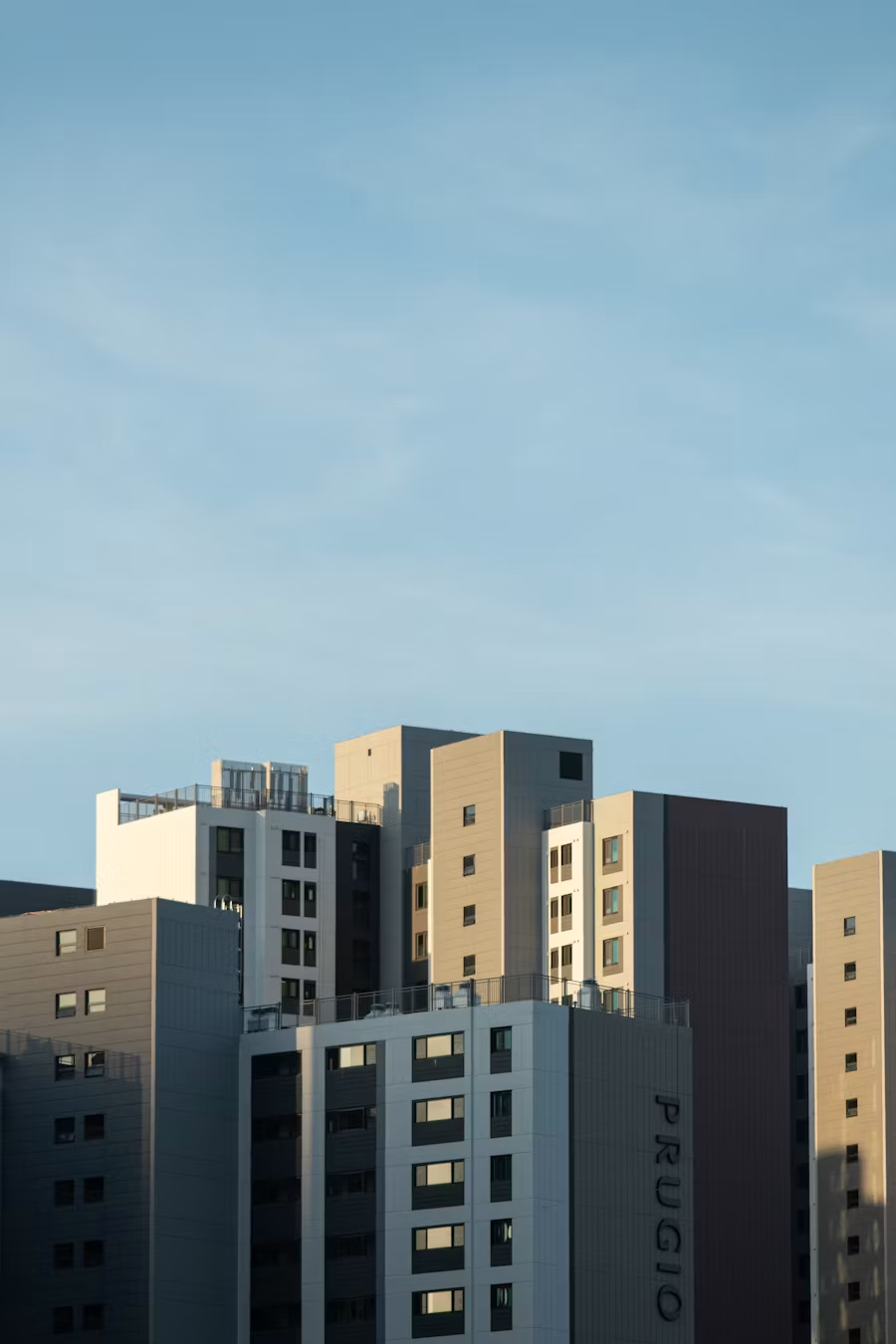
Korean apartment complexes can function almost like small planned neighborhoods. Multiple towers may share entrances, management, underground parking, landscaping, playgrounds, security systems, community spaces, and other facilities.
That structure creates a different buying experience from purchasing one individual home on a random street. Buyers can compare standardized unit sizes, building locations within the complex, floor levels, views, orientation, and recent transactions from similar units.
Large complexes can also become recognizable landmarks within a neighborhood. People may know exactly which complex someone means from the name alone, which gives apartments a level of identity that can seem surprising if you come from a housing market dominated by individually named houses.
Seoul everyday essentials:
Portable ChargerROUND LAB Birch Juice SunscreenSome links may be affiliate links. The Seoul Edit Blog may earn a commission at no additional cost to you.
7. Apartment Brands Matter More Than Many Foreigners Expect
♡ In Korea, the name attached to a large apartment complex can become part of how buyers perceive quality, management, prestige, and resale value.
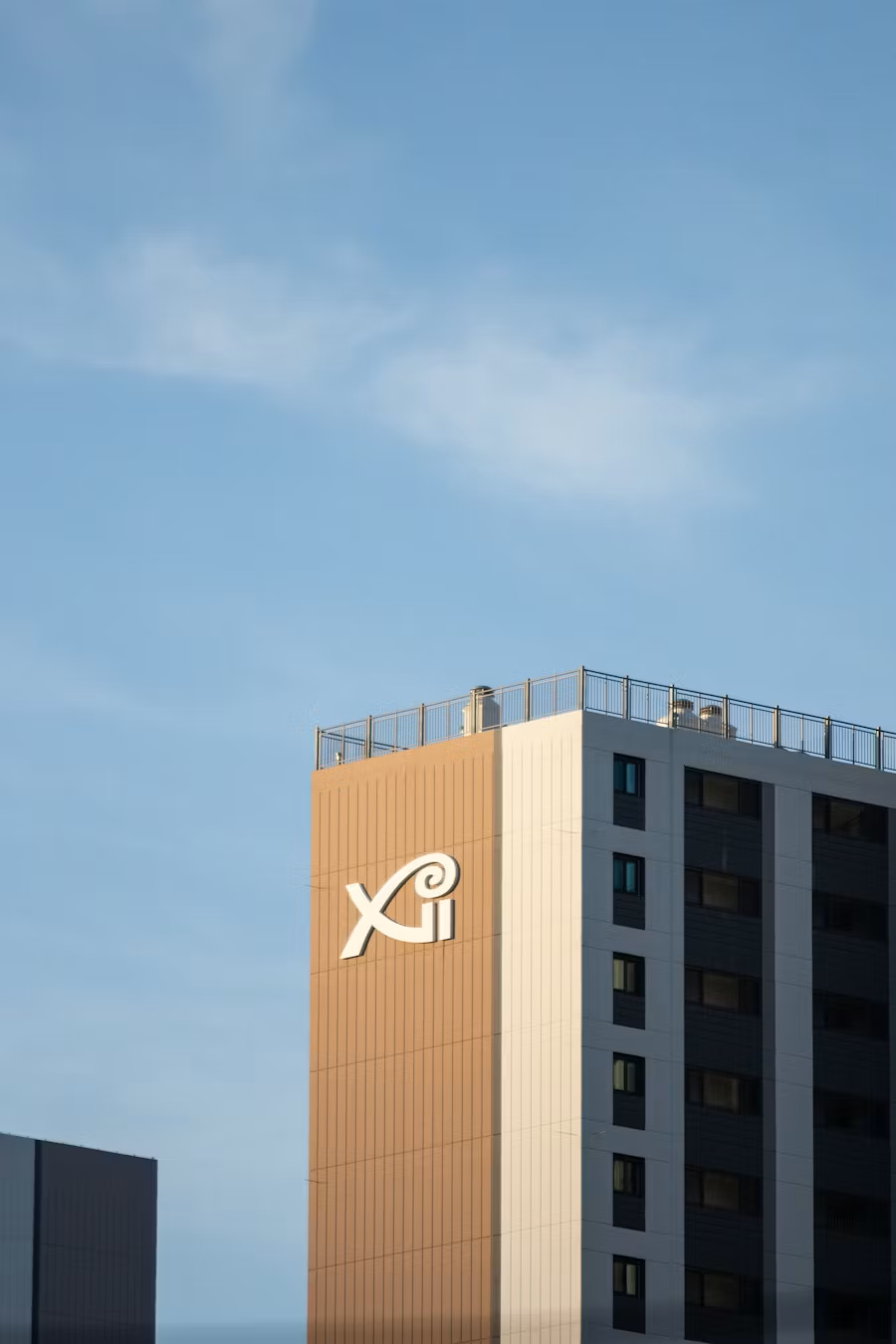
One of the more unusual things for newcomers is seeing how strongly large apartment developments can be associated with brands. Major construction companies use recognizable apartment names, visual identities, landscaping styles, community facilities, and marketing.
The brand does not magically make every apartment worth more, and location is still enormously important. But brand reputation can affect how buyers think about construction quality, maintenance, design, amenities, prestige, and how easy the apartment may be to sell later.
This creates a housing culture where people may casually discuss apartment names almost like consumer brands. The physical home, complex reputation, district, developer, and future resale expectations all become tangled together.
Seoul everyday essentials:
Lip TintBeauty of Joseon Relief SunSome links may be affiliate links. The Seoul Edit Blog may earn a commission at no additional cost to you.
8. Redevelopment Means an Old Apartment Can Still Carry Huge Expectations
♡ Sometimes buyers are not only pricing what a building is today. They are thinking about what the site could become years from now.
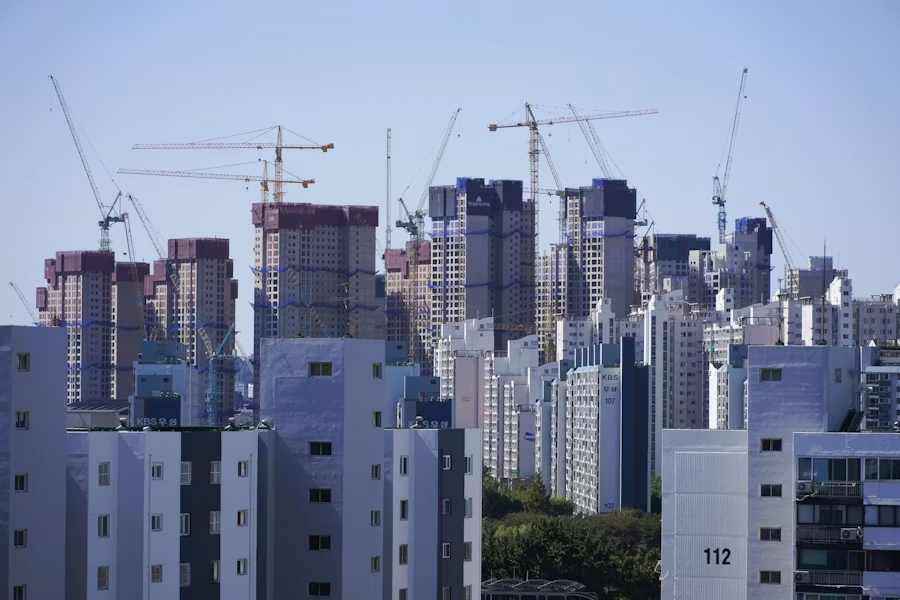
This is where Seoul real estate gets particularly confusing. An old apartment is not automatically cheap just because the building looks dated. If the complex sits on valuable land and has redevelopment or reconstruction potential, buyers may care deeply about what could eventually replace it.
Reconstruction can turn an aging complex into a newer, denser development, although the legal, planning, financial, and resident approval process can take a long time and outcomes are never guaranteed.
Seoul has hundreds of redevelopment, reconstruction, and small-scale renewal areas progressing through different stages. That means future transformation is constantly part of the city's housing conversation, not something that happens only occasionally.
This is also why a foreign visitor can look at an old building and wonder why it costs so much. The market may be pricing the land, location, ownership rights, and expected future project as much as the walls that currently exist.
Seoul everyday essentials:
Digital CameraPortable ChargerSome links may be affiliate links. The Seoul Edit Blog may earn a commission at no additional cost to you.
9. Investment Expectations Can Push Demand Beyond Basic Housing Need
♡ When people believe desirable apartments will become even more expensive, buying decisions can accelerate.

Not every person buying a Seoul apartment is a speculator. People need homes, families move, households upgrade, and residential demand is real. But housing also operates as an investment asset, which means expectations about future prices affect behavior.
Bank of Korea research separating housing-price movements into supply, residential-demand, and speculative-demand shocks found that residential demand contributed the most in its model, while speculative demand still played a meaningful role. That speculative effect was stronger for apartments and in the Seoul metropolitan area than in rural areas.
Expectations can create their own pressure. If buyers become convinced that waiting another year will make a desired home impossible to afford, some may try to buy earlier or borrow more aggressively. That urgency is one reason Korean housing discussions include expressions such as panic buying.
Seoul everyday essentials:
AirPodsMini TripodSome links may be affiliate links. The Seoul Edit Blog may earn a commission at no additional cost to you.
10. The Problem Is Not Just Housing Demand. It Is Demand for the Same Places
♡ Millions of people do not want every Seoul apartment equally, and that concentration is what makes certain markets especially intense.

It is easy to hear that Seoul's population has stopped growing as quickly as before and assume apartment prices should therefore become simple. Housing markets do not work that neatly because people are not distributed evenly across every neighborhood and property type.
Buyers may target the same districts because of jobs, transport, education, family connections, amenities, reputation, redevelopment potential, or expectations about future prices. Demand can therefore remain intense in particular pockets even if broader demographic trends look different.
The Bank of Korea has repeatedly monitored how price growth can begin in core Seoul locations and then spread outward as other areas catch up. That pattern shows why talking about a single "Seoul apartment market" can hide enormous differences inside the city.
Seoul everyday essentials:
ROUND LAB Birch Juice SunscreenBeauty of Joseon Relief SunSome links may be affiliate links. The Seoul Edit Blog may earn a commission at no additional cost to you.
11. Not Every Seoul Apartment Is Expensive for the Same Reason
♡ A high price can come from location, new construction, school demand, redevelopment expectations, views, complex size, or several factors at once.

The most important thing to avoid is treating every expensive Seoul apartment like it belongs to one identical market. A new luxury complex in a prime district, an older redevelopment candidate, a riverside apartment, and a family-oriented complex near popular schools may all be expensive for somewhat different reasons.
Even inside the same complex, floor, direction, view, renovation, building location, noise, and layout can create differences. Then zoom out one level and the subway station, district, schools, nearby parks, commercial areas, and development plans start affecting the picture.
So asking why Seoul apartments cost so much has no single answer. Their prices are the result of many layers of demand being attached to a limited number of desirable homes.
Seoul everyday essentials:
Digital CameraPortable ChargerSome links may be affiliate links. The Seoul Edit Blog may earn a commission at no additional cost to you.
12. So What Are You Actually Paying For?
When somebody buys a Seoul apartment, the price can effectively bundle together much more than the private space inside the unit. You are buying a location, commute, school environment, apartment complex, neighborhood, management system, nearby infrastructure, share of valuable land, and the right to sell that package to somebody else later.
In an older complex, the future may matter almost as much as the present. In a new branded development, buyers may put more weight on facilities and reputation. Near a major subway station, transportation may be the strongest advantage. Near highly desired schools, families can create another layer of competition.
That is why two apartments with the same number of bedrooms can exist in the same city and still belong to very different price worlds.
13. FAQ: Seoul Apartment Prices
Why are apartments in Seoul so expensive?
There is no single reason. Prices can reflect location, subway access, school demand, employment access, limited desirable land, apartment-complex reputation, brand, redevelopment potential, residential demand, and expectations about future prices.
Why are old apartments in Seoul sometimes extremely expensive?
An old building can sit on highly valuable land or have reconstruction potential. Buyers may therefore be valuing the location, land rights, future redevelopment possibilities, and scarcity of comparable sites rather than only the current condition of the building.
Do school districts affect Seoul apartment prices?
School access and the surrounding education environment can be important to families choosing where to live. As a result, education-related demand can become one factor supporting housing demand in particular neighborhoods.
Why does being close to a subway station matter so much?
Commute time repeats every day. A well-connected subway location can reduce travel time to employment centers, schools, shopping, and other parts of Seoul, making those homes attractive to a larger group of buyers.
Why do Korean apartment brands matter?
Large apartment brands can influence perceptions of construction quality, design, management, amenities, prestige, and resale desirability. Brand is only one factor, and location can still matter much more.
Is speculation the main reason Seoul housing is expensive?
No. Bank of Korea research found actual residential-demand shocks contributed more than speculative-demand shocks in its model, although speculative demand still had a substantial effect and was more influential for apartments and in the Seoul metropolitan area.
Can Seoul apartment prices fall?
Yes. Housing prices can move in either direction as interest rates, credit conditions, supply, demand, regulation, expectations, demographics, and the economy change. Expensive property is not guaranteed to rise forever.
14. Sources and Notes
Housing markets change constantly, so this article explains the structural and cultural forces behind Seoul apartment prices rather than claiming one permanent price level.
Seoul's official statistics and housing portals provide current population, housing, redevelopment, and reconstruction data. Bank of Korea research is used here for the discussion of housing expectations, residential demand, and speculative demand.
Seoul Metropolitan Government: Population
Seoul Data: Housing and City Statistics
Seoul Housing: Redevelopment and Reconstruction Status
Seoul: Reconstruction Project Status
Bank of Korea: Housing Demand and Speculative Demand Research
Want More Seoul Housing Guides?
Join the list for Seoul housing, renting, Korean culture, neighborhoods, everyday life, travel, cafés, and local guides.
Planning a trip to Seoul?
15. Final Thoughts
Seoul apartments are expensive partly because people are not simply bidding on rooms inside concrete towers. They are bidding on pieces of Seoul.
A desirable apartment can bundle together access to work, schools, subway lines, parks, shops, an established apartment complex, neighborhood prestige, redevelopment rights, and expectations that another buyer will value those same things in the future.
Add millions of people, limited prime land, deeply established apartment culture, and housing's importance as a household asset, and the prices become easier to understand even when they still feel astonishing.
That does not mean the market can never fall or that every apartment deserves its price. It means that when you look at a Seoul apartment, the thing being priced is much bigger than the home you can see.