
One of the strangest parts of learning Korean is realizing that you can understand every word someone said and still not completely understand the conversation.
A sentence that sounds uncertain in English may actually be a fairly clear opinion. A phrase that sounds like “maybe” may function as a polite refusal. A request can be turned into a question, and sometimes a sentence does not even need to be finished because both people already know what it means.
This is where Korean becomes much more than memorizing vocabulary and grammar.
You start noticing 것 같아요, 혹시, 좀, long polite requests, unfinished refusals, speech levels, hierarchy, and 눈치.
But there is an important warning before going any further: this is not a guide to decoding “what Koreans secretly mean.” Korean people are individuals, communication changes according to the situation, and English speakers use indirect language constantly too.
Instead, this is about understanding why literal translation is sometimes not enough and why context can carry so much information in everyday Korean conversation.
Read: Korean School Culture, Hierarchy, and Social Pressure
Read: Why It Feels Like Everyone in Korea Is Rushing Somewhere
1. In Korean, the Words Can Be Only Part of the Message
♡ Tone, hierarchy, timing, relationship, and context can change how a perfectly ordinary sentence is understood.

If you are learning Korean, there is a strange stage where you can understand every word in a sentence and still feel like you missed what the person actually meant.
Someone says something that translates to “I think it might be a little difficult.” You hear uncertainty. A Korean friend hears a refusal. Someone says “I’ll think about it.” You wait for an answer that may never come. A coworker phrases a simple request as a long, careful question even though everyone in the room understands what needs to happen.
This does not mean Korean people are secretly speaking in code, and it definitely does not mean every Korean person communicates in the same way. English speakers hedge, imply, soften, avoid confrontation, and read body language too.
What makes Korean especially interesting is that social relationships are built unusually deeply into the language itself. Korean politeness involves speech styles, honorifics, forms of address, and choices that depend on who is speaking to whom.
So learning Korean vocabulary is only one layer. You are also learning how much certainty to show, how directly to ask for something, when to soften an opinion, and how the relationship between two people changes the sentence.
Useful picks for living and exploring Korea:
AirPods Portable Charger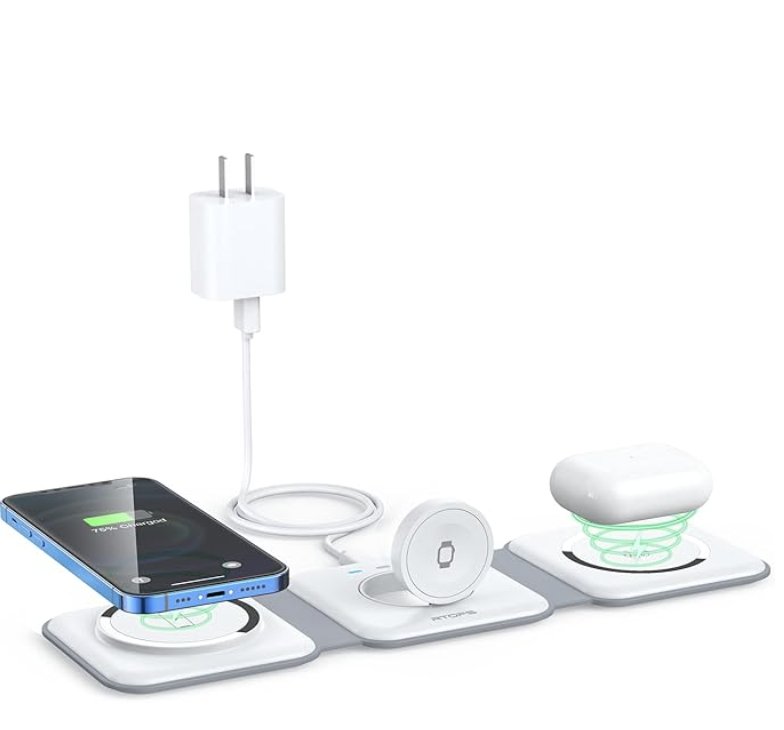
Some links may be affiliate links. The Seoul Edit Blog may earn a commission at no additional cost to you.
2. Why Koreans Say 것 같아요 Even When They Sound Pretty Sure
♡ The expression often translated as “I think” or “it seems” can do more than communicate literal uncertainty.

One of the easiest places to notice Korean indirectness is the extremely common expression 것 같아요. Learners are often taught to translate it as “I think...”, “it seems...”, or “it looks like...”.
That translation is useful, but it can make Korean speakers sound much more uncertain in English than they necessarily sound in Korean.
Imagine somebody asks whether a restaurant was spicy. Instead of simply saying:
매웠어요.
It was spicy.
you might hear:
매웠던 것 같아요.
I think it was spicy / It seems like it was spicy.
Taken literally in English, the second answer can sound strange. You ate the food. Surely you know whether you thought it was spicy.
But conversational expressions do not always map perfectly from one language to another. In many situations, this kind of phrasing can soften a judgment and make it sound less absolute or imposing rather than simply announcing, “I am unsure.”
This was exactly what sparked a discussion among Korean learners online: why add apparent uncertainty even when the speaker seems to know what happened? Several participants pointed out that English does something similar with phrases such as “I think,” “I feel like,” and “it looks like,” especially when people want to soften a correction or opinion.
That comparison is important. The interesting part is not that Korean has hedging and English does not. Both do. The interesting part is learning where Korean speakers naturally soften a statement and why a literal translation can make the degree of uncertainty feel different.
Useful picks for living and exploring Korea:
Digital Camera Lip Tint
Some links may be affiliate links. The Seoul Edit Blog may earn a commission at no additional cost to you.
3. Sometimes “That Might Be Difficult” Means No
♡ A refusal does not always arrive with the word 아니요, especially when a softer answer protects the relationship.

One of the most useful things to learn in Korea is that a clear “no” is not the only way to reject an idea, invitation, request, or proposal.
Imagine asking someone whether they can do something and hearing:
그날은 조금 어려울 것 같아요.
I think that day might be a little difficult.
Grammatically, there is room for uncertainty. Socially, however, the useful interpretation may simply be: “I probably can’t do it.”
Notice how much cushioning is packed into the Korean sentence. There is 조금, “a little,” followed by 어려울 것 같아요, “it seems like it will be difficult.” Nobody has to deliver a hard rejection.
This is not unique to Korea. English speakers say things like “I’m actually pretty busy that night” instead of “No, I don’t want to come.” Indirect refusals are a normal pragmatic strategy across languages.
But if you come from a communication environment where people expect the rejection itself to be explicit, it is easy to hear the Korean sentence as the beginning of a negotiation rather than the answer.
The safest rule is not to translate every hesitant Korean sentence into a definite no. Instead, pay attention to whether the person offers an alternative. “Tuesday is difficult, but what about Wednesday?” is very different from a vague “that might be difficult...” followed by no alternative at all.
Useful picks for living and exploring Korea:
Mini Tripod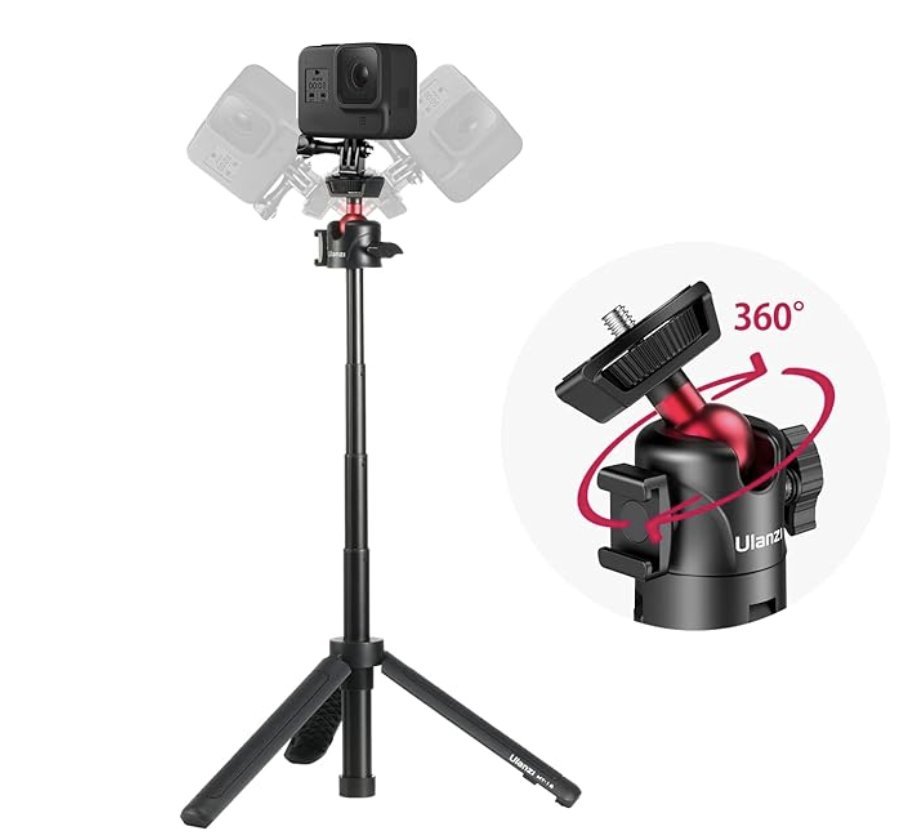 ROUND LAB Birch Juice Sunscreen
Some links may be affiliate links. The Seoul Edit Blog may earn a commission at no additional cost to you.
4. Hierarchy Can Change the Entire Shape of a Sentence
♡ Age, position, familiarity, and social relationship affect much more than whether you attach 요 to the end.
Korean learners quickly discover 존댓말 and 반말, but the social system underneath Korean communication goes much further than “polite Korean versus casual Korean.”
Linguistic descriptions of Korean discuss multiple speech styles and honorific patterns involving the relationship between the speaker, listener, and even the person being talked about. Forms of address can also depend heavily on relationship and status.
That means the exact same intention can be packaged very differently depending on who is speaking.
A request between close friends can be short and direct. The same basic request to a professor, older relative, manager, client, or unfamiliar person may become a question, include words such as 혹시 or 좀, and use grammatical forms that give the listener more room.
One Korean-language discussion online gave an exaggerated but useful illustration: instead of delivering a bare command to somebody of higher status, the speaker may restructure the request into something closer to “Would you perhaps be able to...?”
If you translate only the informational content, both sentences may mean almost the same thing. Socially, they can feel completely different.
This is why technically correct Korean can occasionally sound abrupt. You may have chosen the right vocabulary and verb ending while missing all the small pieces a native speaker would naturally use to manage the relationship.
Useful picks for living and exploring Korea:
Beauty of Joseon Relief Sun Portable Charger
Some links may be affiliate links. The Seoul Edit Blog may earn a commission at no additional cost to you.
5. Nunchi: The Skill of Understanding What Wasn’t Said
♡ 눈치 is one reason Korean communication cannot always be understood by translating the sentence alone.

Then there is 눈치, or nunchi. It is one of those Korean concepts that becomes much easier to understand after spending time around Korean social situations.
Nunchi is essentially the ability to quickly read a situation: noticing the mood, the relationships in the room, what other people need, when to speak, when not to speak, and what somebody may be communicating without stating it directly.
Talk To Me In Korean describes it as understanding what is not being said and paying attention to things such as silence, posture, timing, and who has influence in a group.
Imagine a group dinner. Nobody explicitly tells the youngest person to notice that an older person's glass is empty. Someone with quick nunchi notices anyway.
Or imagine a meeting where you have an idea. The question is not only “Is my idea good?” It can also be “Is this the right moment to say it?”, “What mood is my manager in?”, and “How is everyone else reacting?”
This helps explain why foreigners sometimes describe Korean communication as requiring them to “read the room.” The explicit sentence can be only one source of information.
There is even the expression 눈치가 없다 — to “have no nunchi.” It describes someone who fails to pick up on social cues that other people expect them to notice.
Useful picks for living and exploring Korea:
AirPodsDigital CameraSome links may be affiliate links. The Seoul Edit Blog may earn a commission at no additional cost to you.
6. Silence and Hesitation Can Carry Meaning Too
♡ A pause, delayed answer, awkward laugh, or lack of enthusiasm can communicate almost as much as the actual sentence.

Sometimes the important part of a Korean conversation is not what somebody says. It is how long they take to say it, how enthusiastic they sound, whether they avoid answering directly, and what happens immediately afterward.
Imagine asking someone:
이번 주말에 만날래?
Do you want to meet this weekend?
A very enthusiastic answer might come immediately:
좋아! 언제 만날까?
Yes! When should we meet?
But another person might pause and say:
아... 이번 주말은 좀...
Ah... this weekend is a little...
Grammatically, that sentence is not even finished. But socially, you may already have your answer.
Korean frequently allows meaning to be recovered from context, and people do not always need to finish a thought when everyone involved understands where it is going.
The hesitation itself can make the refusal softer. Instead of forcing one person to say “I don't want to” and the other person to hear a blunt rejection, the meaning is understood without making it unnecessarily uncomfortable.
This is also why translating Korean subtitles literally can sometimes feel strange. A sentence that looks vague on paper may feel completely clear when you can hear the speaker's tone and see the situation.
Useful picks for living and exploring Korea:
Lip TintROUND LAB Birch Juice SunscreenSome links may be affiliate links. The Seoul Edit Blog may earn a commission at no additional cost to you.
7. Korean Workplace Communication Makes This Even More Noticeable
♡ When hierarchy and professional politeness meet, even simple disagreement can become carefully packaged.

The workplace is one of the easiest places to notice the relationship between hierarchy and indirect communication.
Imagine that your manager suggests an idea you think will create a problem. In English, depending on the company, you might comfortably say:
“I don't think that's going to work because we don't have enough time.”
In Korean, especially when speaking upward in a hierarchy, a speaker may be more likely to package that disagreement carefully.
You might hear something closer to:
일정상 조금 어려울 수도 있을 것 같습니다.
Given the schedule, I think it may be a little difficult.
Look at how many layers stand between the speaker and the criticism. Instead of declaring that the plan is bad, the problem is attributed to the schedule. Instead of saying it is difficult, it may be difficult. And instead of presenting the conclusion as absolute, the speaker frames it through 것 같습니다.
The actual message can still be strong. The wording simply gives the other person more room to receive it without making the disagreement feel confrontational.
This does not mean Korean employees never disagree openly or that every Korean office is extremely hierarchical. Company culture, industry, age, personality, and team dynamics make a huge difference.
But if you work in Korea, understanding how criticism and requests can be softened is extremely useful. Sometimes the sentence that sounds like a mild suggestion is the thing your coworker actually wants you to fix.
If you are interested in how hierarchy appears elsewhere in Korean society, I also wrote about it in my guide to Korean school culture, hierarchy, and social pressure.
Useful picks for living and exploring Korea:
Portable ChargerAirPodsSome links may be affiliate links. The Seoul Edit Blog may earn a commission at no additional cost to you.
8. Even Korean Texting Can Be Softer Than the Literal Meaning
♡ ㅋㅋ, ㅎㅎ, maybe, perhaps, emojis, and unfinished sentences can all change how a message feels.
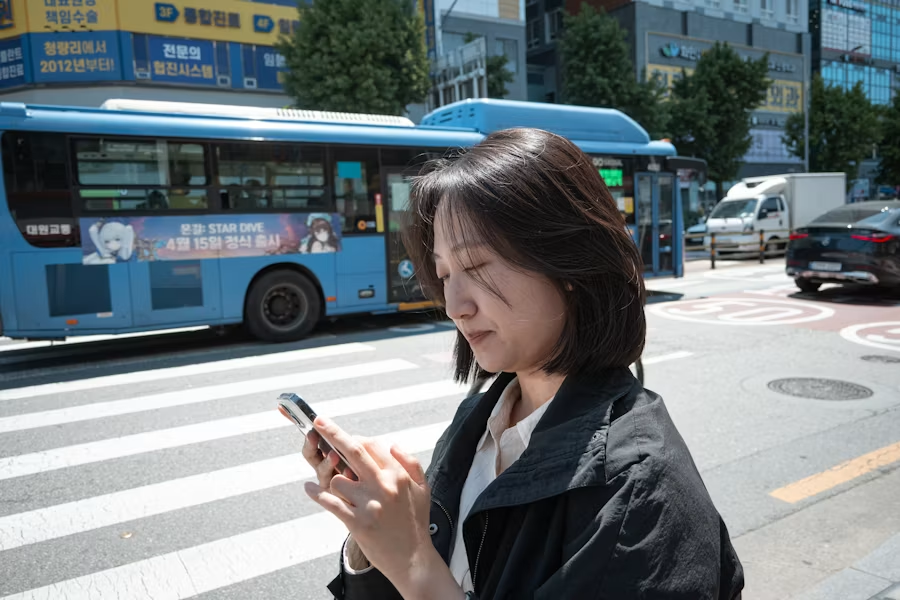
Indirectness does not disappear when the conversation moves to a phone. Korean texting has its own ways of adjusting tone.
Tiny things such as ㅋㅋ, ㅎㅎ, punctuation, emojis, sentence endings, and whether somebody uses 존댓말 or 반말 can make a message feel warmer, colder, more playful, or more serious.
Compare:
안 돼.
No / You can't.
with something like:
아 그건 좀 어려울 것 같아 ㅠㅠ
Ah, I think that might be a little difficult ㅠㅠ
The practical outcome might be identical, but the second message cushions the refusal and makes it easier to receive.
Another interesting phrase is:
한번 생각해 볼게.
I'll think about it.
Sometimes it genuinely means exactly that. The person needs time to think.
In another situation, however, it can function more like a noncommittal response. The meaning depends on your relationship, the topic, what came before it, and whether the person follows up later.
This is why trying to create a dictionary where every Korean phrase has one secret English translation does not work. Context still matters.
| Korean | Literal English | What It May Communicate |
|---|---|---|
| 그런 것 같아요. | I think it is like that. | Yes, that is probably how I see it, expressed more softly. |
| 조금 어려울 것 같아요. | I think it might be a little difficult. | This may be a polite or softened no, depending on the situation. |
| 한번 생각해 볼게요. | I’ll think about it. | Sometimes genuinely 'I’ll think about it'; sometimes reluctance. Context matters. |
| 괜찮은 것 같아요. | I think it seems okay. | It seems fine / I think it is okay, with the statement softened. |
Think of these as examples rather than fixed translations. Tone and circumstances can completely change how each expression should be interpreted.
Useful picks for living and exploring Korea:
Digital CameraMini TripodSome links may be affiliate links. The Seoul Edit Blog may earn a commission at no additional cost to you.
9. Are Younger Koreans Becoming More Direct?
♡ Yes in some situations, but Korean communication is not simply moving from indirect to direct.

It would be misleading to describe Korea as one giant culture where everyone carefully avoids saying what they think.
Talk to close Korean friends and you may hear some of the bluntest, funniest, most brutally direct comments imaginable.
Friends might openly comment on someone's haircut, weight change, dating situation, clothes, food preferences, or behavior in ways that would sound surprisingly direct in another culture.
Younger Koreans also communicate across social media, group chats, workplaces, international environments, and online communities where conversational styles constantly evolve.
The more useful distinction is therefore not:
Korea = indirect
Western countries = direct
Real communication is much messier than that.
A Korean person might be extremely direct with a younger sibling, completely casual with a childhood friend, more restrained with a coworker, and highly careful with a senior executive — all on the same day.
English-speaking cultures also vary enormously. Someone from London, New York, Toronto, Sydney, Texas, or Singapore may have very different ideas about what counts as normal directness.
In fact, one of the most interesting observations in the online Korean-language discussion I read was that English speakers in the comments were constantly using hedges themselves: “I think,” “it seems,” “I feel like,” and similar phrases.
So the goal is not to stereotype Koreans as mysterious or indirect. It is to notice that different languages and social environments put softness and explicitness in different places.
Korean society itself is changing too. The way a twenty-something talks to friends today is not identical to the way their grandparents communicated, just as workplace culture and expectations around hierarchy continue to change.
Useful picks for living and exploring Korea:
Beauty of Joseon Relief SunLip TintSome links may be affiliate links. The Seoul Edit Blog may earn a commission at no additional cost to you.
10. How to Understand What Someone Actually Means
♡ You do not need psychic powers. Listen for context, alternatives, tone, relationship, and what happens after the sentence.

If you are learning Korean or spending time in Korea, none of this means you need to analyze every sentence like a detective.
A few habits make Korean conversations much easier to understand.
Look for an alternative
If someone says a day is difficult and immediately suggests another day, they probably really do want to meet.
If they repeatedly say something might be difficult without proposing another option, the practical answer may be no.
Pay attention to enthusiasm
The words “I'll think about it” can be identical in two conversations while the tone makes one sound genuinely interested and the other sound like an attempt to end the subject.
Notice the relationship
Ask yourself who is speaking to whom. A junior employee talking to a boss may use far more cushioning than that same person talking to their best friend.
Do not translate every hedge literally
Hearing 것 같아요 does not automatically mean the person has no confidence in what they are saying.
Do not assume every vague answer is secretly negative
This is equally important. Sometimes “I'll think about it” genuinely means “I'll think about it.”
Watch what happens next
Actions often clarify ambiguous words. Someone who seems vague but messages you later with details was probably sincere. Someone who keeps avoiding the subject is giving you different information.
And finally, when something actually matters, ask.
Cultural awareness should make communication easier, not make you paranoid that every normal sentence contains a hidden message.
You can politely clarify:
그럼 어려운 거죠?
So that means it will be difficult, right?
or:
다른 날은 괜찮아요?
Would another day work?
Context matters, but clear communication still has a place.
Useful picks for living and exploring Korea:
Portable ChargerROUND LAB Birch Juice SunscreenSome links may be affiliate links. The Seoul Edit Blog may earn a commission at no additional cost to you.
11. FAQ: Korean Indirect Communication
Are Korean people really more indirect when they speak?
Korean communication can involve more linguistic softening in some situations, especially where hierarchy, politeness, disagreement, requests, or refusals are involved. However, communication style varies enormously by age, personality, relationship, region, workplace, and context, so it is better to understand specific patterns than to describe every Korean person as indirect.
What does 것 같아요 mean?
것 같아요 is commonly translated as 'I think,' 'it seems,' or 'it looks like.' Depending on context, it can express actual uncertainty, an impression, or simply soften a statement so it sounds less absolute.
Why do Koreans say something is difficult instead of saying no?
Expressions such as 조금 어려울 것 같아요 can soften a refusal and reduce confrontation. But they do not always mean a definite no. The surrounding context, whether an alternative is offered, and the relationship between the speakers all matter.
What is nunchi?
Nunchi, written 눈치, refers to noticing and interpreting social context such as mood, timing, relationships, body language, and other people's reactions. Someone with good nunchi is often described as being quick at reading a room.
What does 눈치가 없다 mean?
눈치가 없다 literally means someone 'doesn't have nunchi.' It is used for a person who fails to notice social cues or does not read the situation in the way others expect.
Do Koreans avoid saying no?
Not universally. Koreans say no directly in many situations, particularly among people who are close. Softer or indirect refusals become more relevant when politeness, hierarchy, embarrassment, or maintaining the relationship matters.
Is Korean indirectness caused by Confucianism?
Confucian social traditions influenced ideas about hierarchy and relationships in Korea, but modern communication cannot be explained by one historical cause. Language structure, politeness conventions, workplace norms, family relationships, generation, personality, and contemporary social change all matter.
Are young Koreans more direct?
Communication styles are changing, and younger Koreans may use more casual or direct language in some contexts. However, hierarchy, honorifics, softening, and contextual communication remain important, particularly when speaking to older people, strangers, clients, teachers, or superiors.
12. Sources and Further Reading
This article combines general linguistic research on Korean politeness and language use with examples from Korean-learning discussions and everyday communication patterns.
The examples are meant to explain tendencies and pragmatic possibilities rather than give fixed translations for every Korean sentence.
Cambridge Handbook of Korean Linguistics — Politeness Strategies in Korean
Cambridge — Korean Language and Society
Talk To Me In Korean — Understanding Nunchi
National Institute of Korean Language
I also reviewed discussions among Korean learners and speakers about the frequent use of expressions such as 것 같아요. Those discussions are useful as anecdotal examples of how learners perceive Korean hedging, but they should not be treated as academic evidence or as proof that every Korean speaker communicates the same way.
Want More Korean Culture Guides?
Join the list for Seoul guides, Korean culture, cafés, food, beauty, travel tips, and the everyday things about Korea that become interesting once you actually live here.
Planning a trip to Seoul?
13. Final Thoughts
Korean people do say what they mean. The interesting part is that the meaning is not always stored entirely inside the literal sentence.
Relationship, hierarchy, timing, tone, hesitation, speech level, body language, and the other person's reaction can all add information.
That is why a phrase like 조금 어려울 것 같아요 can feel vague when translated word for word but completely understandable in the original conversation.
It is also why 것 같아요 should not automatically make you imagine a speaker nervously doubting everything they say. Sometimes the expression is doing social work as much as informational work.
And then there is nunchi: noticing everything happening around the sentence.
Once you start recognizing these patterns, Korean conversations become much easier to follow. You stop asking only “What do these words translate to?” and start asking “Why did this person choose to say it this way?”
That is usually where the interesting part of the meaning is.