
Korea’s marriage decline is often explained in a very simple way: people are not dating, people are too picky, or young people do not want responsibility anymore.
But that explanation is too shallow.
When you look closer, marriage in Korea has become connected to a long list of pressures: apartment prices, family expectations, career survival, private education, household labor, gender roles, long working hours, and the fear of losing your own life after marriage.
This guide breaks down why many Koreans are delaying marriage, avoiding marriage, or choosing a different life path entirely.
1. Why Marriage In Korea Feels Different Now
♡ This is not just about people being picky. It is about how expensive, exhausting, and complicated adult life has become.

When people talk about Korea’s low birth rate, they usually talk about babies first. But honestly, the deeper story begins much earlier than pregnancy. It starts with dating, housing, work, money, social pressure, and whether young people feel like marriage would actually improve their lives.
A lot of Koreans are not rejecting love. They are rejecting the version of adulthood that marriage seems to come with. For many people, marriage no longer feels like a natural next step. It feels like a huge financial, emotional, and social project.
In the past, marriage was treated almost like a required life stage: study, get a job, marry, buy a home, have children. But that path has become harder to follow. Housing is expensive, stable jobs are competitive, work hours are draining, and raising a child can feel like entering a lifelong competition.
This is why the question “why aren’t Koreans getting married anymore?” cannot be answered with one simple reason. It is not only feminism. It is not only men. It is not only women. It is not only money. It is a whole system of pressure that makes marriage feel risky instead of comforting.
The BBC reported that South Korea’s fertility rate fell to 0.72 in 2023, the lowest in the world. But behind that number are real people making very personal decisions about what kind of life feels possible. You can read the BBC’s reporting here.
If you are trying to understand modern Korea, this topic matters because it touches almost everything: dating culture, apartments, jobs, education, gender roles, loneliness, beauty standards, family pressure, and the future of Seoul itself.
Thoughtful life reset picks:
Journal ANUA PDRN Hydrating Mist
Some links may be affiliate links. The Seoul Edit may earn a commission at no additional cost to you.
2. Money And Housing Made Marriage Feel Unreachable
♡ For many couples, love is not the hard part. The apartment is.

One of the biggest reasons marriage feels so difficult in Korea is the cost of starting a life together. Dating can be romantic, but marriage quickly becomes practical. Where will you live? Who pays the deposit? Can you afford rent? Can you buy an apartment? What will both families expect?
In Korea, housing is not just a background detail. It is often treated as proof that a couple is ready for marriage. This creates pressure, especially on men, who may feel expected to provide a home or at least a large jeonse deposit before marriage is considered realistic.
For young people in Seoul, this can feel impossible. Many jobs do not pay enough to make home ownership realistic, while rent and deposits take up a huge part of income. Even couples who love each other can delay marriage for years because they cannot afford the version of marriage their families or society expect.
Marriage becomes less about “do we love each other?” and more about “can we survive the financial pressure?”
This is one reason more young Koreans are choosing to live alone, postpone marriage, or stay in relationships without rushing into a wedding. It is not always because they do not want commitment. Sometimes they simply do not want to turn love into debt.
If you are new to Seoul and want to understand why location and housing matter so much here, my where to stay in Seoul guide gives a softer travel version of the same reality: Seoul is amazing, but where you live completely changes your daily life.
Thoughtful life reset picks:
Portable Charger Kindle Paperwhite
Some links may be affiliate links. The Seoul Edit may earn a commission at no additional cost to you.
3. Work Culture Leaves Little Space For Family Life
♡ When everyone is tired, love starts to feel like another responsibility.
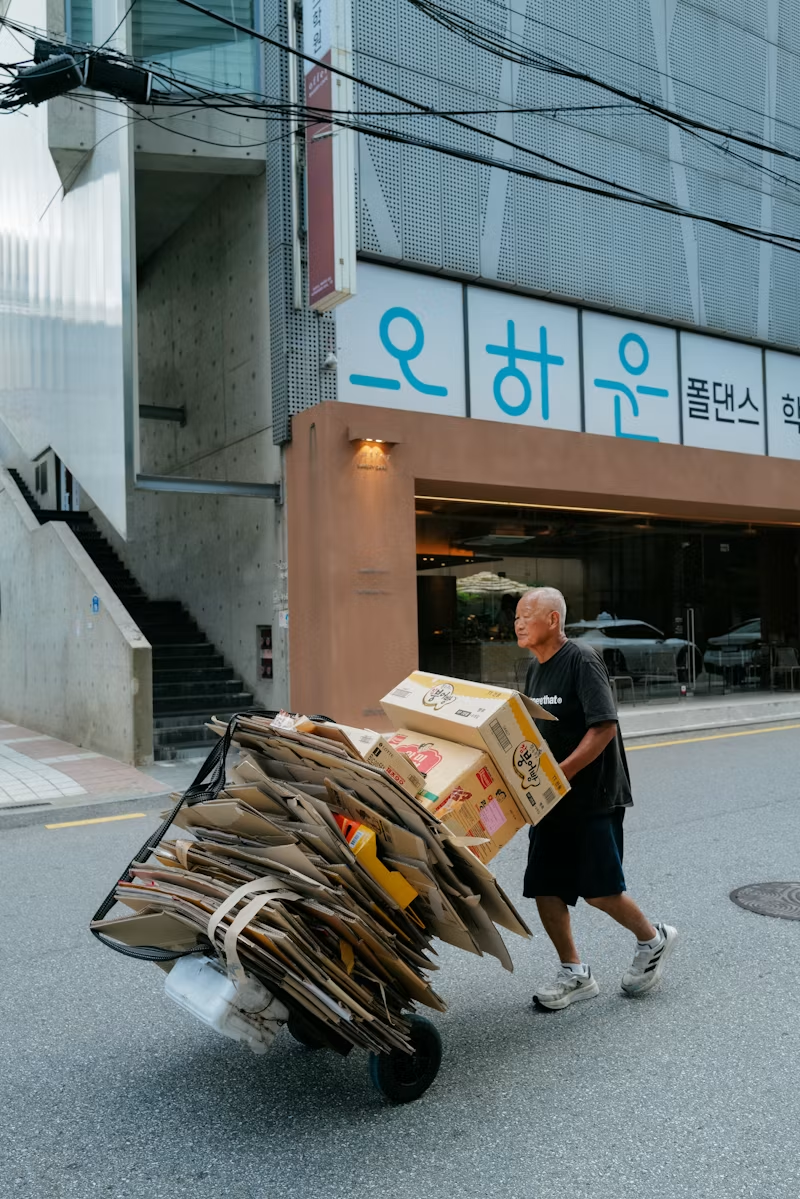
Another major reason marriage is changing in Korea is work culture. Even when official work hours look normal on paper, many people still deal with overtime, long commutes, after-work obligations, weekend studying, career pressure, and the constant feeling that they are falling behind.
The problem is not only the number of hours. It is the emotional energy that work takes. A person can finish work at 7 or 8 p.m., commute home, eat dinner, clean, shower, and suddenly the day is over. Dating becomes tiring. Marriage becomes scary. Parenting can feel impossible.
In the BBC article, one Korean woman described feeling stuck in a “perpetual cycle of work.” That phrase explains so much. If life already feels like work, adding marriage, in-laws, household labor, and childcare may not feel like happiness. It may feel like a second shift.
This is especially important because marriage does not happen in a fantasy version of life. It happens after work, after commuting, after bills, after exhaustion.
For men, the pressure can also be intense. Many men feel they must earn enough to be considered marriage material, provide stability, and still participate emotionally at home. For women, marriage can feel like risking career progress and personal freedom.
This is why more people are choosing smaller forms of comfort instead: solo living, hobbies, running crews, café time, weekend trips, or wellness routines. I wrote about one version of this shift in my Seoul running boom guide, because fitness communities are becoming a new way Koreans build connection without traditional pressure.
Thoughtful life reset picks:
AirPods Purito Seoul Sunscreen
Some links may be affiliate links. The Seoul Edit may earn a commission at no additional cost to you.
4. Marriage Expectations Have Changed Faster Than Marriage Itself
♡ Women gained more opportunities, but many marriage expectations never fully caught up.
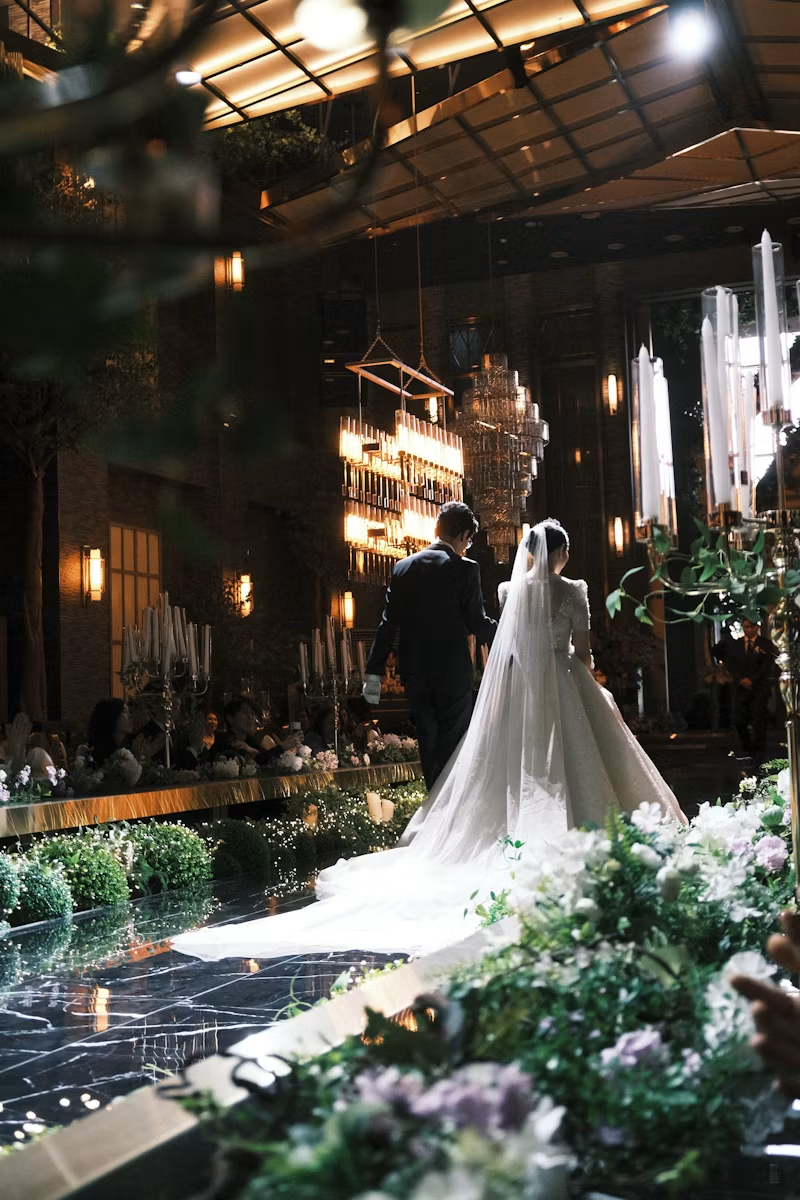
One of the most discussed parts of Korea's marriage crisis is the gap between modern lifestyles and traditional expectations.
Korean women are among the most highly educated in the world. More women attend university, build careers, travel internationally, and develop independent lives than ever before.
At the same time, many women still worry that marriage will increase their workload rather than improve their quality of life. Surveys and interviews repeatedly show concerns about childcare, household labor, career interruptions, and unequal responsibilities.
Many men also feel trapped by expectations. Some believe they are still expected to earn significantly more, provide housing, maintain financial stability, and carry most of the economic burden.
The result is that both sides often feel overwhelmed before marriage even begins.
Instead of seeing marriage as a partnership, many young people see it as an enormous package of expectations.
This does not mean Korean men and women dislike each other. It means many people feel the system surrounding marriage has become difficult to navigate.
The conversation has become less about romance and more about fairness, lifestyle compatibility, emotional labor, finances, and long-term sustainability.
Thoughtful life reset picks:
JournalANUA PDRN Hydrating MistSome links may be affiliate links. The Seoul Edit may earn a commission at no additional cost to you.
5. The Cost Of Raising Children Scares Many Couples
♡ For many Koreans, having children feels less expensive than raising them.
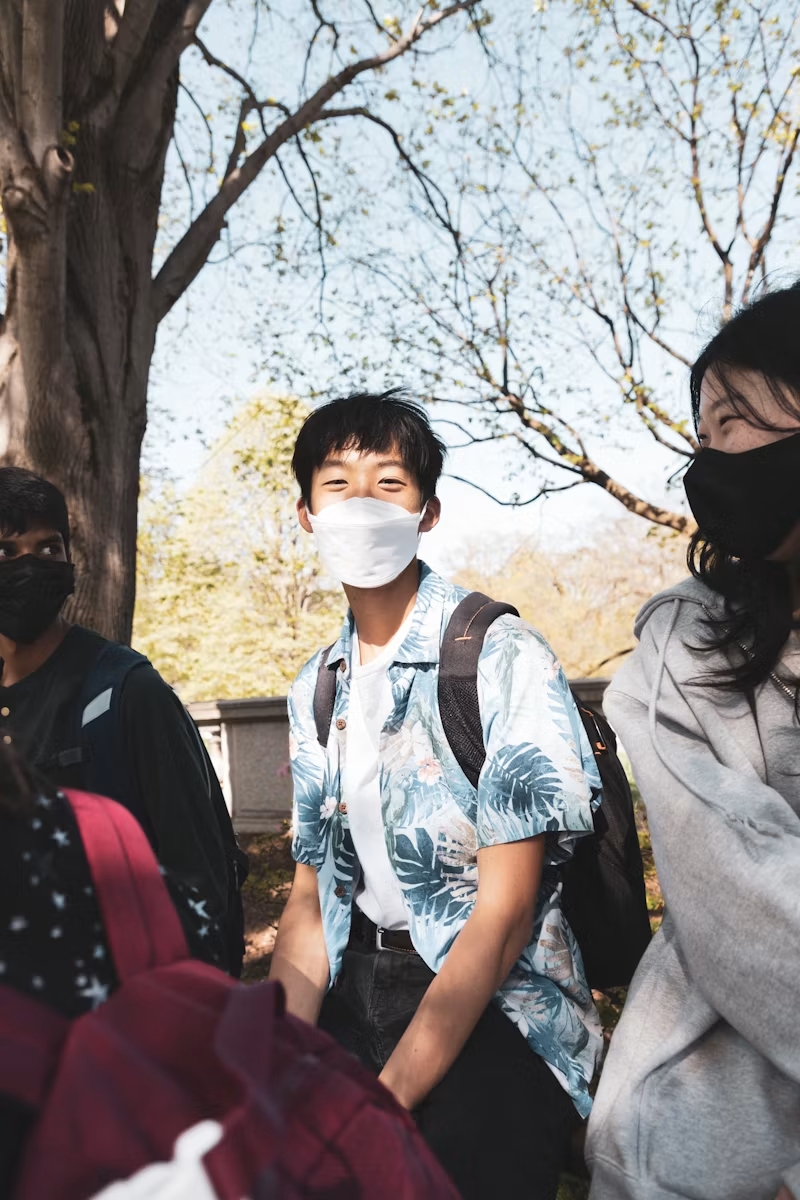
Even couples who want children often hesitate because of what comes after birth.
Korea's education system is highly competitive. Many families spend large amounts of money on private academies, tutoring, English classes, extracurricular activities, and exam preparation.
Parents frequently worry that if they do not invest heavily in their child's education, their child could fall behind.
This creates a psychological burden that goes beyond simple financial costs.
Some adults who grew up under intense academic pressure openly say they do not want their future children to experience the same stress.
They remember spending evenings in hagwons, studying late into the night, preparing for exams, and competing constantly for opportunities.
In many countries people ask, "Can we afford a baby?" In Korea, people often ask, "Can we afford eighteen years of pressure?"
This is one reason the birth-rate discussion cannot be separated from education. For many couples, the decision not to have children is also a decision not to participate in a system they found exhausting.
Thoughtful life reset picks:
Kindle PaperwhitePortable ChargerSome links may be affiliate links. The Seoul Edit may earn a commission at no additional cost to you.
6. Being Single Is No Longer Considered A Failure
♡ Perhaps the biggest change is that many Koreans now have real alternatives.

A generation ago, staying single was often viewed as unusual. Marriage was assumed to be the default path.
Today, many Koreans are discovering that single life can be enjoyable, fulfilling, and stable.
Living alone has become increasingly common. Solo travel, solo dining, solo hobbies, and independent lifestyles are more socially accepted than ever before.
People can build meaningful lives through friendships, careers, communities, fitness groups, creative projects, travel, and personal interests.
This does not mean they are anti-marriage. Many are simply no longer willing to marry because society expects them to.
Marriage is becoming something people choose rather than something people automatically do.
That shift may be one of the most important cultural changes happening in Korea today.
For many young adults, the question is no longer "When will I get married?" but "Will marriage actually improve my life?"
Thoughtful life reset picks:
AirPodsPurito Seoul SunscreenSome links may be affiliate links. The Seoul Edit may earn a commission at no additional cost to you.
7. Dating Has Become More Complicated Than Ever
♡ Technology created more options, but not necessarily more relationships.
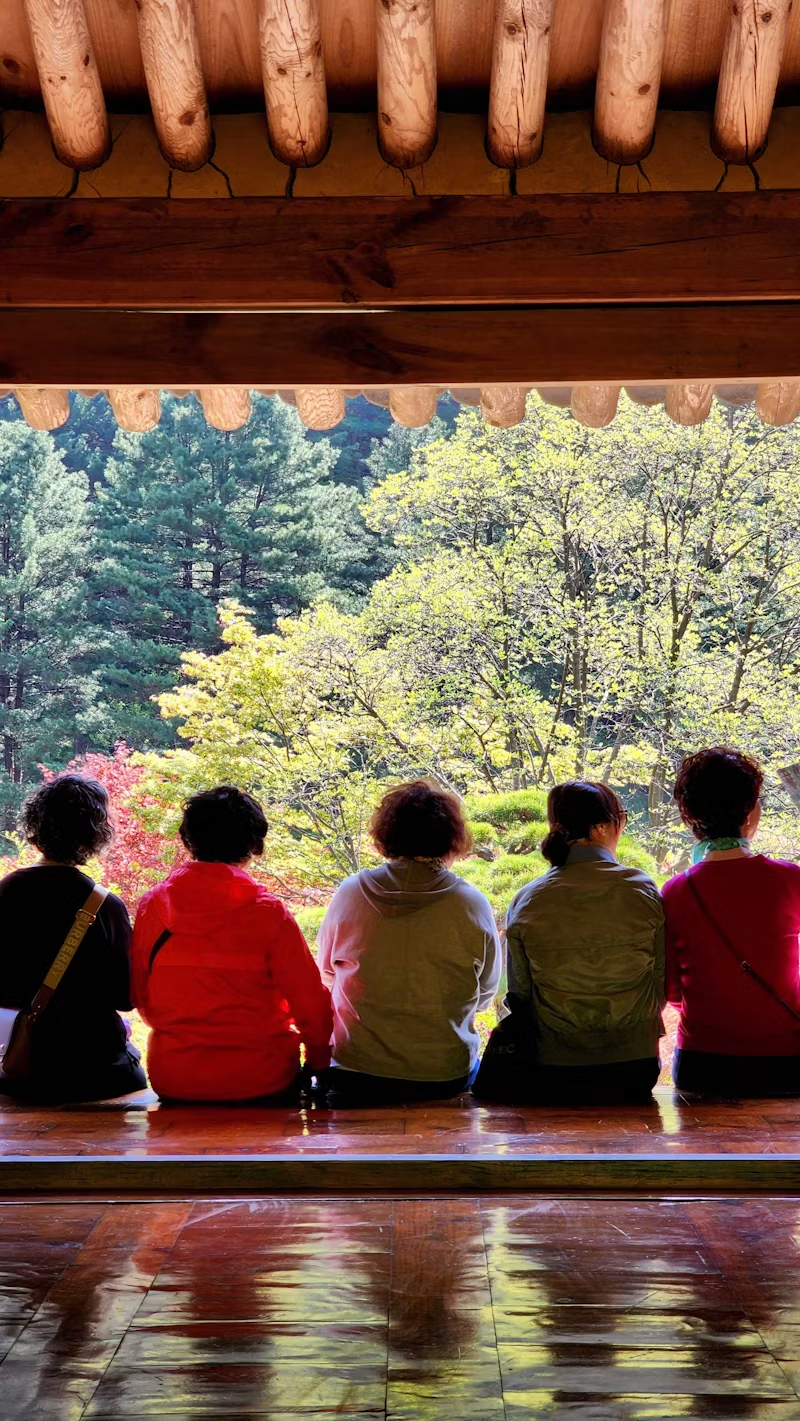
While marriage rates are falling, dating itself has also become more complicated.
Modern Koreans have access to dating apps, social media, international travel, and more lifestyle choices than any previous generation. Yet many people report feeling lonelier than ever.
Dating expectations have grown dramatically. People are no longer evaluating only personality and compatibility. Career success, appearance, education, financial stability, housing, future plans, lifestyle preferences, and family expectations all play a role.
Social media has also changed how relationships are perceived. Instead of comparing themselves to neighbors, people compare themselves to influencers, celebrities, and carefully curated online lifestyles.
The result is that finding a partner can sometimes feel more like a high-pressure evaluation process than a natural relationship.
When expectations rise faster than opportunities, more people decide staying single is less stressful.
This does not mean romance is disappearing. Cafés are full of couples, dating apps remain popular, and many people still want relationships. But the path from dating to marriage has become much longer and more uncertain.
Thoughtful life reset picks:
AirPodsPortable ChargerSome links may be affiliate links. The Seoul Edit may earn a commission at no additional cost to you.
8. What Most Foreigners Get Wrong About Korea's Birth Rate
♡ The story is much bigger than people simply 'not wanting children.'

International headlines often reduce Korea's birth rate crisis to a single statistic.
But after speaking with Koreans, reading interviews, following local discussions, and living in Korea, it becomes clear that the reality is much more complicated.
Most people are not rejecting love. Most people are not rejecting family. Many are rejecting the conditions surrounding family life.
Housing costs, education pressure, career concerns, childcare burdens, work culture, social expectations, and economic uncertainty all influence these decisions simultaneously.
Some people still want children but cannot afford them. Others want children but cannot find the right partner. Some feel trapped by work. Others feel trapped by traditional expectations.
There is no single villain and no simple solution.
Korea's birth rate is not one problem. It is the result of many interconnected problems colliding at the same time.
That is why government cash incentives alone have struggled to reverse the trend. The underlying concerns are often cultural and structural, not just financial.
Thoughtful life reset picks:
Kindle PaperwhiteJournalSome links may be affiliate links. The Seoul Edit may earn a commission at no additional cost to you.
9. What Happens If This Trend Continues?
♡ The future of Korea may look very different from the Korea people know today.

If birth rates remain extremely low, South Korea will face significant demographic challenges over the coming decades.
The working-age population will shrink. The number of elderly citizens will continue growing. Schools may close due to declining enrollment, and some rural communities could struggle to maintain their population.
Policymakers are already discussing potential solutions including housing reforms, expanded childcare support, parental leave improvements, workplace reforms, and immigration policies.
Some experts believe technology and automation will help offset labor shortages. Others argue that deeper cultural and workplace reforms are necessary.
What happens next will likely shape Korea's economy, politics, education system, and social structure for generations.
Yet despite the dramatic headlines, many young Koreans remain optimistic about their personal futures. They are simply redefining success differently than previous generations.
For many people today, a successful life is no longer measured by whether you get married. It is measured by whether you are happy, healthy, financially stable, and able to live on your own terms.
Thoughtful life reset picks:
Purito Seoul SunscreenANUA PDRN Hydrating MistSome links may be affiliate links. The Seoul Edit may earn a commission at no additional cost to you.
10. FAQ: Why Koreans Aren’t Getting Married Anymore
Why are Koreans getting married later?
Many Koreans are delaying marriage because of housing costs, career pressure, long work hours, dating expectations, and the high cost of raising children.
Why is Korea's birth rate so low?
Korea's low birth rate is connected to marriage decline, expensive housing, private education costs, work culture, gender expectations, childcare pressure, and changing life goals.
Do Koreans still want to get married?
Yes, many still do, but more people are questioning whether marriage fits their financial reality, career goals, lifestyle, and emotional needs.
Is the problem only about money?
No. Money matters, but the issue also includes work-life balance, gender roles, childcare responsibility, dating culture, social pressure, and personal freedom.
Why do Korean women not want children?
Some Korean women want children, but feel the current system makes motherhood too costly socially, financially, and professionally.
Can Korea fix the marriage and birth rate crisis?
It may improve, but cash incentives alone are unlikely to solve the issue unless housing, work culture, childcare, gender expectations, and family policy also change.
Want More Korean Culture Guides?
Join the list for Korean culture explainers, Seoul trends, lifestyle essays, travel guides, and local stories.