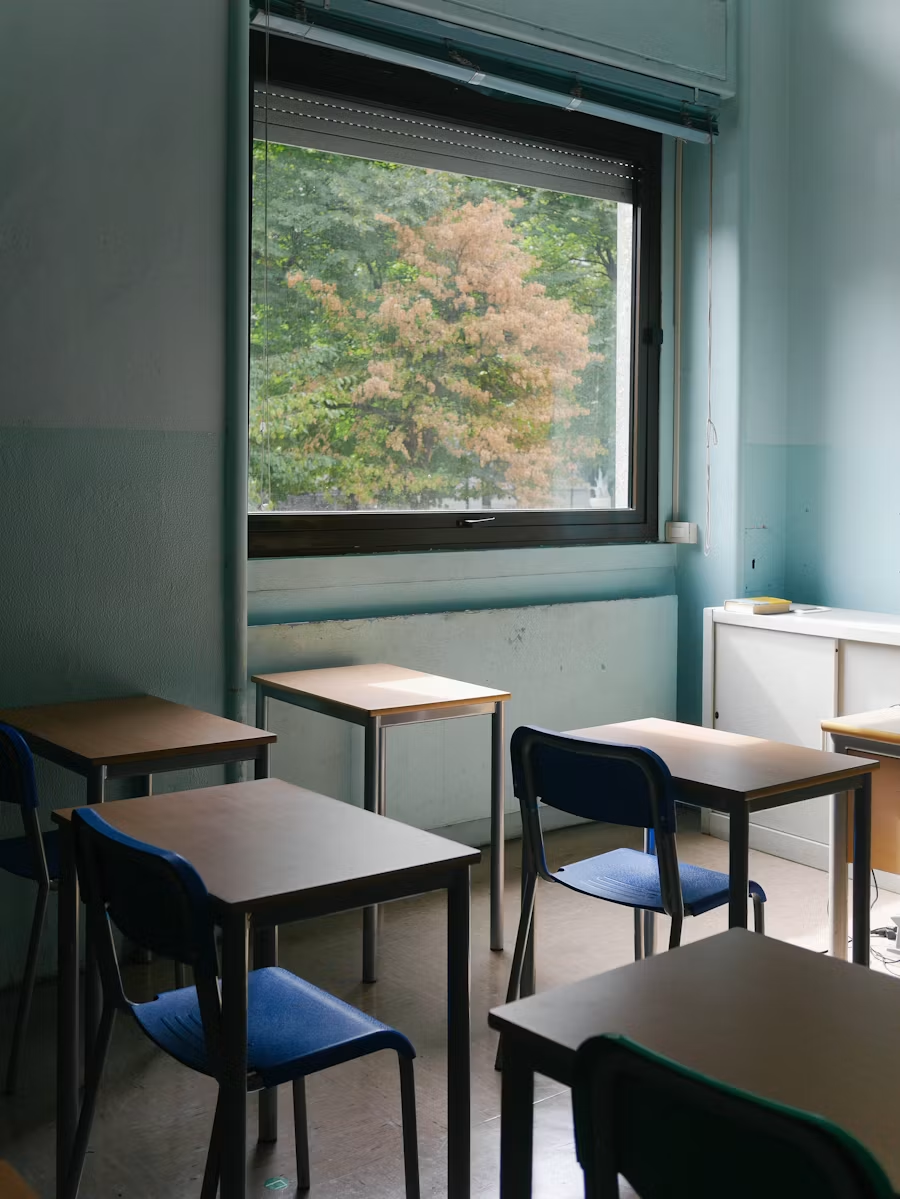

Korean school culture is often shown through uniforms, friendships, exam pressure, school lunches, and after-school study routines. But behind the aesthetic version of Korean student life, there is also a serious conversation about school bullying, social hierarchy, and academic pressure.
This article looks at why bullying in Korean schools has become such a major social issue, how it can differ from bullying in Western countries, and why dramas like The Glory made the topic more visible internationally.
This is not meant to stereotype Korean students or Korean schools. Many students have positive school experiences. But to understand Korean society more honestly, it is important to talk about both the beautiful parts and the difficult parts.
You might also like:
1. Why This Topic Matters
♡ School bullying in Korea is not just a drama plot
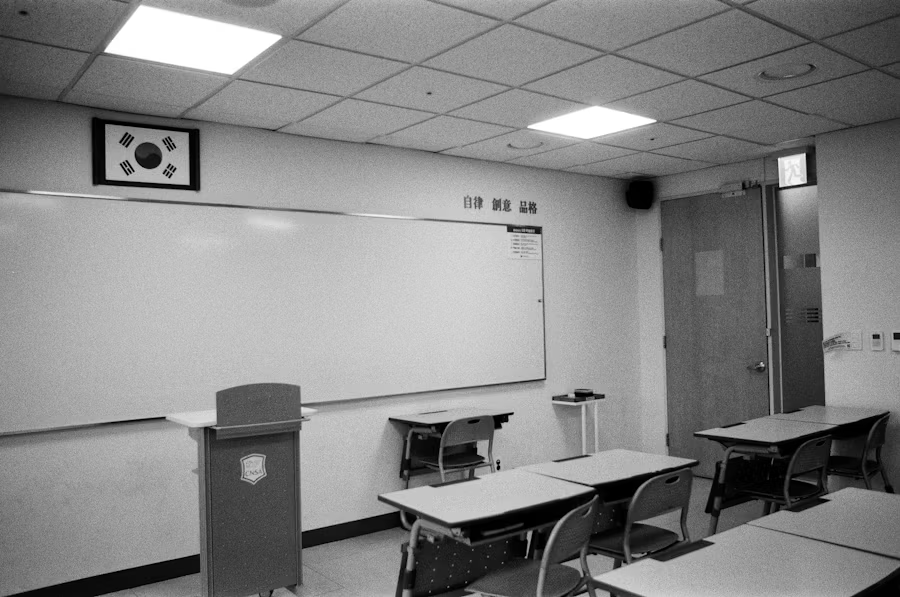
Bullying in Korean schools has become one of the most discussed social issues in South Korea. It is not only something people talk about after watching a K-drama. It is connected to education pressure, peer hierarchy, social reputation, online behavior, and the way Korean society responds to conflict inside schools.
In Korean, school bullying is often discussed under the term 학교폭력, which means school violence. This can include physical violence, verbal abuse, threats, cyberbullying, extortion, social exclusion, humiliation, and group harassment.
One reason this topic receives so much attention is that Korean school life can be extremely intense. Students often spend long hours at school, hagwons, study rooms, and test preparation programs. When competition, hierarchy, and social pressure combine, bullying can become more hidden and more emotionally damaging.
A Human Rights Research Center article discusses how school bullying in South Korea has drawn renewed public attention, especially after high-profile media portrayals and reports about school violence.
This article is not saying every Korean school is unsafe. Many Korean students have normal, happy, supportive school experiences. But the issue matters because when bullying does happen, the emotional damage can be serious and long-lasting.
Helpful picks:
Korean Grammar in Use Desk Lamp
Shop through my Amazon links to check the latest price and deals ♡ As an Amazon Associate, The Seoul Edit earns from qualifying purchases.
2. The Glory Effect
♡ How one drama made school bullying impossible to ignore
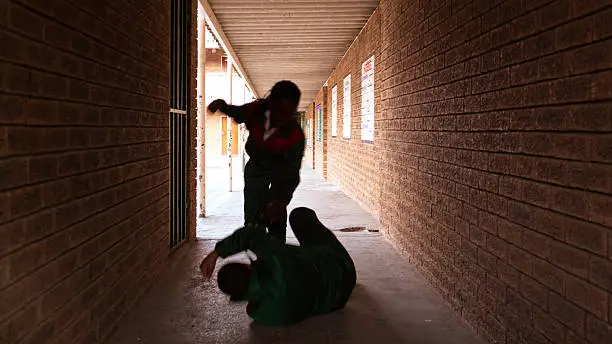
International audiences became much more aware of Korean school bullying after the Netflix drama The Glory. The drama follows a woman who seeks revenge after suffering extreme school violence as a teenager.
What made the show especially disturbing was that parts of the abuse reminded viewers of real school violence cases in South Korea. The drama did not create the conversation from nothing. It amplified a conversation many Koreans were already having.
For foreign viewers, The Glory may look shocking because the violence is so intense. But for many Korean viewers, the drama also touched on something familiar: the fear that school bullying can be ignored, minimized, or handled too slowly by adults.
The drama also made people ask bigger questions. Why do some bullying cases become so cruel? Why do victims sometimes struggle to get help? Why does reputation matter so much in school, university admissions, careers, and public life?
This is why the topic is not only about entertainment. Korean dramas can sometimes open the door to deeper conversations about Korean society, including education pressure, class anxiety, social status, and trauma.
Helpful picks:
Kindle Paperwhite Noise Cancelling Headphones
Shop through my Amazon links to check the latest price and deals ♡ As an Amazon Associate, The Seoul Edit earns from qualifying purchases.
3. Hierarchy in Korean School Culture
♡ Age, status, groups, and social ranking can shape school life

Korean society has many visible and invisible hierarchy systems. Age, school year, seniority, grades, family background, popularity, and social groups can all influence how people treat each other.
In school, this can create pressure to know where you stand. Who is popular? Who is quiet? Who has influence? Who gets excluded? Who is considered different? These questions can matter more than adults realize.
Hierarchy does not automatically create bullying, but it can make bullying harder to escape. If one student becomes labeled as an outsider, others may avoid defending them because they do not want to become the next target.
This is one reason Korean bullying is often described as social and relational. Instead of only focusing on physical fighting, many cases involve group exclusion, silent treatment, rumors, group chat isolation, public embarrassment, or reputation damage.
A cross-cultural comparison from Carleton University explains that bullying in South Korea is often more relational compared with bullying patterns commonly discussed in Western contexts.
Helpful picks:
iPad Portable Charger
Shop through my Amazon links to check the latest price and deals ♡ As an Amazon Associate, The Seoul Edit earns from qualifying purchases.
4. Wangtta and Social Exclusion
♡ The bullying style many foreigners do not immediately recognize

One term frequently discussed in conversations about Korean bullying is 왕따 (wangtta).
Wangtta generally refers to someone being intentionally isolated, excluded, ignored, or pushed out of a social group. Unlike physical violence, this type of bullying can be difficult for adults to detect.
A student may not come home with visible injuries, yet they may be completely isolated at school. Classmates may refuse to sit with them, ignore messages, exclude them from group chats, spread rumors, or act as though they do not exist.
Researchers have noted that relational bullying appears more frequently in South Korea than in many Western countries. Social exclusion can be psychologically devastating because humans naturally need belonging, friendship, and social support.
In extreme situations, victims may feel trapped because the bullying is happening across an entire peer group rather than coming from one individual bully.
Helpful picks:
Noise Cancelling HeadphonesKindle PaperwhiteShop through my Amazon links to check the latest price and deals ♡ As an Amazon Associate, The Seoul Edit earns from qualifying purchases.
5. Academic Pressure and Competition
♡ Why school stress sometimes makes problems worse

South Korea is known for having one of the most competitive education systems in the world.
Many students attend regular school during the day and private academies known as hagwons in the evening. Long study hours, entrance exams, rankings, and university admissions can create significant pressure.
Psychologists and education researchers have suggested that highly competitive environments may sometimes contribute to social stress, status anxiety, and unhealthy peer dynamics.
This does not mean academic success causes bullying. Most students handle competition without becoming bullies. However, environments with strong social pressure can sometimes amplify existing conflicts and group behavior.
According to reporting discussed by The Guardian, some experts believe academic competition and rigid social structures can create conditions where exclusion and harassment become more likely.
6. Cyberbullying and Social Media
♡ Bullying no longer stops when school ends

Modern bullying often continues after students leave the classroom.
Smartphones, messaging apps, online communities, anonymous forums, and social media platforms allow harassment to follow students throughout the day.
Cyberbullying can include spreading rumors, posting embarrassing content, excluding someone from group chats, creating anonymous attack accounts, or organizing coordinated online harassment.
Victims often describe cyberbullying as especially stressful because it feels impossible to escape. Instead of ending after school, the harassment can continue late into the night.
Studies have suggested that cyberbullying may have serious mental health consequences, particularly when combined with existing social exclusion and academic pressure.
Helpful picks:
Portable ChargerAirTag
Shop through my Amazon links to check the latest price and deals ♡ As an Amazon Associate, The Seoul Edit earns from qualifying purchases.
7. How Korea Is Responding
♡ Awareness is growing, but challenges remain
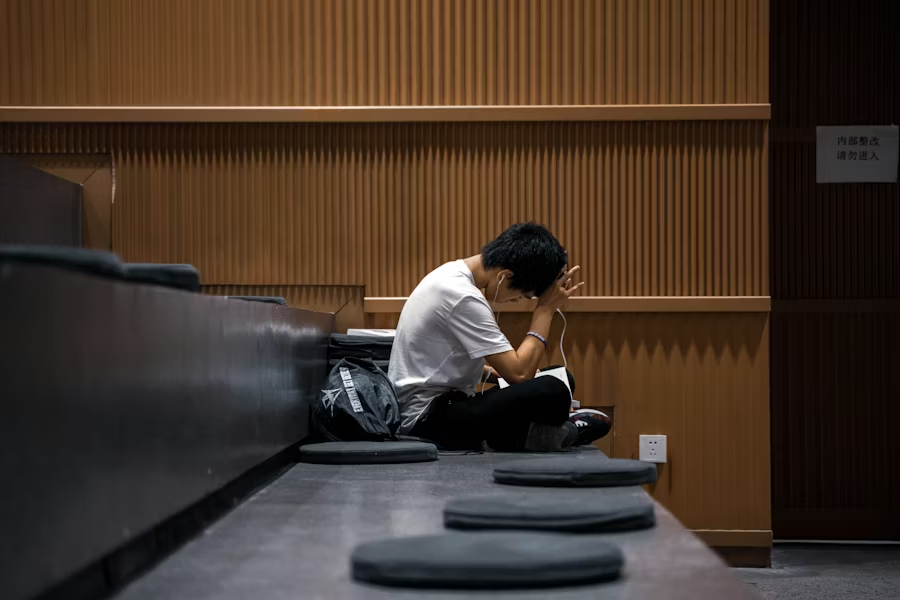
Public awareness of school violence has increased significantly over the last decade.
Schools, government agencies, educators, parents, and researchers have all become more focused on preventing bullying and helping victims.
New discussions include stronger reporting systems, counseling support, educational programs, and recording certain school violence incidents during admissions reviews.
However, critics argue that victims still sometimes struggle to receive timely support. Some cases become highly publicized only after they reach a crisis point.
Organizations such as UNESCO continue advocating for safer learning environments, anti-bullying education, and stronger student support systems around the world.
Helpful picks:
Korean Grammar in UsePassport Holder
Shop through my Amazon links to check the latest price and deals ♡ As an Amazon Associate, The Seoul Edit earns from qualifying purchases.
8. Sources and Further Reading
This article uses outside sources for context, but the explanation and structure are written for The Seoul Edit readers.
Human Rights Research Center: A Bullying Epidemic in South Korea
Carleton University: Comparing Bullying in South Korea and Western Countries
The Korea Herald: Victims of School Bullying and Suicide Risk
The Korea Times: School Bullying in Korea
9. FAQ: Korean School Bullying and Culture
Is bullying common in Korean schools?
Most Korean students do not experience severe bullying, but school violence remains a significant social issue that receives considerable public attention.
What does wangtta mean?
Wangtta refers to intentionally isolating or excluding someone from a social group. It is one of the most commonly discussed forms of relational bullying in Korea.
Did The Glory accurately portray bullying?
The Glory is fictional, but many viewers connected parts of the story to real bullying cases and broader concerns about school violence in South Korea.
Why is hierarchy important in Korean schools?
Hierarchy can influence social relationships, group dynamics, seniority expectations, and peer interactions, although experiences vary widely between schools.
Is cyberbullying a problem in Korea?
Yes. Cyberbullying is increasingly discussed because social media and messaging apps allow harassment to continue outside school hours.
Want More Korean Culture Guides?
Join the list for Korean culture explainers, Seoul travel guides, Korean food stories, K-beauty picks, and local discoveries.

Planning a trip to Seoul?
10. Final Thoughts
Korean school culture is complex. It can be disciplined, ambitious, emotional, supportive, competitive, and stressful all at once. That complexity is why bullying in Korean schools cannot be explained with one simple answer.
The issue is connected to hierarchy, social pressure, academic competition, group belonging, online behavior, and how adults respond when students ask for help.
The most important takeaway is this: bullying is not just childish conflict. It can become trauma. Talking about it seriously helps people understand Korean society more honestly and creates space for better support for victims.