Autumn is probably the easiest season to romanticize in Korea. The humidity finally drops, leaves start changing color and suddenly every café is selling something with chestnut, persimmon or sweet potato in it.
But if you actually want to know what Koreans eat because it is autumn, the answer is more interesting than a list of cozy snacks. Korea's fall food season includes seafood that becomes richer at this time of year, fruit arriving with the harvest, and foods tied specifically to Chuseok.
That means I would not put every warm Korean dish under the label of "fall food." Kimchi jjigae tastes amazing on a cold October night, but it is not an autumn specialty. The foods in this guide either have a real seasonal connection, an autumn harvest connection or a useful place in the transition toward colder weather.
You also do not need to turn this into an expensive food tour. Some of the best seasonal things to try are pieces of fruit from a market or supermarket. Others are better shared as a seafood dinner. I have included both so you can choose according to your budget and how adventurous you actually want to be.
My quick advice: If you only want the foods that feel most specifically autumnal, prioritize jeoneo or salt-grilled prawns, fresh persimmons and chestnuts. Add songpyeon if your trip overlaps with Chuseok.
1. What Does Autumn Food Actually Mean in Korea?
Some foods are genuinely at their best in fall, some belong to the Chuseok harvest table, and others simply start appearing when Seoul gets cold.
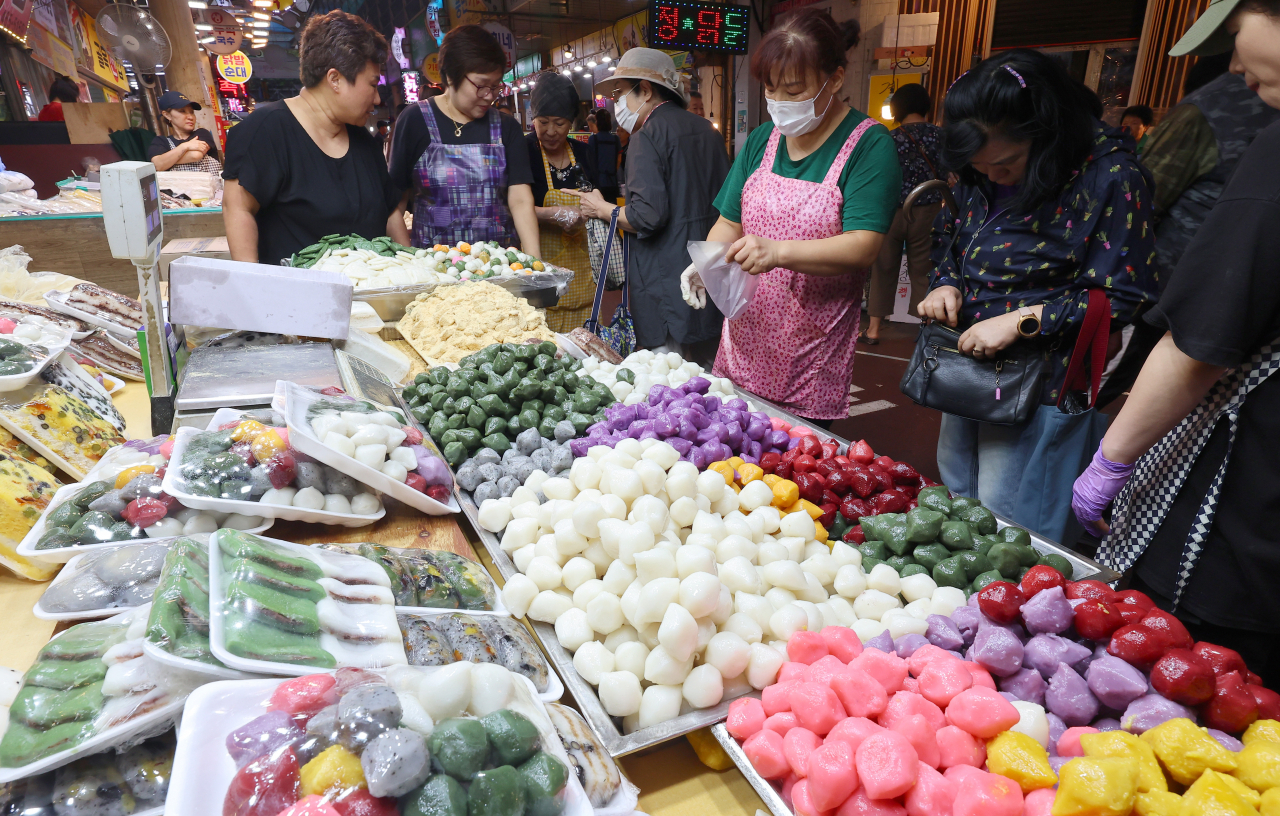
Autumn food in Korea is a little more complicated than making a list of everything that feels warm and cozy. Some ingredients have a real seasonal connection to fall. Gizzard shad becomes richer, prawns grow plumper, persimmons ripen and chestnuts appear with the cooler weather. Other foods are connected more specifically to Chuseok, Korea's major autumn harvest holiday.
That distinction is useful if you are visiting Seoul in September, October or November. You can eat jeon, sweet potatoes and rice cakes throughout the year, so seeing them on a menu does not automatically mean you have discovered a rare autumn specialty. On the other hand, foods such as jeoneo are so closely associated with fall that their seasonal timing is part of the reason people seek them out.
There is also a Seoul-versus-Korea distinction. Many of Korea's most famous autumn seafood destinations are coastal, not in Seoul. You do not need to leave the capital to taste the foods, but a Seoul restaurant is not the same experience as eating freshly caught seafood beside a fishing port. I would treat Seoul as an easy place to sample the season rather than pretend every autumn specialty originated here.
My quick autumn food rule
Seek out jeoneo, prawns, cockles, persimmons and chestnuts for their seasonal connection. Treat songpyeon and jeon as Chuseok foods. Think of roasted sweet potatoes as the bridge from late autumn into Korea's colder winter street-food season.
2. Jeoneo (전어): The Autumn Fish Koreans Wait For
If you want one food that genuinely screams Korean autumn rather than simply feeling seasonal, make it gizzard shad.
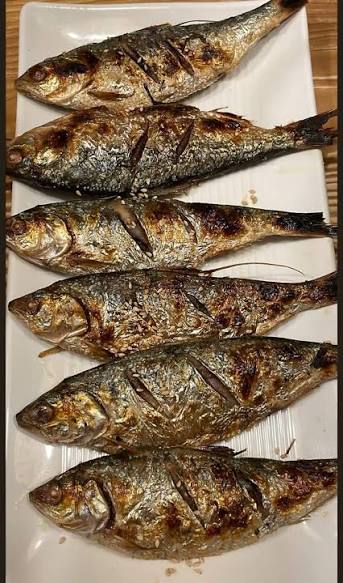
Jeoneo, or gizzard shad, is one of the clearest examples of a true Korean autumn food. As the season arrives, the fish develops more fat, giving it a richer, nuttier flavor. VISITKOREA specifically identifies fall as the season when jeoneo becomes especially prized.
The most approachable version for a first-time visitor is jeoneogui, where the fish is lightly salted and grilled. It can also be served as raw sliced fish or mixed into a spicy seasoned salad. The bones are relatively soft, and the grilled version can be eaten more completely than some visitors expect, although how much of the fish you eat comes down to personal preference.
Jeoneo is a stronger recommendation for adventurous seafood eaters than for someone who dislikes noticeable fish flavor. This is not a neutral white fish designed to disappear under a sauce. Its richness and aroma are part of the appeal.
In Seoul, look for seasonal seafood restaurants, sashimi restaurants and places advertising 전어 during autumn. Because availability follows the catch and the restaurant, I would search Naver Map for 전어 near wherever you are staying rather than traveling across the city for an old restaurant recommendation.
Useful details
Look for: 전어, 전어구이, 전어회
Taste: Rich, savory and noticeably fishy
Best for: Seafood lovers who want a genuinely seasonal dish
My pick: Grilled jeoneo for a first try
3. Daeha (대하): Salt-Grilled Autumn Prawns
Big prawns cooked over a bed of coarse salt are one of the easiest Korean autumn seafood dishes to love.
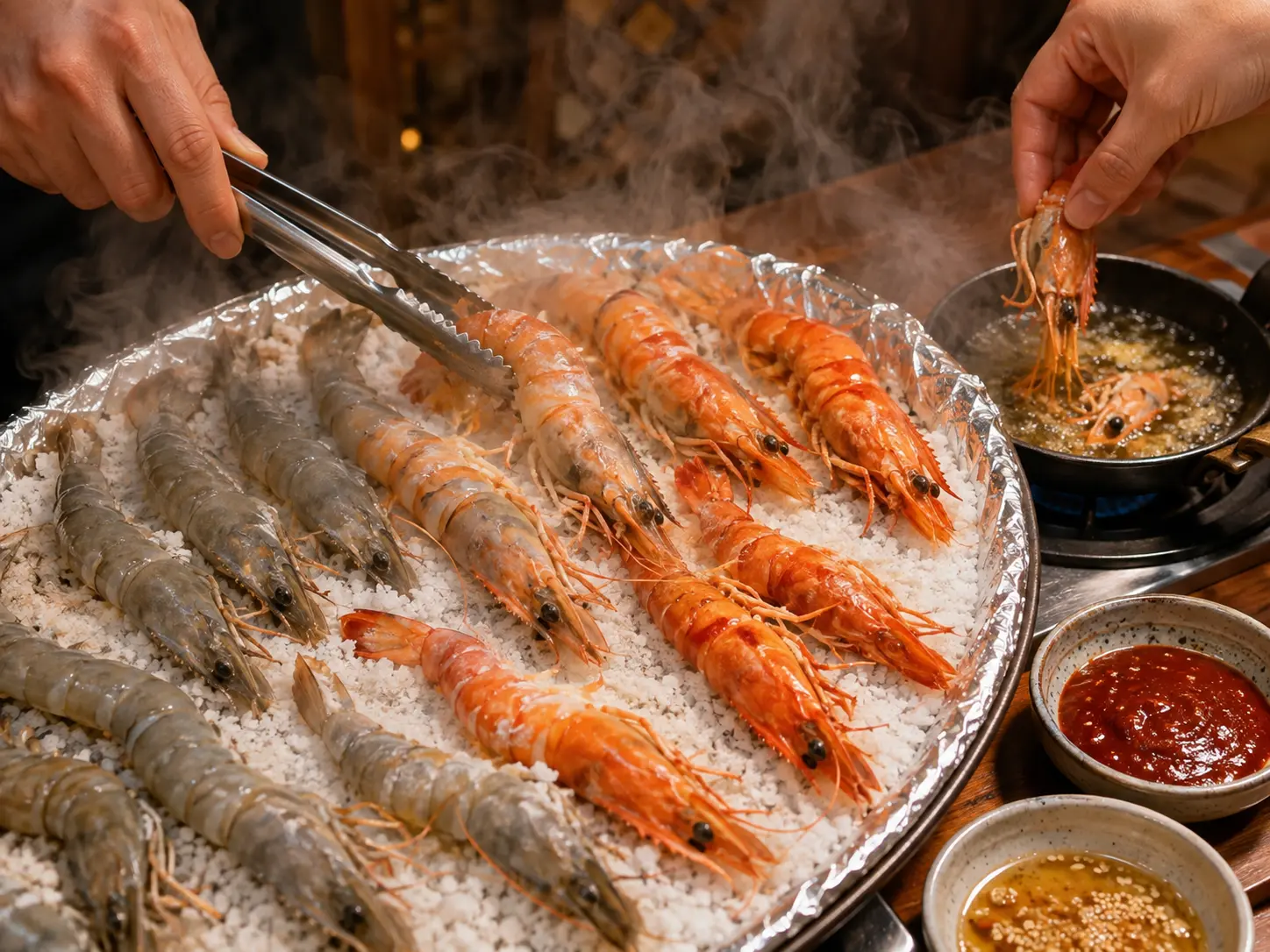
Daeha literally means big prawn, and autumn is when these prawns become particularly plump and flavorful. The classic preparation is daeha sogeumgui, or salt-grilled prawns. A pan is lined with coarse salt and the prawns cook above it until their shells turn bright orange.
This is one of the foods on this list I would recommend even to someone who is not trying to have a particularly adventurous meal. The flavor is sweet and savory, the preparation is simple, and you are not dealing with the stronger taste that can make jeoneo divisive.
The fun part is that the heads do not necessarily go to waste. Some places cook or fry them separately until crisp. If you are unfamiliar with eating prawn heads, you do not have to force yourself, but it is worth knowing why everyone else at the table may suddenly become very interested in the part you were about to leave behind.
Korea has coastal prawn festivals and famous producing regions, but you can find daeha in Seoul seafood restaurants during the season. Search for 대하구이 or 대하 소금구이. If a restaurant sells by weight, check the displayed price before ordering rather than assuming it is a fixed-price dish.
Useful details
Look for: 대하, 대하구이, 대하 소금구이
Taste: Sweet, savory and juicy
Best for: Couples or groups sharing seafood
Planning note: Seafood pricing can vary by restaurant and weight
4. Kkotge (꽃게): Blue Crab for a Proper Seafood Meal
Crab is a better choice when you want autumn seafood to become the main event rather than a quick snack.
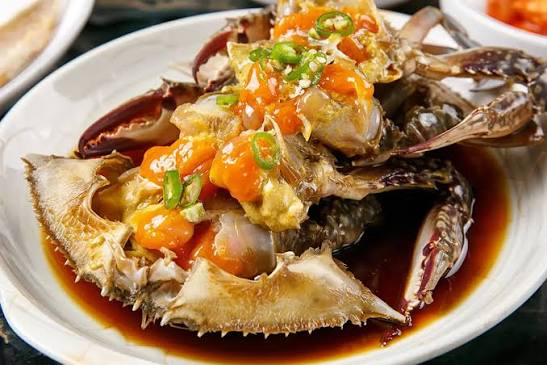
Blue crab is another seafood you will see connected with Korea's cooler seasons. It appears in several very different dishes, which means simply saying you want to "try Korean crab" does not narrow the experience down very much.
Kkotgetangis a hot, spicy crab stew and makes much more sense once Seoul's evenings start getting cold. Steamed crab keeps the focus on the meat itself. Then there is ganjang gejang, raw crab marinated in soy sauce, one of the most famous Korean crab dishes among visitors.
I would not treat ganjang gejang as the automatic choice simply because it is famous. Raw marinated crab has a soft texture and intense salty-sweet flavor that some people love and others find challenging. If you want something warmer and easier to understand on a cool autumn night, crab stew may be the better introduction.
Crab is also one of the foods where the bill can climb quickly. Check whether the restaurant prices by crab, portion, set or weight before committing. This is more of a sit-down meal than something I would squeeze between cafés.
Useful details
Look for: 꽃게, 꽃게탕, 간장게장
Best for: A full seafood dinner
Good first choice: Kkotgetang if raw marinated crab sounds intimidating
Budget note: Check portion and weight pricing before ordering
5. Kkomak (꼬막): Chewy Cockles with Rice
Cockles are less famous internationally than Korean barbecue or raw crab, but they are one of the more interesting seasonal seafood choices.
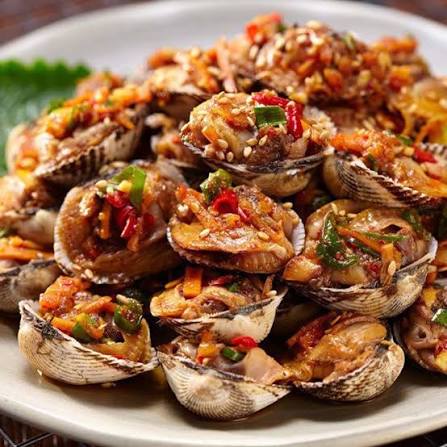
Kkomak are cockles with a distinctive chewy texture. They can be blanched and served in their shells with a seasoned soy sauce, tossed with vegetables and spicy-sweet seasoning, or piled over rice as kkomak bibimbap.
For a visitor trying them for the first time, kkomak bibimbap is probably the easiest entry point. You get the briny shellfish flavor, but rice, vegetables and seasoning turn it into a complete meal rather than asking you to eat shellfish one by one.
The texture matters more than it does with prawns. If you already know that chewy shellfish is not your thing, I would spend your autumn-food budget elsewhere. If you like clams, mussels and other shellfish, kkomak is much more worth seeking out.
You can search 꼬막 or 꼬막비빔밥 on Korean map apps. Unlike some of the seafood on this list, you may also encounter kkomak bibimbap at restaurants that specialize in regional Korean food rather than only at sashimi restaurants.
6. Songpyeon (송편): Korea's Autumn Harvest Rice Cake
Songpyeon belongs to Chuseok more specifically than to every autumn day, but it is too important to Korea's harvest season to leave out.
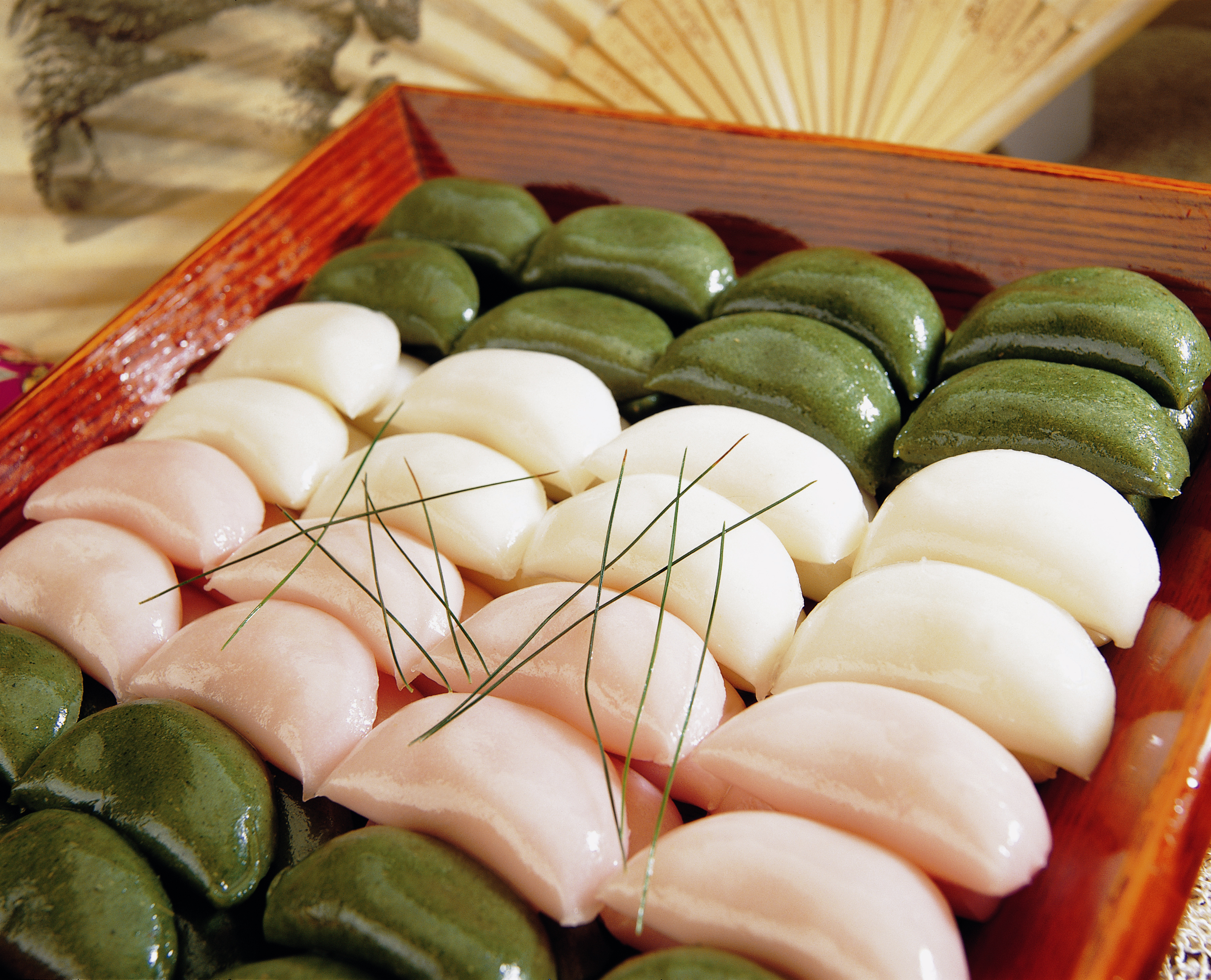
Songpyeon are small half-moon-shaped rice cakes closely associated with Chuseok. They are traditionally filled with ingredients such as sesame, beans or red beans and steamed over pine needles, which is where the name's pine connection comes from.
This is exactly the kind of food that gets mislabeled in generic travel guides. Songpyeon is not a rare snack that disappears the second Chuseok ends, but its cultural significance is tied much more closely to the harvest holiday than something like jeoneo, whose appeal comes from the fish itself being especially good in autumn.
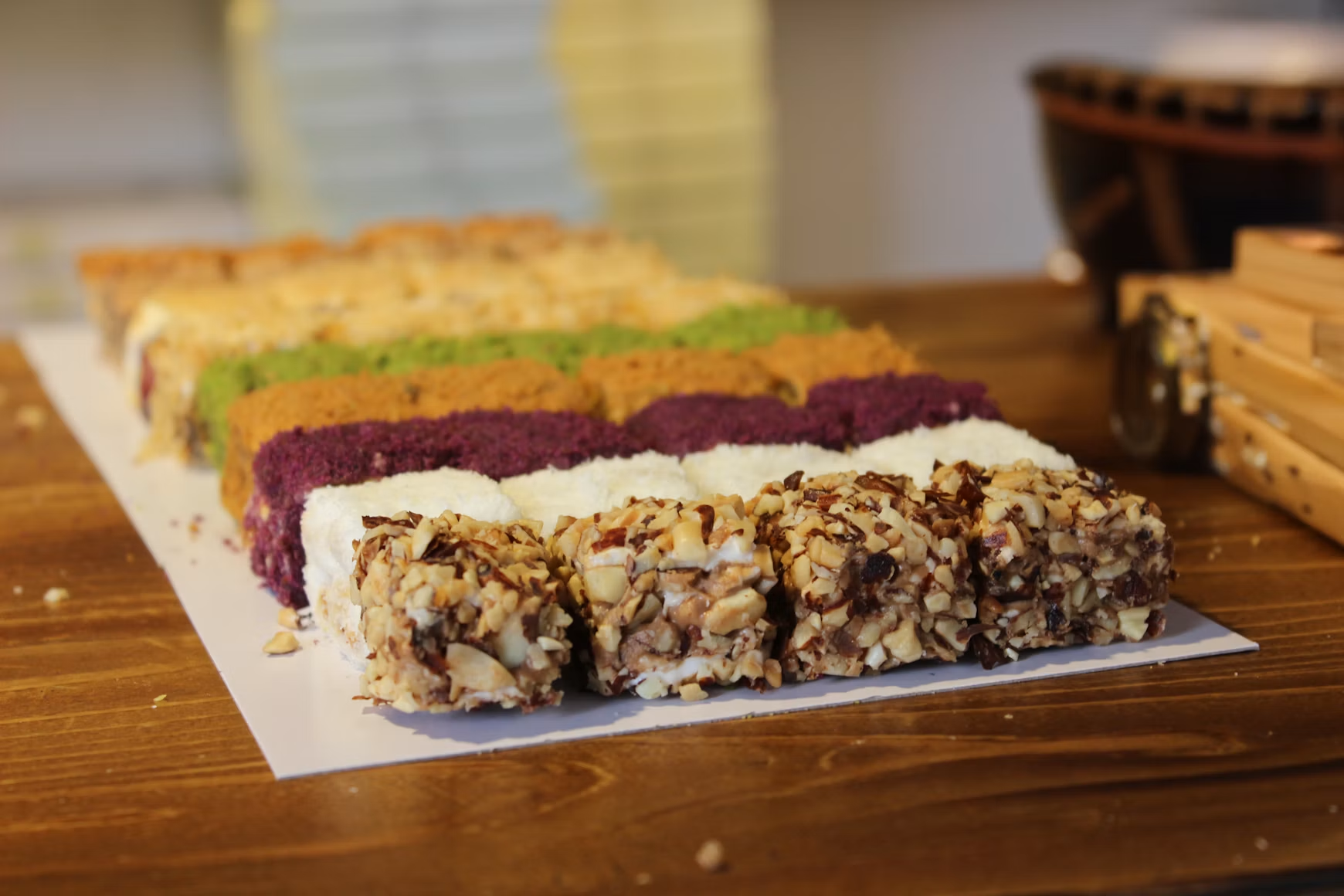
If you are in Seoul around Chuseok, traditional markets and rice cake shops are the obvious places to look. You may see different colors and fillings, so buying a small assortment is more interesting than choosing based only on which one photographs best.
The texture is chewy rather than cake-like in the Western sense. If you already like Korean tteok, songpyeon is an easy choice. If you have never tried rice cake before, expect something much denser and chewier than a baked dessert.
If you are actually in Seoul during the holiday, my guide to spending Chuseok in Seoul covers the practical side of planning around the holiday.
7. Jeon (전): The Savory Side of the Chuseok Table
Jeon is available all year, but platters of pan-fried meat, seafood and vegetables are strongly connected with Korean holiday meals.
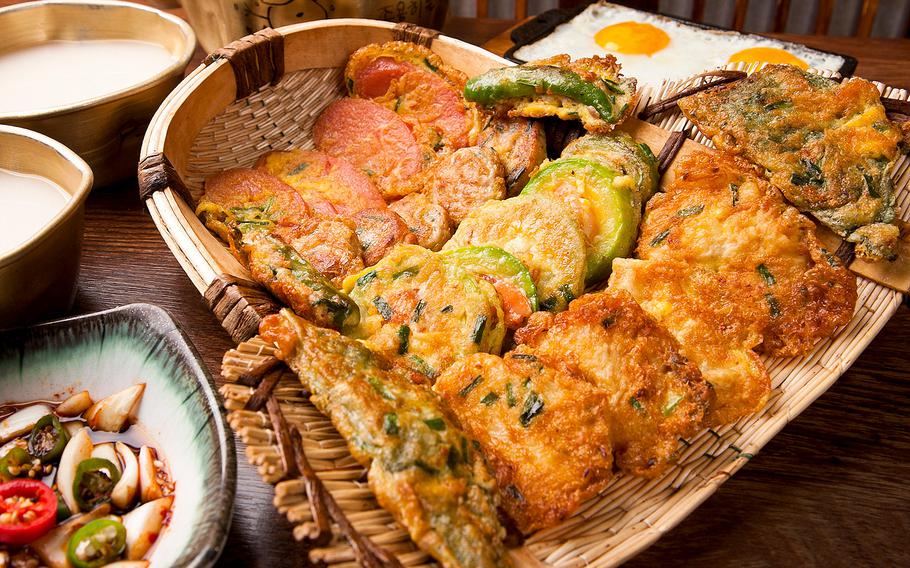
Jeon is a broad category rather than one single dish. Ingredients are typically coated in batter or egg and pan-fried, producing everything from small meat patties to vegetable, fish and seafood jeon.
During Chuseok, jeon becomes part of the holiday food spread, but you absolutely do not need to visit during the holiday to eat it. That makes it useful for an autumn traveler who wants a connection to Korean seasonal culture without having to hit a tiny window of ingredient availability.
If you want variety, a market is more interesting than ordering one enormous pancake. VISITKOREA's current Chuseok guide specifically points to Mapo Jeon Alley for dishes such as kimchijeon, donggeurangttaeng and bindaetteok. Traditional markets are another easy place to see several kinds together.
Jeon also works well if you are traveling with someone whose seafood tolerance is much lower than yours. One person can chase autumn fish while the other still gets something savory and recognizably Korean.
8. Persimmons (감): The Fruit That Looks Like Korean Autumn
Bright orange persimmons are one of the simplest seasonal foods to try because you do not need a restaurant, reservation or complicated order.
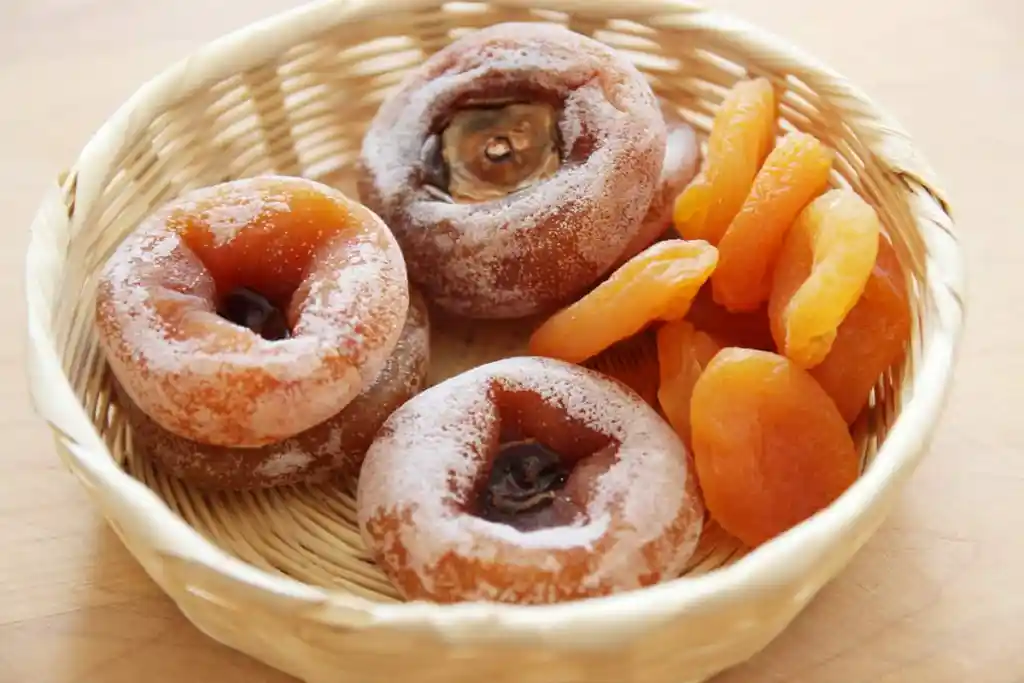
Persimmons are one of Korea's signature autumn fruits. Fresh sweet persimmons can be crisp, while fully ripened varieties become much softer and almost spoonable. The difference can be surprising if your only reference point is one type of persimmon.
You may see names such as dan-gam for sweet persimmon and hongsi for a soft, fully ripened persimmon. Dried persimmons, or gotgam, are another important form, although those move beyond the simple experience of eating fresh autumn fruit.
This is one of my strongest recommendations for a budget traveler because there is no need to turn it into an expensive café dessert. Buy fruit from a market or supermarket and try it as it is. Seasonal produce is one of the easiest ways to eat according to the Korean calendar without planning an entire meal around it.
If you are already visiting a traditional market for food, add a persimmon instead of making a separate trip. Mangwon is especially easy to combine with a larger snack crawl. My Mangwon Market food guide can help you turn that into a fuller meal.
9. Chestnuts and Sweet Potatoes: When Autumn Starts Feeling Cold
Chestnuts have a clear autumn connection, while roasted sweet potatoes become more strongly associated with Korea's colder-weather street-food season.
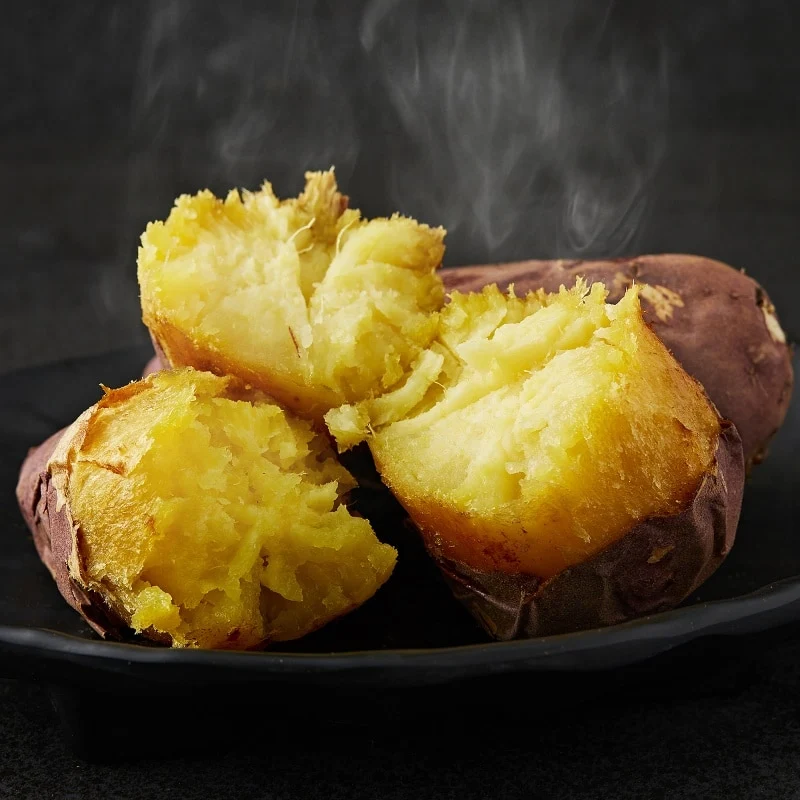
Chestnuts belong comfortably on an autumn list. As the weather cools, roasted chestnuts begin appearing, and Korea also uses chestnuts in sweets, braised dishes and regional desserts. Their natural sweetness becomes more noticeable when roasted or boiled.
Sweet potatoes need a little more explanation. You will absolutely see goguma in Korea, and roasted sweet potatoes feel perfect once autumn nights get cold. But they are also strongly associated with winter. I would describe them as a late-autumn-to-winter comfort food rather than pretend they have the same precise fall-season identity as jeoneo or persimmons.
If you encounter a roasted sweet-potato seller on a cold evening, there is no reason to wait for December just to satisfy a technical seasonal rule. The point is simply that not every warm snack sold in October is an exclusively autumn Korean food.
Both chestnuts and sweet potatoes are useful when you want something inexpensive and filling between activities. They are also much easier for vegetarian travelers than the seafood-heavy first half of this list.
10. Korean Pears and Apples: Do Not Ignore the Fruit Section
Autumn in Korea is harvest season, and some of the easiest things to try are sitting in supermarkets and traditional markets rather than famous restaurants.
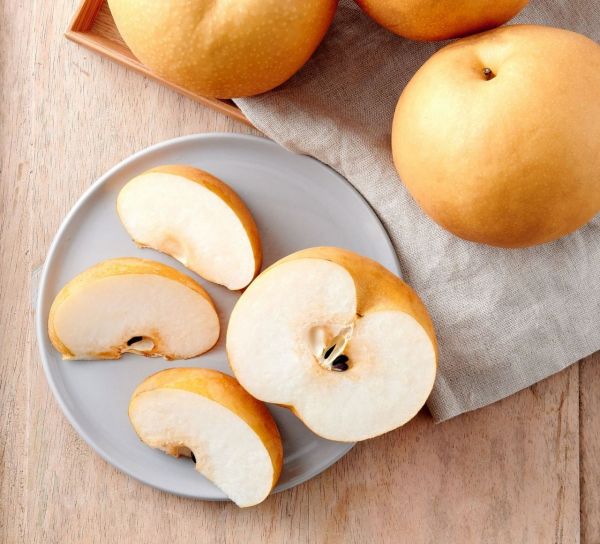
Korean pears are large, round, crisp and extremely juicy. If you are expecting the softer pear texture common in some other countries, the crunch is the first thing you will notice. Apples are another major harvest fruit and appear alongside pears in Chuseok gift sets and seasonal displays.
VISITKOREA lists freshly harvested apples and pears among representative Chuseok foods. That does not mean you need to buy an elaborate holiday gift box. Those beautifully packaged sets can be expensive and make much more sense as gifts than as a tourist snack.
Buy individual fruit or a small pack instead. Traditional markets can be fun for the atmosphere, while supermarkets are easier if you want clear prices and no pressure to buy a large quantity. Department-store food halls are polished and convenient but are rarely where I would send a budget traveler for a basic pear.
Fruit is also a useful reset if your Seoul food itinerary has become five fried snacks, two desserts and convenience-store ramyeon in a row. Autumn eating does not have to mean every item is a restaurant dish.
11. Where I Would Actually Look for Autumn Food in Seoul
Do not build your trip around one supposedly famous restaurant. Different types of autumn food make sense in different parts of the city.
For fruit, rice cakes, jeon and casual snacks, traditional markets are the easiest starting point. Mangwon is approachable for a food crawl, while larger markets can give you more variety. You can also use neighborhood markets instead of assuming every food experience needs to happen at a famous tourist market.
For jeoneo, prawns, crab and cockles, I would search Korean map apps for the Korean dish name close to where I am already staying. Seasonal seafood availability changes, and a current menu is more useful than a three-year-old list of "best restaurants."
Supermarkets are underrated for autumn fruit. They are especially practical if you are staying in Seoul for several days and want pears, apples, persimmons or snacks to keep at your accommodation. Department-store food halls are useful for browsing polished seasonal gift sets, traditional sweets and premium produce, but they are not automatically the best value.
If you want a proper market meal rather than only autumn foods, my Mangwon Market food crawl is a more practical starting point for building an affordable eating route.
Where to look
Seasonal seafood: Seafood and sashimi restaurants
Songpyeon: Tteok shops and traditional markets
Jeon: Traditional markets and jeon specialists
Fruit: Markets and supermarkets
Chestnuts / sweet potatoes: Markets, street vendors and seasonal sellers
12. What I Would Prioritize If You Only Have a Few Days
You do not need to hunt down every food on this list to feel like you ate your way through Korean autumn.
If this were my first autumn trip to Seoul, I would prioritize based on what actually changes with the season. Start with jeoneo or daeha if you like seafood. They give you the strongest sense that you are eating something because it is autumn, not simply because it is Korean.
Then add fresh persimmon. It is inexpensive, requires almost no planning and gives you a completely different side of Korean seasonal eating. If your visit overlaps with Chuseok, add songpyeon because the cultural timing makes it more meaningful.
After that, choose according to your own taste. Kkomak is worth it for shellfish fans. Crab makes sense for a larger dinner. Chestnuts are an easy snack. Pears are worth buying if you have never tried the large crisp Korean variety.
I would not force yourself to eat ten foods simply to complete a checklist. Autumn is one of the nicest seasons to explore Seoul, so leave room for the neighborhoods, cafés and places you actually came to see. You can pair this food list with my Seoul autumn foliage guide or the 2026 Seoul autumn festival guide.
If you only try four
1. Jeoneo or daeha for genuine seasonal seafood
2. Fresh persimmon for an easy autumn fruit
3. Songpyeon if your trip overlaps with Chuseok
4. Korean pear or chestnuts for an inexpensive market/supermarket addition
13. FAQ: Eating in Seoul in Autumn
What food is Korea famous for in autumn?
Some of Korea's strongest autumn food associations include jeoneo (gizzard shad), daeha (large prawns), cockles, persimmons and chestnuts. Chuseok also brings harvest foods such as songpyeon and jeon into focus.
What should I eat in Seoul in October?
October is a good time to look for seasonal seafood such as jeoneo and prawns, fresh persimmons, chestnuts and autumn fruit. If your trip is close to Chuseok, songpyeon and jeon are also culturally relevant foods to try.
Where can I find autumn food in Seoul?
Traditional markets are useful for fruit, rice cakes, jeon and snacks. For seasonal seafood, search Korean map apps for the specific dish name, such as 전어, 대하구이 or 꼬막, because availability can change by restaurant and season. Supermarkets are an easy option for pears, apples and persimmons.
Is jeoneo really an autumn food in Korea?
Yes. Gizzard shad is particularly associated with fall because its fat content increases and the flesh develops a richer, nuttier flavor. Korean tourism sources specifically identify autumn as its prime season.
What is the easiest Korean autumn food for a tourist to try?
Fresh persimmon is probably the easiest because you can buy it at a market or supermarket without finding a specialist restaurant. Salt-grilled prawns are another approachable choice if you want a seasonal restaurant meal.
Is songpyeon eaten all autumn?
Songpyeon is most strongly associated with Chuseok, Korea's autumn harvest holiday. You may be able to find it outside the exact holiday period, but its cultural significance is specifically tied to Chuseok rather than to every day of autumn.
Are roasted sweet potatoes an autumn food in Korea?
They fit naturally into late autumn as the weather gets colder, but roasted sweet potatoes are also strongly associated with Korea's winter street-food season. It is more accurate to think of them as a cold-weather food that begins to feel right in late autumn.
What Korean autumn foods are vegetarian?
Fresh persimmons, apples, Korean pears, chestnuts and roasted sweet potatoes are straightforward choices. Songpyeon is often made with plant-based fillings such as sesame, beans or red beans, but recipes can vary, so ask if you need to avoid specific ingredients.
Do I need to leave Seoul to eat seasonal Korean seafood?
No. Seoul seafood restaurants serve seasonal fish and shellfish, although many of the famous producing regions and festivals are on Korea's coasts. In Seoul, search the Korean dish name on Naver Map or Kakao Map and check current menus.
14. Sources and Planning Notes
Last checked: October 4, 2026.
Seasonal-food information in this guide was checked against current Korea Tourism Organization / VISITKOREA material. The distinction between foods that are seasonally at their best, foods associated specifically with Chuseok and foods that simply become appealing as the weather cools is intentional.
Restaurant availability, seafood prices and individual menus change much faster than the season itself. For that reason, this guide focuses on what to look for rather than claiming that one restaurant will always have a particular seasonal catch.
View sources
Recommendations about what I would prioritize, how I would search for these foods in Seoul and which dishes are easiest for first-time visitors are editorial recommendations from The Seoul Edit rather than official tourism guidance.
Planning More Time in Seoul?
Join The Seoul Edit for Seoul neighborhoods, food, cafés, Korean culture, K-beauty and practical travel guides written from Seoul.
Planning a trip to Seoul?
15. Final Thoughts
The most interesting thing about eating in Seoul in autumn is that you do not need every meal to become a seasonal event. One seafood dinner, a few pieces of fruit and something connected to Chuseok can tell you much more about the season than forcing ten "fall foods" into a weekend.
If seafood is your thing, this is the time I would pay attention to jeoneo and prawns. They have a stronger seasonal reason to be on your table than a generic hot stew. If seafood is not your thing, you are not missing autumn completely. Persimmons, chestnuts, Korean pears and Chuseok rice cakes give you plenty to explore.
I also would not overlook the ordinary places. A supermarket fruit section can be more genuinely seasonal than a café launching an elaborate "autumn" dessert. A neighborhood market may tell you more about what people are buying right now than a viral restaurant designed around tourists.
Most importantly, eat according to what you actually like. Autumn in Seoul is too nice to spend your trip chasing a fish you hate just because somebody called it essential. Pick two or three seasonal foods, combine them with the neighborhoods and foliage you already want to see, and let the season become part of the trip rather than another checklist.