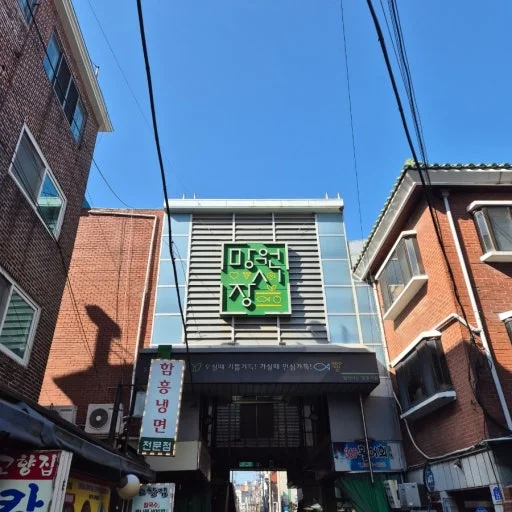
Seoul has markets that are more famous internationally than Mangwon. That is part of why I like recommending this one.
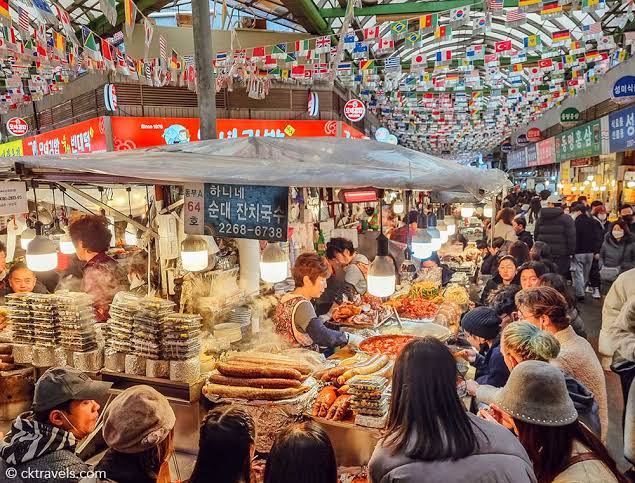
Mangwon Market sits inside a real residential neighborhood in Mapo-gu, a short walk from Mangwon Station. You will absolutely see visitors queuing for viral food, but you will also see people buying vegetables, fruit, meat, banchan, rice cakes, and ingredients for dinner. The market has not stopped functioning as a neighborhood market simply because younger Koreans and international travelers discovered it.
That makes the experience different from arriving somewhere with a rigid checklist of famous stalls. I would go to Mangwon with a few priorities, then let the market change the plan. If something is coming straight out of the fryer, the queue is moving quickly, and it smells better than whatever you saved on Instagram three months ago, eat that.
The other thing tourists often underestimate is how quickly Korean market food becomes filling. Fried chicken, croquettes, hotteok, rice cakes, noodles, and battered vegetables sound like "snacks" individually. Put four of them together and you have accidentally eaten two lunches. Mangwon is much better with a friend, partner, or small group because you can split things and keep moving.
If I were bringing somebody here for the first time, these are the foods I would prioritize and the order I would think about them.
Planning more of your Seoul day?
Read: 24 Hours in Seoul: The Perfect First-Timer Itinerary
Read: Why Korean People Don't Always Say Exactly What They Mean
1. Start With Dakgangjeong, but Share It
♡ Sweet, sticky fried chicken is one of Mangwon Market’s signature foods, but the portion can quietly destroy your snack crawl if you order too much.
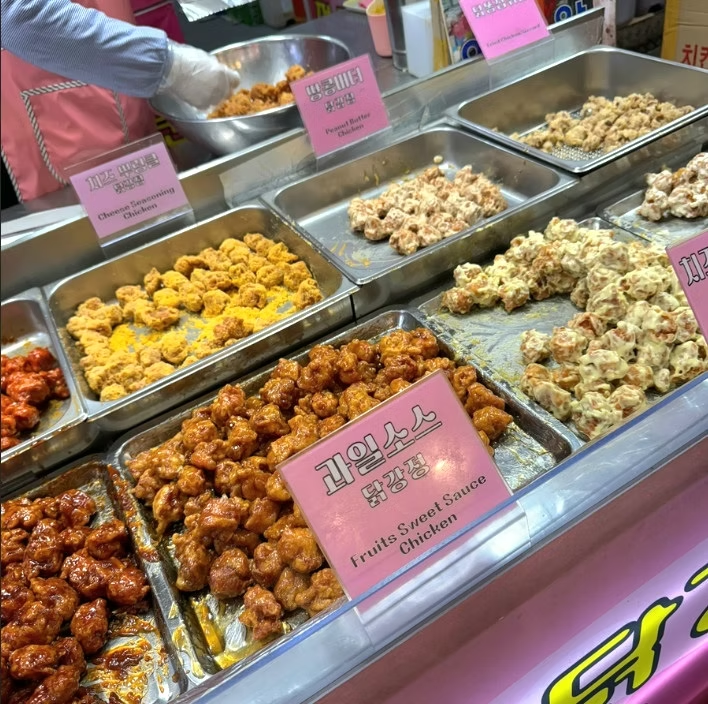
If you only recognize one food from photos of Mangwon Market, it will probably be dakgangjeong. These are bite-sized pieces of fried chicken coated in a glossy sweet-savory sauce, sometimes with additional flavors layered on top. The official Seoul tourism guide specifically points visitors toward Q's Dakgangjeong and mentions both spicy and fruit-flavored variations.
This is one of the foods I would absolutely try here, but I would not begin by buying the biggest box. Mangwon works best as a grazing market. The whole point is being able to eat chicken, walk ten meters, see something frying in front of you, change your plan, and order that too. A large portion of fried chicken can end the entire food crawl before it properly starts.
If I were visiting with one other person, I would get a small serving and share it. With three or four people, dakgangjeong becomes even more practical because everyone can taste a few pieces without committing half their stomach to one stall. The chicken also travels reasonably well, so it is one of the better things to save for a Mangwon Hangang Park picnic if you are heading toward the river afterward.
Flavor-wise, I would choose one classic sweet or soy-based option before going for the most novelty-heavy sauce. When you are eating several foods in one afternoon, the simpler version gives you the crispy, sticky contrast that makes dakgangjeong good without becoming overwhelmingly sweet.
2. The Fried Green Pepper Is More Interesting Than It Sounds
♡ The giant stuffed pepper is one of the foods I would prioritize because it feels much more specific to a Korean market than another generic fried snack.
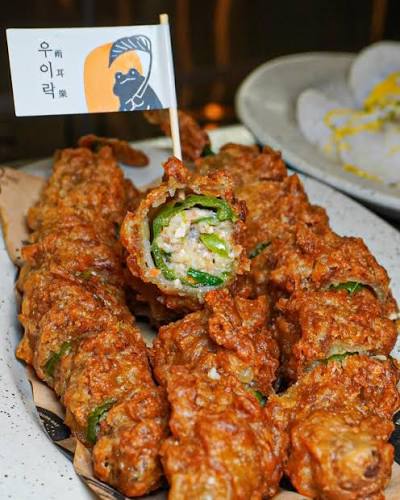
One of the foods official Korean tourism material highlights at Mangwon is the crispy deep-fried green chili pepper. If the words "fried pepper" make you imagine a thin chili dropped into batter, the actual market version can be much more substantial. Korean-style stuffed peppers are often filled before being battered and fried, turning the pepper into something closer to a full snack.
This is the type of Mangwon food I think travelers can easily overlook because it does not photograph as dramatically as glossy fried chicken or a bubbling pan of tteokbokki. I would still put it near the top of the list. You get crisp batter, the freshness and slight bite of the pepper, and a savory filling in the middle. It also feels much more connected to the kind of fried foods you actually see in Korean traditional markets.
If you are sensitive to spice, do not assume every large green pepper will be extremely hot. Korean peppers vary considerably. That said, an unexpectedly spicy one is always possible, so I would still ask the vendor if you are particularly cautious about heat.
Eat this one while it is hot. Fried food that has been sitting in a takeaway bag for twenty minutes is rarely as convincing as something that has just come out of the fryer. If you are choosing foods for a later Han River picnic, I would eat the fried pepper inside the market and save sturdier items like chicken, gimbap, or packaged snacks for the walk.
3. Get Hotteok When It Is Actually Hot
♡ Mangwon is known for both classic and more playful hotteok, but temperature matters more than how Instagrammable the topping is.
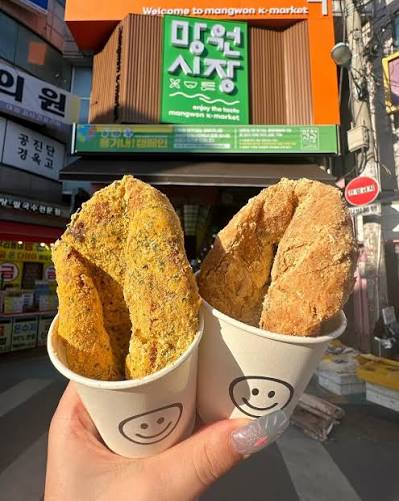
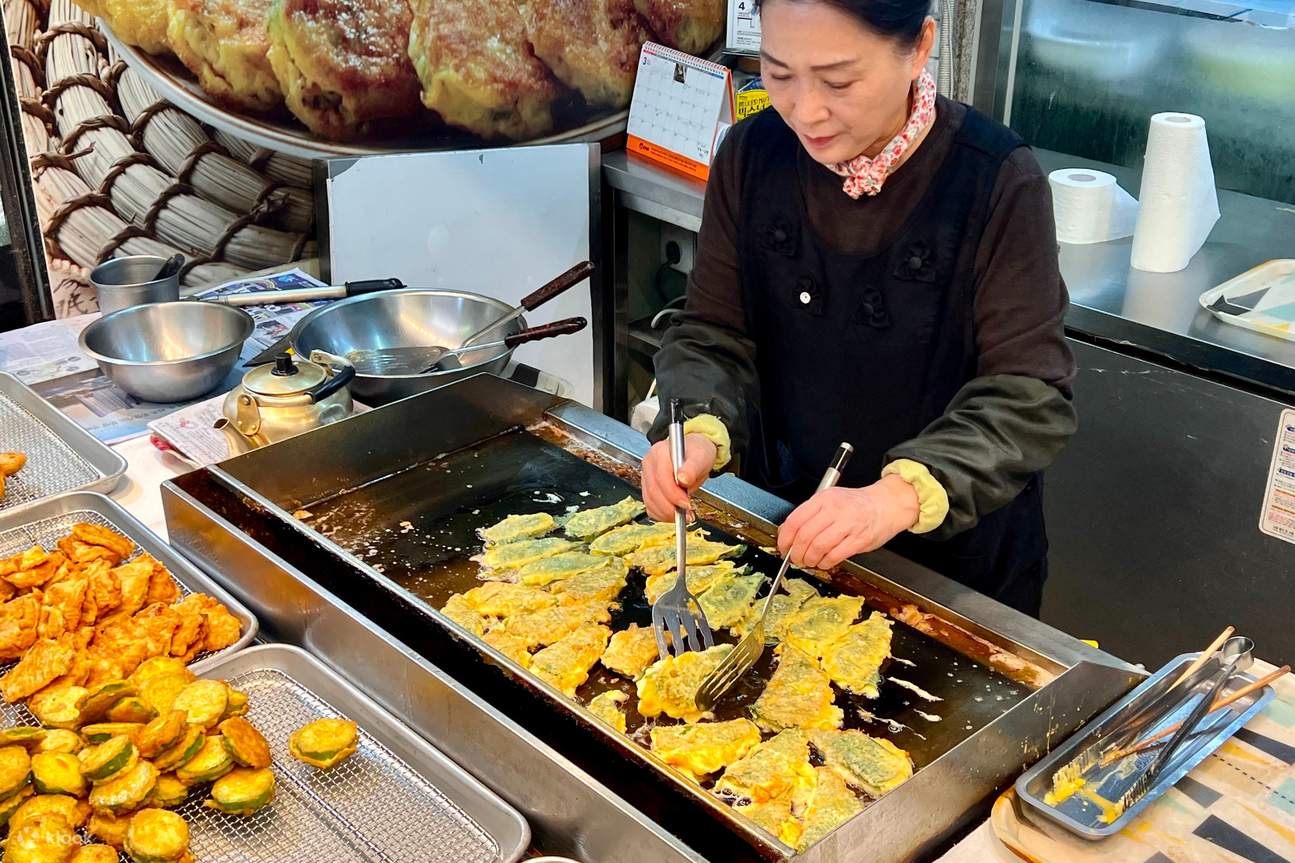
Hotteok is one of those Korean street foods that can be incredible or strangely forgettable depending on when you eat it. At its best, the outside has just developed a fried, chewy crust while the sugar filling inside is hot enough to become syrupy. Leave it sitting around too long and much of that contrast disappears.
Mangwon is particularly associated with creative hotteok. Korea Tourism Organization material has highlighted Hoon-Hoon Hotteok and versions using seeds, ice cream, cheese seasoning, and other toppings. Those are fun if you specifically want a modern market snack, but I would not dismiss the basic sugar-filled version. A freshly cooked classic hotteok is still one of the best cold-weather market foods in Seoul.
Personally, I would order hotteok later in the crawl rather than at the beginning. Sweet fried dough has a way of making you feel full faster than expected, especially after dakgangjeong. It works better as the point where you shift from savory food into dessert.
Winter is when hotteok makes the most emotional sense. Standing in a cold market holding something too hot to bite properly for the first minute is basically part of the experience. In hot, humid Seoul summer weather, I would be much more likely to split one and then leave the market for an iced drink in Mangwon-dong.
4. Croquettes Are Cheap, Easy to Share, and Dangerously Filling
♡ Mangwon’s croquette shops are famous for good reason, especially if you want to sample several fillings instead of ordering another full meal.
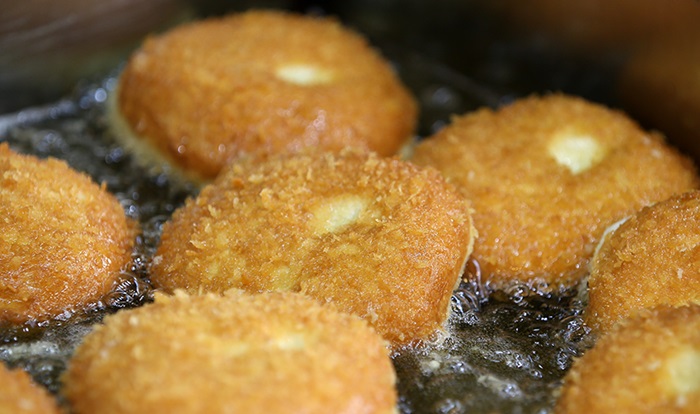
Croquettes are another food that repeatedly appears in official guides to Mangwon Market. You will see breaded, fried buns with fillings that can range from vegetables and japchae to cheese and pizza-inspired combinations. The Seoul tourism guide specifically mentions Hwanginho Croquette as one of the market's well-known stops.
I like croquettes here because they make sense for the way Mangwon is best eaten. You do not need a table, utensils, or a full meal break. One person can grab a savory filling, another can get something cheesier, and you can tear them apart and compare. This is much more fun than each person buying the exact same thing.
The tradeoff is that bread plus fried coating is extremely filling. A croquette looks like a small snack until you eat two of them and realize you no longer have any interest in noodles, tteokbokki, or dessert. If your goal is to try the market broadly, one or two croquettes shared between people is enough.
I would also choose based on what you cannot easily get elsewhere. Cheese and pizza flavors are approachable, but something like japchae or a more Korean-style savory filling makes the stop feel less like buying a fried bun you could find in many bakeries.
5. Tteokbokki and Twigim Are the Market Comfort-Food Combo
♡ This is less about finding one legendary stall and more about eating two Korean snack foods the way they naturally belong together.
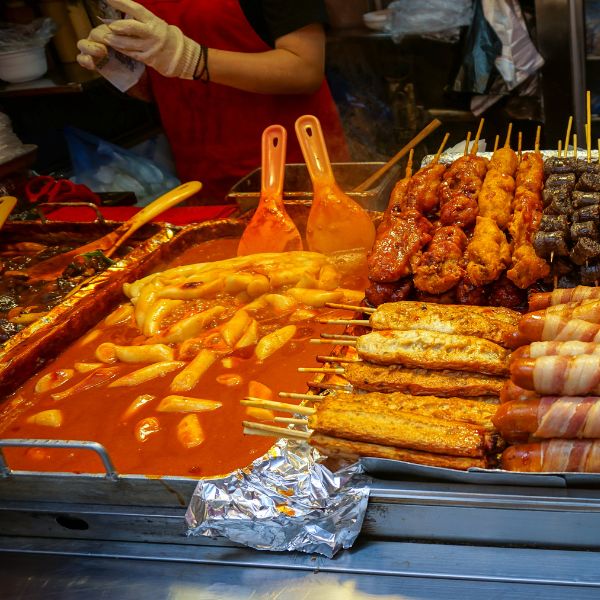
A bowl or plate of tteokbokki with a few pieces of twigim is one of the easiest ways to understand Korean market snacking. Tteokbokki gives you chewy rice cakes covered in a sweet-spicy red sauce, while twigim adds battered and fried vegetables, squid, dumplings, or other ingredients.
The important move is not to treat them as completely separate foods. Dip a piece of fried food into the tteokbokki sauce. That combination of crisp batter soaking up spicy-sweet sauce is why the two foods appear next to each other so often at bunsik shops.
I also would not spend twenty minutes hunting for the single supposedly "best" tteokbokki stall unless you already have one saved for a specific reason. Mangwon is still a functioning neighborhood market rather than a collection of only destination restaurants. Part of the appeal is choosing a busy-looking counter, seeing what has just been cooked, and eating it there.
If you are traveling solo, this is one place where portion planning matters. A serving of tteokbokki plus several fried items can easily become your entire lunch. If you want to keep exploring, order conservatively or make this your actual meal and treat the other market foods as small tastes.
6. Sit Down for Kalguksu if You Want an Actual Meal
♡ After several fried snacks, a hot bowl of knife-cut noodles can be the thing that makes the market feel like lunch rather than an endless snack queue.
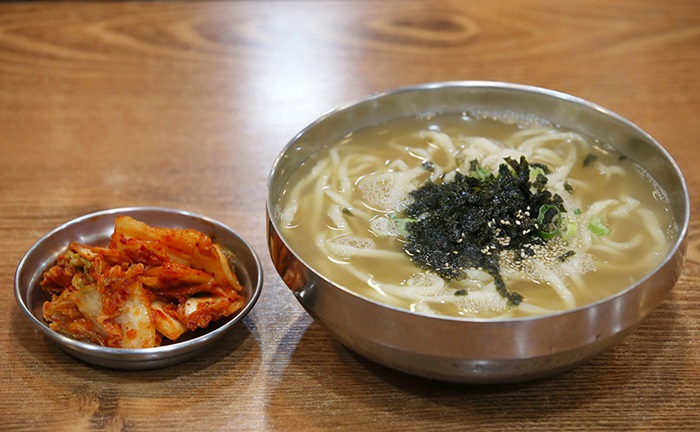
Not everything worth eating at Mangwon needs to be carried around in a paper cup. Kalguksu, Korean knife-cut wheat noodles served in hot broth, is one of the more substantial foods associated with the market and is also included in Korea Tourism Organization's Mangwon recommendations.
This is what I would choose on a cold day, if I were visiting alone, or if I had already reached my limit with fried food. A bowl of noodles gives you a proper sit-down pause and is much easier to treat as lunch than trying to construct a meal from five unrelated snacks.
The downside is obvious: once you eat a full bowl of noodles, your ability to continue a serious street-food crawl drops dramatically. For first-time visitors who care more about trying many foods, I would either share a bowl where the shop allows it or leave noodles until the end. If you are simply hungry and want good-value Korean comfort food, do the opposite and make kalguksu your anchor meal.
Kalguksu is also a good example of why Mangwon feels different from a market designed primarily around tourism. The food is not only there to be photographed. Noodle shops, produce sellers, side-dish stores, fried-food counters, and grocery stalls all coexist because local residents actually use the market.
7. Try Tteokgalbi if You Want Something Savory Without More Batter
♡ Grilled meat patties are a useful break between fried snacks and sweets, especially when the market crawl starts becoming too carb-heavy.
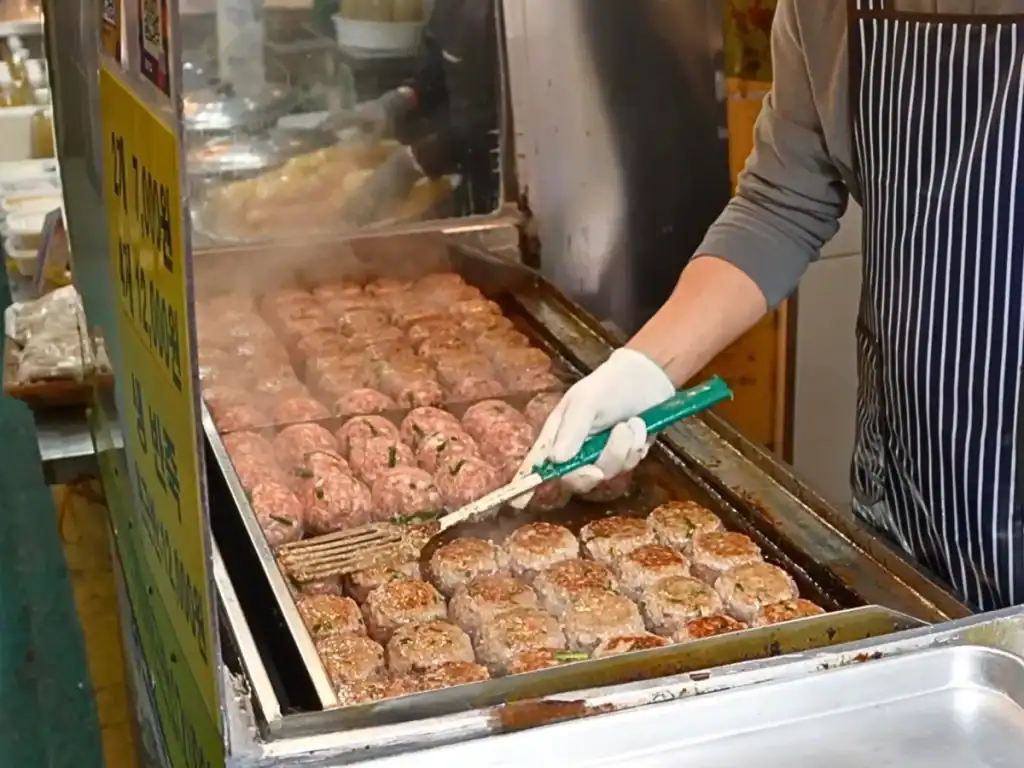
Tteokgalbi is another food highlighted by Seoul tourism material for Mangwon Market. Despite the word tteok in the name, this is not a rice cake. It is a seasoned meat patty traditionally associated with minced or finely prepared meat shaped and cooked for a tender texture.
In a market crawl, tteokgalbi fills a useful role. By this point, you may have already eaten fried chicken, a croquette, and something covered in tteokbokki sauce. A hot, savory meat item gives your palate a break from both breading and sugar.
I would look for a stall actively cooking rather than choosing purely based on which sign is largest. With market food, timing often matters more than internet fame. Something that has just come off the grill is usually a better bet than a famous item that has been sitting around waiting for the next rush.
This is also a good sharing food for couples or groups. Split one portion, keep walking, and save room. The biggest mistake at Mangwon is treating every stop like it needs to be a full individual order.
8. Do Not Ignore Gimbap Just Because It Looks Familiar
♡ Gimbap is one of the least dramatic things to photograph here and one of the most practical things to actually buy.
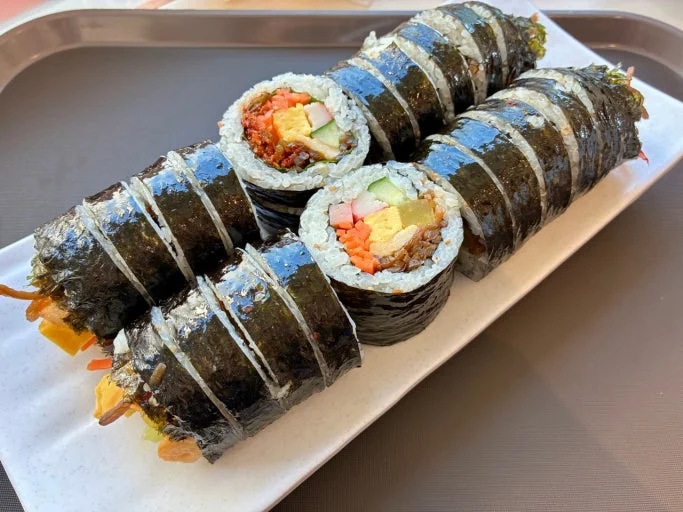
Visitors sometimes skip gimbap at traditional markets because they have already seen it in convenience stores, restaurants, and subway neighborhoods all over Seoul. I understand the instinct, but market gimbap is still useful, particularly if you are building a picnic rather than trying to eat everything immediately.
Gimbap travels better than a bowl of noodles, is less messy than tteokbokki, and gives you a more balanced base underneath all the fried snacks. Korea Tourism Organization also includes gimbap among Mangwon's classic market foods, alongside tteokbokki and fried dishes.
If a stall has an unusual version that is clearly one of its specialties, I would choose that over the most basic roll. Otherwise, there is no need to turn gimbap into a major destination stop. Think of it as practical food that helps the rest of your market haul make sense.
For solo travelers, gimbap is especially useful because you can take it away and finish it later. If you realize halfway through Mangwon that you bought too much food, a wrapped roll causes far fewer problems than a tray of sauce-covered rice cakes.
9. Save Room in Your Bag for Tteok, Yakgwa, and Old-School Snacks
♡ The best souvenir from Mangwon may be something edible that never went viral on TikTok.
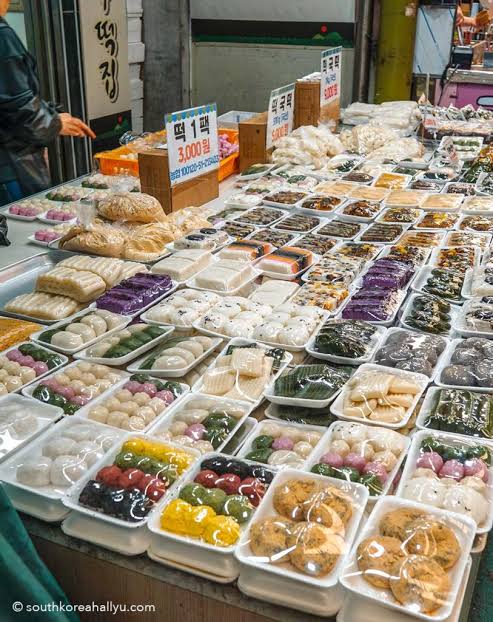
The market is not only useful for food you eat while standing in the aisle. Official tourism guidance also recommends traditional Korean snacks such as hangwa, tteok, nurungji, yakgwa, and buckwheat snacks as things to take away.
I actually think this is one of the better reasons to spend a little more time looking around instead of moving from viral stall to viral stall. A bag of scorched-rice snacks or Korean sweets tells you more about how traditional markets function than buying five foods you already saw in a Reel before arriving.
Fresh tteok is worth considering if you will eat it relatively soon. Korean rice cakes are often best when fresh and can lose their ideal texture as they sit. Packaged sweets such as yakgwa, hangwa, or nurungji are easier if you want something to take back to your hotel or give to someone later.
I would also compare a few shops rather than buying the first pre-packed souvenir set you see. Mangwon is compact enough that walking the aisle once before making your final purchases does not require much effort.
10. How I Would Actually Eat My Way Through Mangwon Market
♡ The smartest Mangwon visit is not a checklist of ten foods. It is a controlled snack crawl that still leaves enough energy for the neighborhood and river.
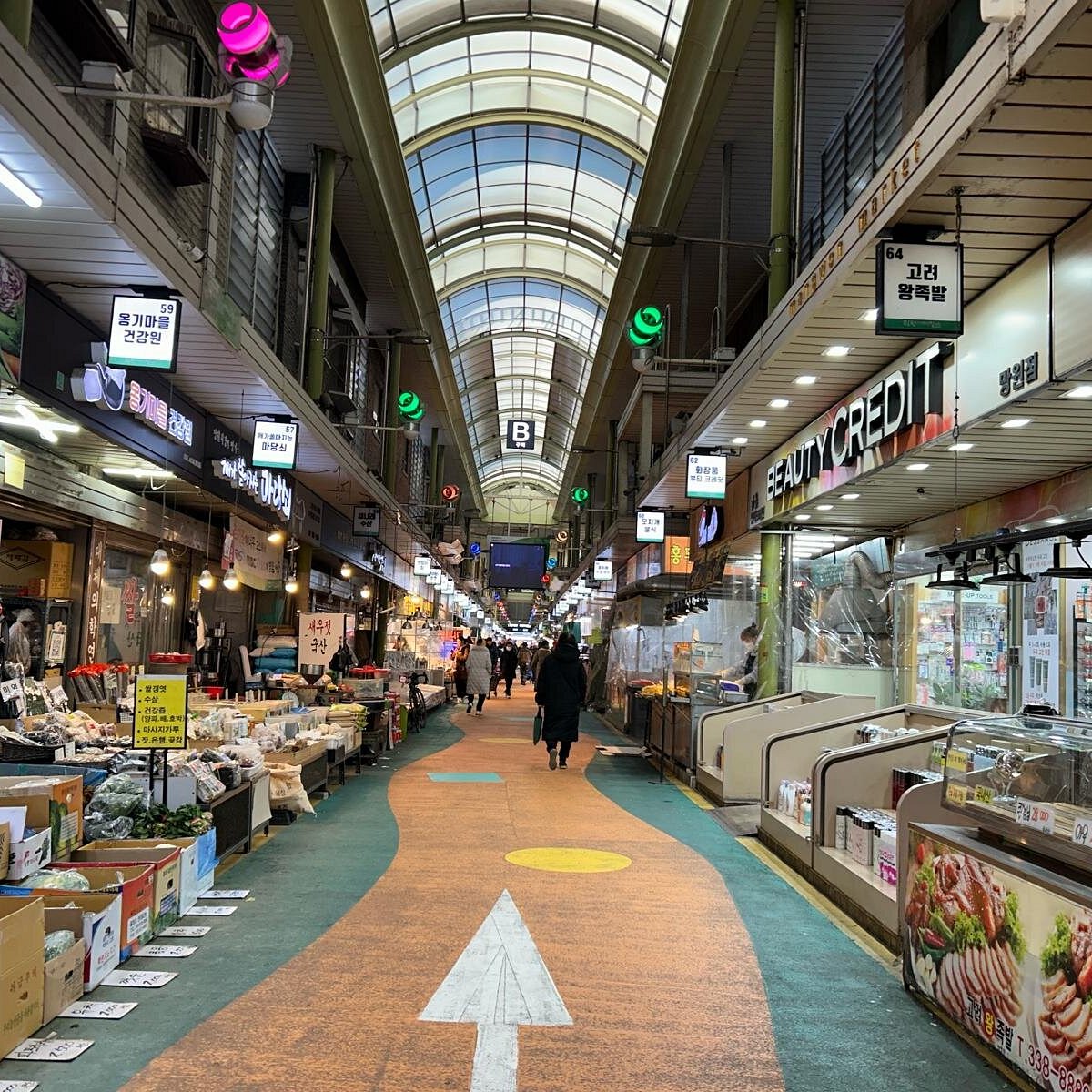
Mangwon Market is close to Mangwon Station on Line 6. The official Seoul tourism listing places the market about 351 meters from Exit 2 and lists general operating hours as 10:00 to 21:00, although individual stores vary. I would not arrive exactly at opening or wait until the final hour if food is the priority. A late-morning or early-afternoon visit gives more stalls time to be fully operating without forcing you into the busiest dinner period.
If crowds bother you, I would choose a weekday. Mangwon can feel very different when the main aisle is comfortably moving versus when everyone stops in the same narrow area to queue, photograph food, and decide what to order. Weekends are still completely doable, but I would expect more friction and build extra time into the visit.
My ideal order would be something savory first, probably a small dakgangjeong or fried pepper, followed by one or two shared fried snacks, then either tteokbokki or a sit-down bowl of noodles depending on how hungry I am. Hotteok comes near the end. Anything durable gets packed for the river.
For budgeting, I would personally set aside roughly ₩15,000 to ₩25,000 per person for a generous snack crawl, especially if two people are sharing. That is a planning budget, not an official fixed price, and what you spend can vary a lot depending on whether you add a full noodle meal, larger chicken portions, drinks, or takeaway food.
Official Korea Tourism Organization guidance says most shops accept cards, but recommends having some cash because acceptance can vary. If you live in Korea, bank transfer is also commonly available at many stalls. For a visitor, I would simply carry a small amount of cash as backup rather than assuming every single counter will handle your preferred payment method.
I would give the market itself around 90 minutes to two hours if food is the main goal. You can physically walk through it much faster, but that misses the point. The extra time lets you compare stalls, wait for something freshly cooked, sit down for one dish, and avoid eating everything at once.
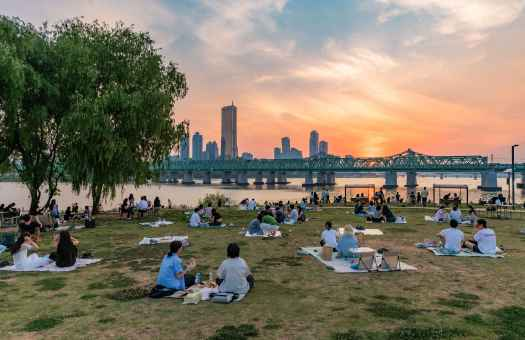
Then keep going. Mangwon-dong has independent cafés and small shops, and Mangwon Hangang Park is close enough to make a market-to-river route feel natural. Official tourism guidance explicitly recommends taking market food toward the park. That is the version of Mangwon I would choose over visiting the market, eating until uncomfortably full, and immediately getting back on the subway.
11. FAQ: Visiting and Eating at Mangwon Market
What food is Mangwon Market most famous for?
Dakgangjeong, fried green chili peppers, hotteok, croquettes, tteokbokki, fried foods, kalguksu, gimbap, and tteokgalbi are among the foods commonly associated with Mangwon Market. Official Seoul and Korea tourism guides specifically highlight several of these. The exact stalls and menus can change, so I would treat the market as a place to browse rather than building the entire trip around one vendor.
Is Mangwon Market better than Gwangjang Market for food?
They serve different kinds of trips. Gwangjang is larger, more internationally famous, and better if seeing one of Seoul's iconic traditional markets is the main objective. Mangwon feels more embedded in a residential neighborhood and is easier to combine with Mangwon-dong cafés and the Han River. If I wanted a relaxed food crawl rather than a major sightseeing stop, I would personally choose Mangwon.
What time should I visit Mangwon Market?
The official Seoul tourism guide currently lists general hours of 10:00 to 21:00, with hours varying by store. For food, I would personally aim for late morning through mid-afternoon so that most stalls are operating while leaving time to explore Mangwon-dong afterward. Check current information before making a special trip for one particular vendor.
How do I get to Mangwon Market?
Take Seoul Subway Line 6 to Mangwon Station and use Exit 2. Visit Seoul currently lists the market approximately 351 meters from the exit, making it an easy walk through the neighborhood.
How much money should I budget for Mangwon Market?
There is no single admission fee or fixed food budget. For planning purposes, I would personally allow around ₩15,000 to ₩25,000 per person for a generous snack crawl, particularly if you share several foods. A full meal, large portions, drinks, and takeaway purchases can increase that. Individual stall prices change, so check menus when you visit.
Can I pay by card at Mangwon Market?
Korea Tourism Organization guidance says most shops accept cards, although some may not, so carrying a little cash is sensible. Korean residents may also find bank transfer available at many stalls.
Is Mangwon Market good for solo travelers?
Yes. It is easy to reach by subway and comfortable to explore alone. The only downside is portion size. A solo visitor can fill up after only one or two substantial dishes, so choose small portions, prioritize foods you cannot easily try elsewhere, and consider takeaway items you can finish later.
How long should I spend at Mangwon Market?
I would allow roughly 90 minutes to two hours if eating is the focus. You can walk through much faster, but extra time gives you room to browse, queue, eat something freshly cooked, and compare stalls. Add more time if you are continuing into Mangwon-dong or Mangwon Hangang Park.
Can I take Mangwon Market food to the Han River?
Yes. Official Korean tourism guidance specifically recommends combining the market with nearby Mangwon Hangang Park and taking food there for a picnic. Choose foods that travel reasonably well, such as dakgangjeong, gimbap, or packaged snacks, and eat delicate fried items while they are still hot.
Is Mangwon Market vegetarian-friendly?
You can find foods that may appear vegetarian, including some croquettes, hotteok, rice cakes, vegetable fried items, and traditional sweets, but sauces, broths, fillings, and frying oil can contain or come into contact with meat or seafood. If you follow a strict vegetarian or vegan diet, ask the vendor about ingredients rather than relying only on appearance.
12. Sources and Planning Notes
Mangwon is a working traditional market, which means individual stall hours, menus, prices, days off, and even popular vendors can change. I have therefore avoided treating old menu prices as permanent facts. The practical information and food references in this guide were checked against official Seoul and Korea tourism resources available when this article was updated.
VISITKOREA: Mangwon-dong and Mangwon Market Guide
VISITKOREA: Mangwon Market Hotteok Guide
Seoul Metropolitan Government: Mangwon Market and Mangnidan-gil
At the time of writing, Visit Seoul lists Mangwon Market at 27 Poeun-ro 6-gil, Mapo-gu, approximately 351 meters from Mangwon Station Exit 2, with general operating hours of 10:00 to 21:00. Individual store hours vary. Check current listings before your visit if one particular stall is the main reason you are going.
References to which foods I would prioritize, how much I would personally order, when I would eat them, the suggested ₩15,000-₩25,000 planning budget, and how I would structure a Mangwon food crawl are recommendations rather than official market rules or fixed prices.
Want More Seoul Food and Neighborhood Guides?
Join the list for Seoul food finds, Korean culture, cafés, neighborhoods, K-beauty, shopping, and the places I think are actually worth adding to a Seoul itinerary.
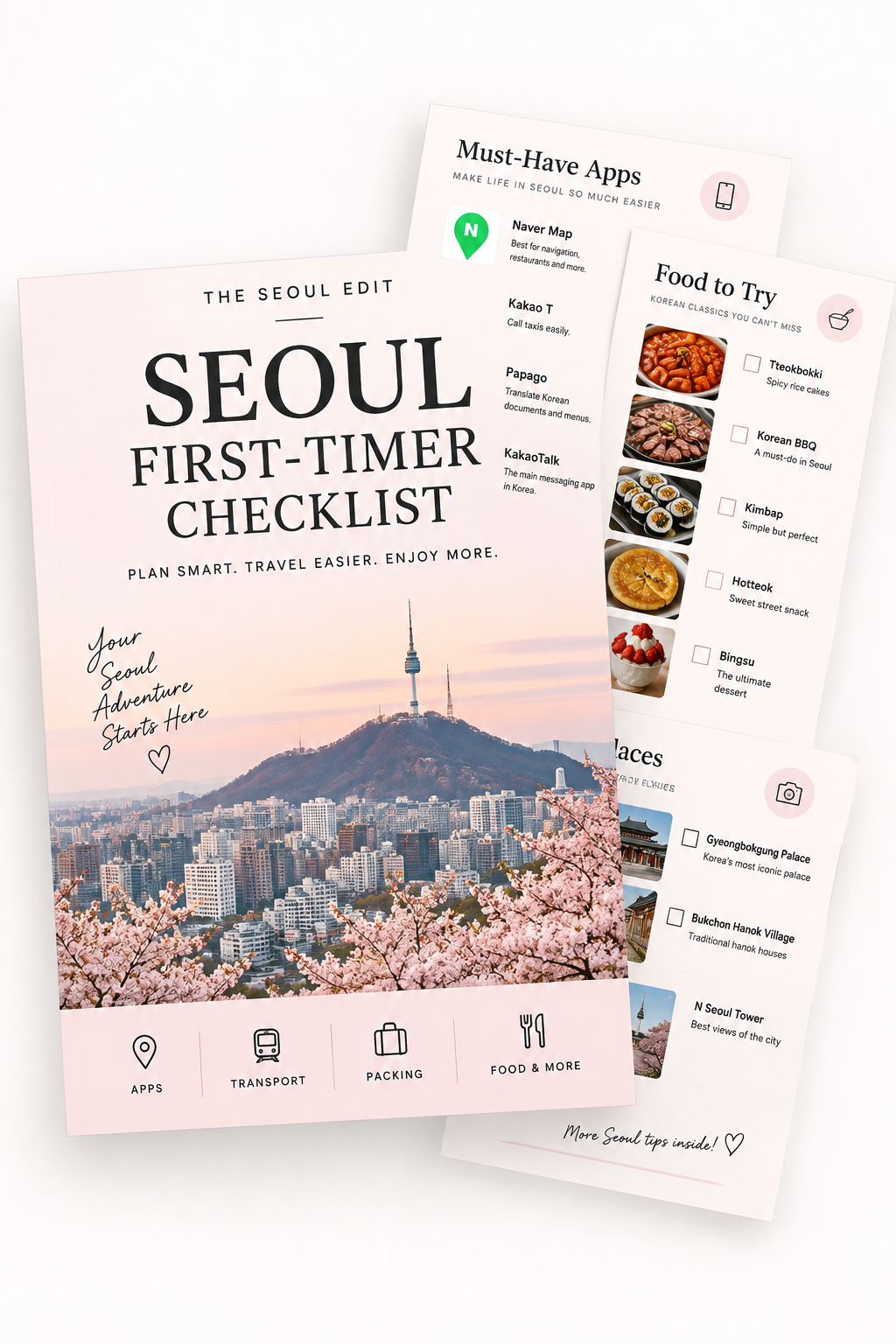
Planning a trip to Seoul?
13. Final Thoughts
I would not go to Mangwon Market trying to eat every famous thing in one visit. That sounds ambitious until your first serving of fried chicken, one croquette, half a stuffed pepper, and a few rice cakes suddenly become a full meal.
The better strategy is to choose a few things that benefit from being eaten immediately, share wherever possible, and leave some room for whatever looks good once you are actually standing there. My personal priorities would be dakgangjeong, the fried green pepper, one croquette, and hotteok, with tteokbokki or kalguksu depending on whether I wanted another snack or an actual meal.
I also would not make Mangwon Market the entire day. The market is compact, Mangwon-dong itself is worth walking around, and the Han River gives you somewhere to take the food that survives the journey. A market snack crawl followed by coffee and a walk toward Mangwon Hangang Park feels much more like a good Seoul afternoon than arriving, checking off ten stalls, and leaving.
And that is probably the biggest reason I recommend Mangwon. You can eat very well here, but the market also makes sense as part of its neighborhood. You are not visiting a sealed-off attraction. You are dropping into a piece of everyday Seoul that happens to have very good snacks.