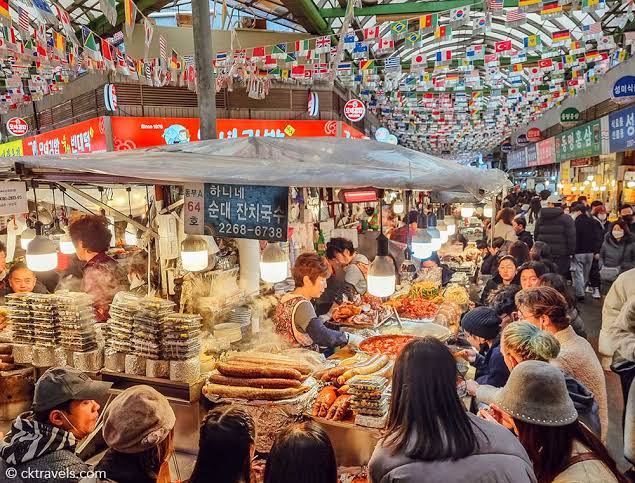
If you search for the best food markets in Seoul, Mangwon and Gwangjang have a habit of ending up on the same lists.
On paper, that makes sense. Both are traditional markets. Both have enough Korean street food to replace lunch. Both attract visitors who arrive specifically to eat. And both now show up constantly in travel content.
In practice, they feel completely different.
Gwangjang is large, historic, centrally located, and internationally famous. Its food street is part of the attraction, and there are a handful of dishes I strongly associate with eating there. Mangwon is smaller and much more intertwined with the residential neighborhood around it. I go there wanting to snack rather than complete a list of legendary dishes.
That distinction matters because "which market is better?" is not really a question about the number of food stalls. It is about the type of day you want, how much crowding you tolerate, whether you are traveling alone, how much you want to spend, and whether you care more about famous foods or casually discovering several things.
If I had to choose only one for food, I would choose Mangwon. If I were helping a first-time visitor plan a short Seoul trip, the answer becomes much closer.
More Mangwon and Seoul food planning:
Read: What to Eat at Mangwon Market
Read: Mangwon Market Food Crawl: What I Would Eat With ₩20,000
1. The Quick Answer: I Would Choose Mangwon for Food
♡ If food itself is the priority, Mangwon is the market I would rather spend an afternoon eating through. Gwangjang still wins in a few important situations.
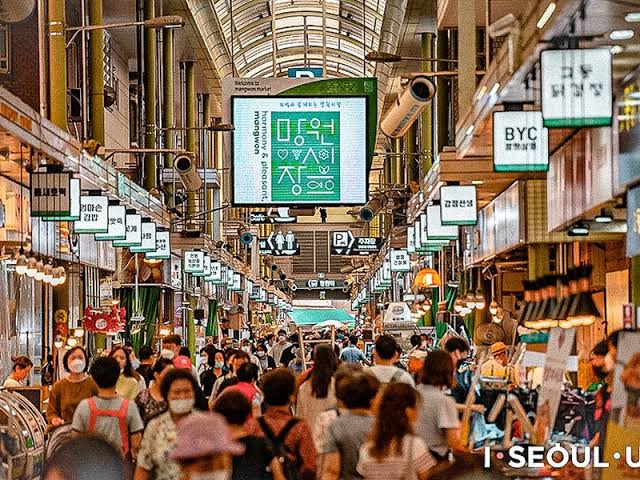
If somebody visiting Seoul asked me to pick only one of these markets specifically for a food crawl, I would usually send them to Mangwon Market. It is smaller, easier to understand, more naturally connected to the surrounding neighborhood, and better suited to buying a series of inexpensive foods without feeling like the whole outing revolves around one famous tourist attraction.
That does not mean Gwangjang is overrated or that I would tell a first-time visitor to skip it. Gwangjang is one of Seoul's most historically important traditional markets, and its food street has several dishes that are much more closely associated with the market itself, particularly bindaetteok, yukhoe, mayak gimbap, noodles, and bibimbap. Official Korean tourism material describes its food street as one of the most popular sections of the entire market. If your goal is to experience one of Seoul's iconic market scenes, Gwangjang has the stronger claim.
The difference is really about what you mean by "better." Mangwon is better for the kind of afternoon where you snack, browse, buy another snack, walk through the neighborhood, get coffee, and eventually head toward the Han River. Gwangjang is better when the market itself is part of a central-Seoul sightseeing day and you want foods with a stronger historical association with that specific place.
My quick verdict
Best overall food crawl: Mangwon Market
Best iconic Seoul market experience: Gwangjang Market
Best for lower-pressure wandering: Mangwon Market
Best for famous traditional dishes: Gwangjang Market
Best for first-time Seoul sightseeing: Gwangjang Market
Best market plus neighborhood day: Mangwon Market
If you have enough time, the best answer is obviously to eat at both. They are different enough that visiting one does not make the other redundant. But if your itinerary forces you to choose, the rest of this comparison should make the decision much easier.
2. Mangwon Is Better for a Casual Street-Food Crawl
♡ Mangwon gives you lots of smaller, approachable foods without making every stop feel like a famous attraction you need to queue for.
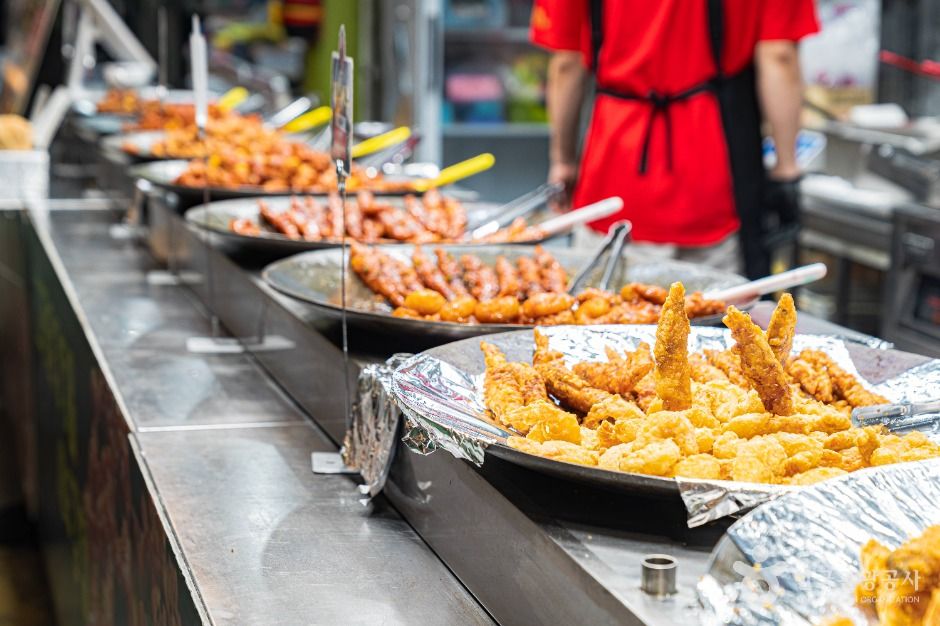
Mangwon's biggest advantage is that its food fits the format of a crawl very naturally. Official Korea tourism guidance highlights foods such as dakgangjeong, crispy fried green peppers, hotteok, croquettes, kalguksu, gimbap, tteokbokki, and other fried snacks. That is a useful mix because you are not choosing between five versions of the same meal. You can move between chicken, noodles, filled bread, rice cakes, fried vegetables, and sweets.
I also find Mangwon easier to portion strategically. There are foods you can buy in smaller quantities, split with another person, or take away if you get full. That matters more than people realize. A good street-food market is not only about whether the individual dishes taste good. It is about whether you can try enough of them before your appetite disappears.
The market itself is compact, so you can walk through once, see what looks good, and then loop back. That is much less stressful than treating every stall as a once-only decision. If the fried chicken line is long when I first pass it, I can eat something else and check again later rather than committing twenty minutes to a queue because I am afraid I will never find the stall again.
Mangwon is also still visibly a neighborhood market. Alongside the snack stalls are produce, side dishes, groceries, seafood, and other everyday goods. Official tourism material specifically describes it as a place where local residents still shop as part of daily life. That changes the feeling of eating there. You are visiting somewhere that happens to have become popular for food rather than entering a food attraction isolated from the surrounding neighborhood.
3. Gwangjang Wins for Iconic Market Foods
♡ If you want dishes whose names are immediately connected to one famous Seoul market, Gwangjang has the stronger lineup.
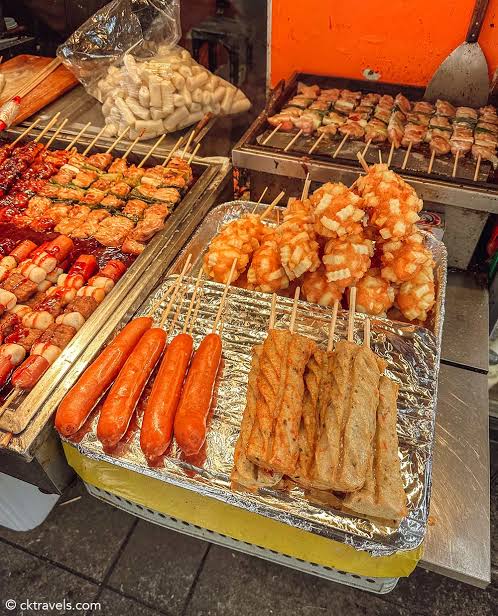
Gwangjang's advantage is almost the reverse of Mangwon's. Rather than being my favorite place for casually picking whatever looks good, it has several foods that people specifically travel there to eat. Official Korea tourism guidance highlights bindaetteok, yukhoe, small gimbap, noodles, and bibimbap among the market's best-known foods.
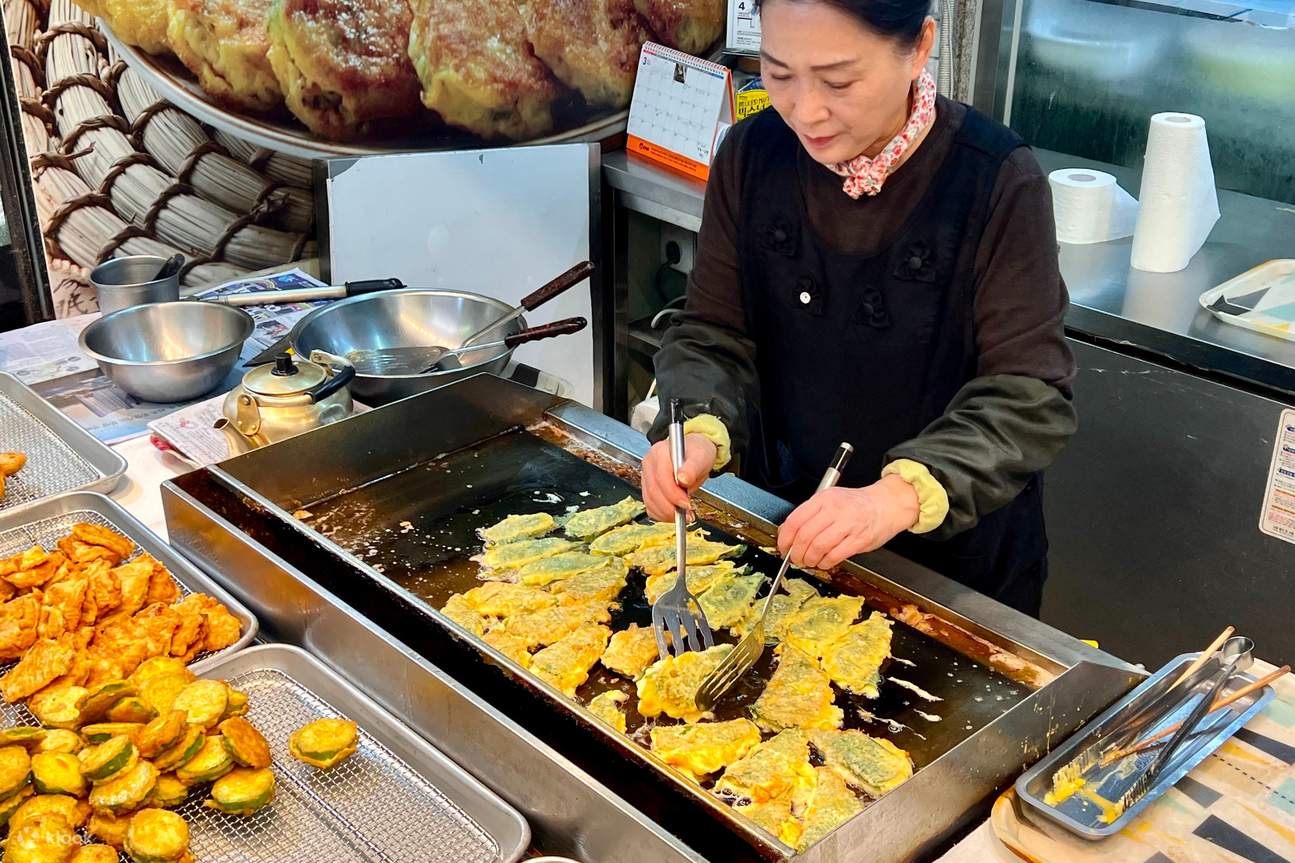
Bindaetteok is probably the clearest example. The mung-bean pancake arrives crisp and oily on the outside, dense and savory inside, and it feels like exactly the kind of food that makes sense inside a noisy traditional market. Gwangjang is also strongly associated with raw beef dishes, including yukhoe and combinations of raw beef with live octopus. Official tourism material still specifically recommends the market as a destination for those foods.
Then there is the tiny gimbap usually associated with mustard dipping sauce. The point is not that you cannot find gimbap anywhere else in Seoul. Obviously you can. What Gwangjang offers is the experience of eating several foods that have become part of the market's own identity.
If I were taking someone to their first traditional market in Korea and they wanted the foods they had seen in Seoul travel videos, Gwangjang would probably satisfy that expectation more immediately. It gives you recognizable market scenes, long counters, steaming pans, stacks of pancakes, raw-beef restaurants, and a dense concentration of people eating in the middle of the market.
The tradeoff is that fame changes how a place feels. Some parts of Gwangjang can feel more like a destination designed around visitors than a casual neighborhood food stop. That does not automatically make the food worse. It simply means I approach it with different expectations.
4. For Variety, Mangwon Has the Slight Edge
♡ Gwangjang has stronger signature dishes, but Mangwon makes it easier to build a varied meal from many small, inexpensive stops.
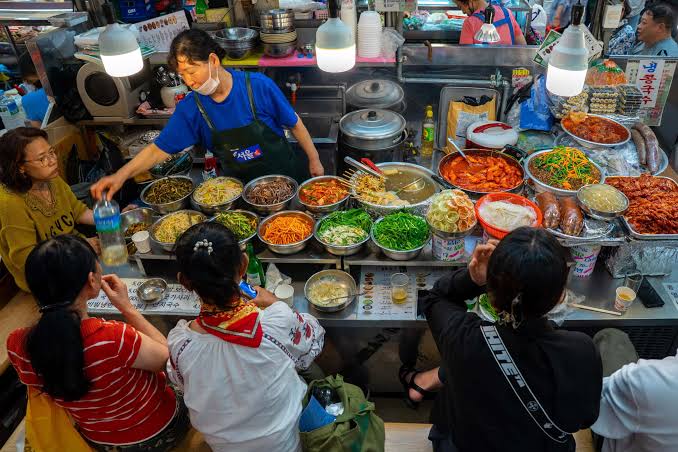
When people ask which market has "more food," I think that is the wrong question. Both have enough food to make you uncomfortably full. What matters is the type of variety.
At Gwangjang, the foods I would prioritize are relatively substantial. A plate of bindaetteok is heavy. Yukhoe is something I would sit down and properly eat. Noodles and bibimbap are meals. Even the famous gimbap becomes surprisingly filling once it is added to everything else.
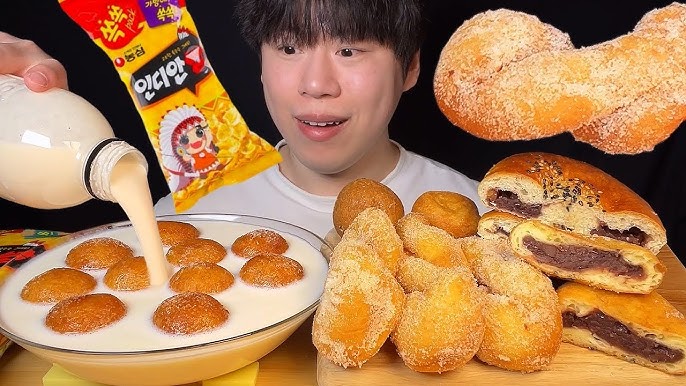
Mangwon has more foods that naturally behave like individual snack stops. A croquette can be one item. A hotteok is one dessert. A stuffed pepper can be split. Dakgangjeong can be bought in a smaller cup. Tteokbokki, fried foods, noodles, gimbap, and traditional sweets fill in the gaps depending on how hungry you still are.
This is why I give Mangwon the edge for people whose goal is totaste as many different things as possible. Gwangjang may have the more iconic top five. Mangwon gives me an easier top ten without requiring an enormous appetite.
Groups have an advantage at either market. If four people are sharing, Gwangjang's larger dishes become much easier to sample. For a solo traveler, however, Mangwon's smaller-food format is much more forgiving.
5. Mangwon Feels Easier to Eat on a Budget
♡ I would choose Mangwon if the challenge were to stretch a fixed amount of money across as many different foods as possible.
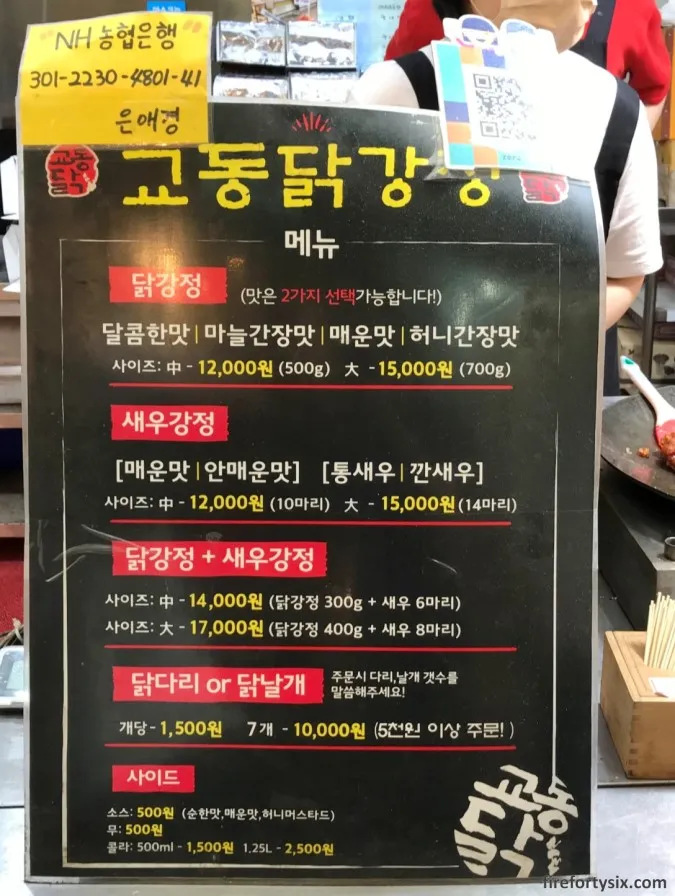
I am careful about making blanket statements that one market is "cheaper" because prices vary enormously by stall and change over time. There is no single Mangwon price and no single Gwangjang price.
What I can say from planning actual food crawls is that Mangwon makes a small budget easier to divide. In my separate ₩20,000 Mangwon Market challenge, it was possible to build a basket across chicken, a croquette, noodles, a stuffed pepper, gimbap, a tteok skewer, and hotteok using menu prices available when I checked them. That kind of budget distribution is exactly why I like Mangwon for casual eating.
At Gwangjang, I am more willing to spend on a few specific foods. Yukhoe, for example, is naturally going to consume more of a budget than a single croquette or hotteok. Recent official tourism listings for several Gwangjang yukhoe restaurants show individual raw-beef dishes priced well above basic street-snack territory.
That does not make Gwangjang bad value. If the reason you came is specifically to eat yukhoe or bindaetteok, spending more on those signature foods makes perfect sense. I simply would not use the same strategy at both markets.
At Mangwon, I think in terms of quantity of experiences. At Gwangjang, I think in terms of choosing a few dishes I actually came there for.
6. Mangwon Is Usually Easier if You Hate Crowds
♡ Neither market is secret, but Gwangjang can feel far more intense when the food street is busy.
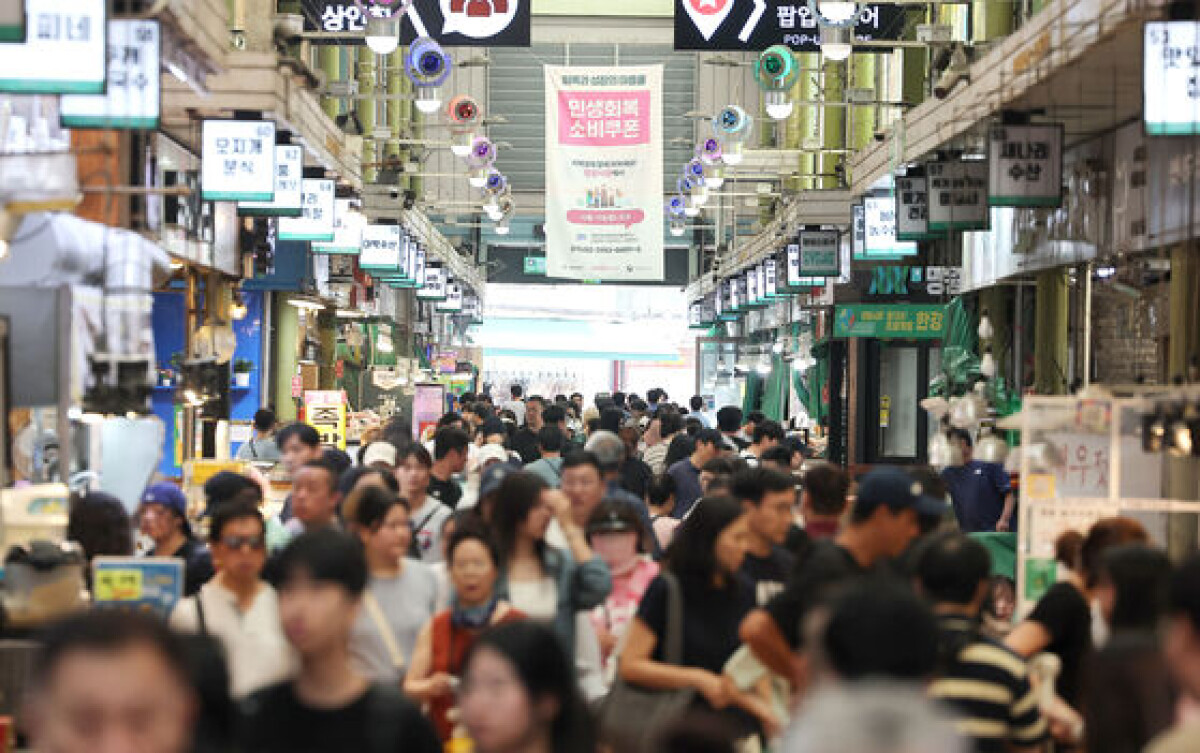
This is probably the biggest practical difference for visitors who dislike crowds. Gwangjang is one of Seoul's best-known traditional markets internationally, and official tourism material describes its food street as a major tourist attraction. When that area gets busy, you are dealing with people queuing, stopping for photos, looking for particular stalls, sitting at narrow counters, and moving in several directions at once.
Mangwon can absolutely get crowded too. It is popular with younger Koreans, weekend visitors, food-tour groups, and international travelers. Official tourism material even notes that some viral foods can develop lines. The difference is that Mangwon rarely feels as monumental. The market is smaller and the surrounding neighborhood gives you somewhere to escape when you have had enough.
Personally, I would choose a weekday for either one. For Mangwon, late morning through early afternoon works well for a food-focused day. At Gwangjang, going earlier can help you see the market before the food street reaches its most hectic period.
If someone in your group becomes stressed in crowded, noisy spaces, I would choose Mangwon without much hesitation. If you enjoy energy and want the spectacle of people eating shoulder-to-shoulder inside one of Seoul's most famous markets, Gwangjang turns that exact intensity into part of the experience.
7. Mangwon Feels More Like a Neighborhood, Gwangjang Feels More Historic
♡ This is not really a question of authenticity. They represent two different versions of what a Seoul market can be.
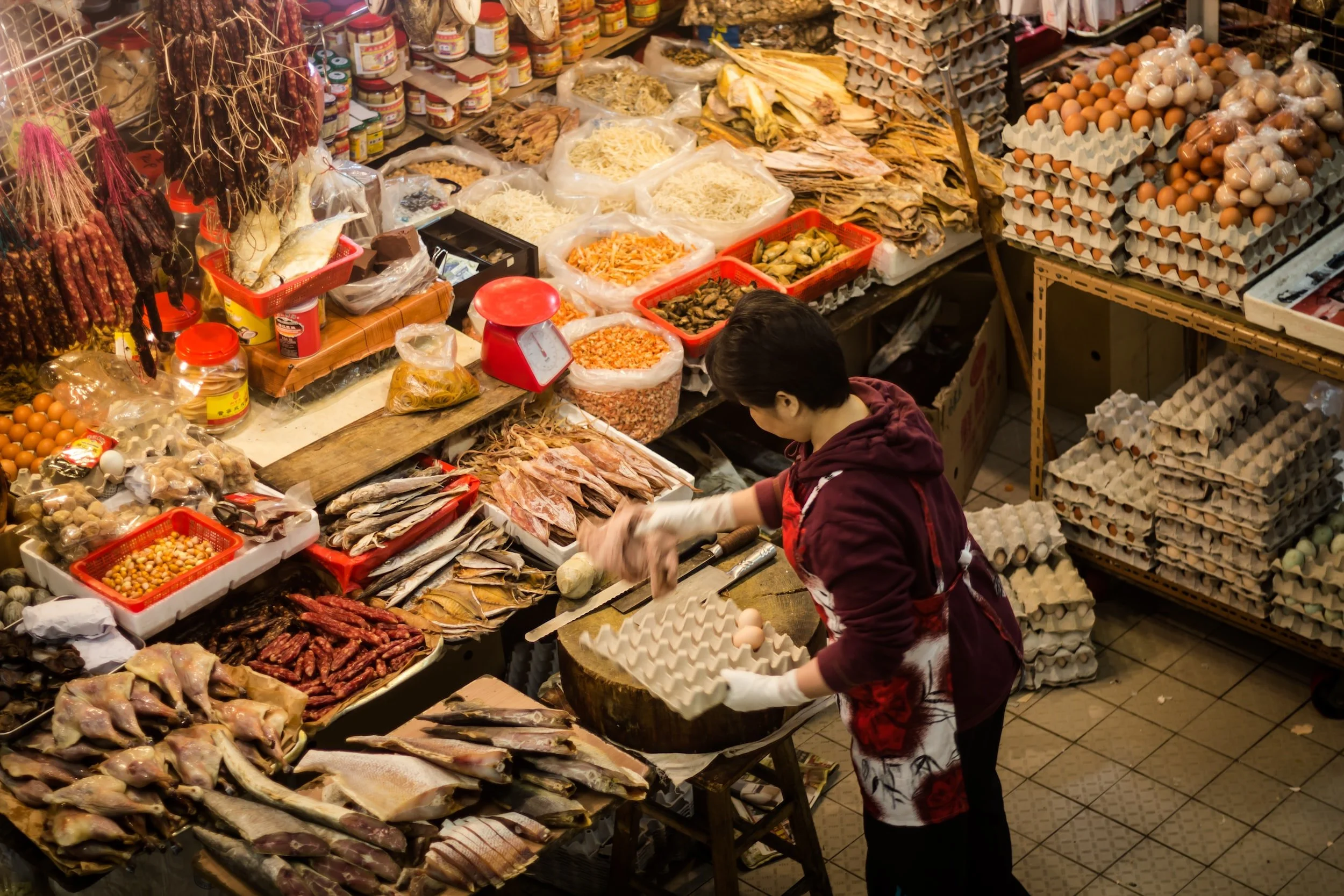
I would avoid describing Mangwon as "authentic" and Gwangjang as "touristy," because that simplifies both places too much. Gwangjang is touristy because it is historically important, centrally located, famous for food, and genuinely worth seeing. A place does not become fake just because international visitors discover it.
The better distinction is that Mangwon still feels strongly tied to the daily rhythm of Mangwon-dong. People buy vegetables, side dishes, groceries, seafood, and household items while visitors buy snacks. Official Korea tourism material describes exactly that mixture of neighborhood shopping and food tourism.
Gwangjang, meanwhile, has much more historical weight. Korea Tourism Organization describes it as Korea's first permanent market, and the market still contains textile wholesalers, traditional goods, groceries, bedding, handicrafts, and other businesses alongside the famous food street.
For atmosphere, my preference depends on the day. If I want an easy Saturday with snacks, coffee, neighborhood wandering, and the river, I prefer Mangwon. If I am already spending the day around Jongno, palaces, Cheonggyecheon, or Dongdaemun and want a market that feels embedded in central Seoul's older commercial history, Gwangjang makes much more sense.
8. Gwangjang Is Better for a Central-Seoul Sightseeing Day
♡ Mangwon has the better neighborhood pairing, but Gwangjang is much easier to slot into a classic first-time Seoul itinerary.
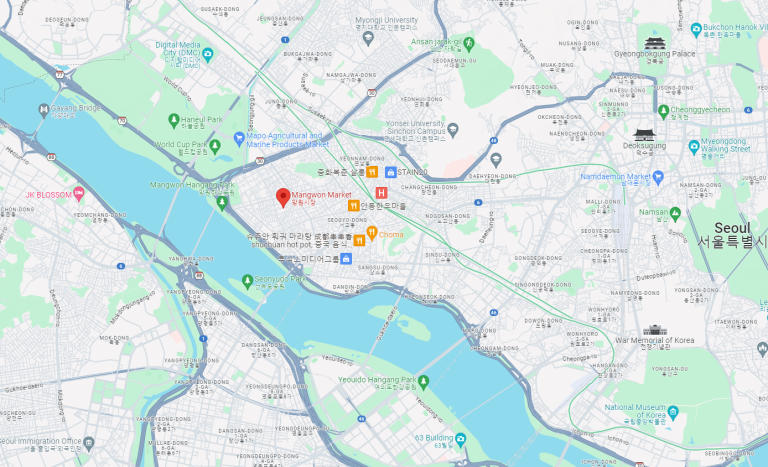
Gwangjang's location is one of its strongest arguments. Visit Seoul currently places the market just about 62 meters from Jongno 5-ga Station Exit 8 on Line 1. It is also close to Cheonggyecheon and sits in the broader Jongno and Dongdaemun area, which makes it easy to combine with a sightseeing schedule.
If you only have three or four days in Seoul, that matters. You can spend the morning around the palaces or Jongno, eat at Gwangjang, walk Cheonggyecheon, and continue toward Dongdaemun without designing a completely separate day around the market.
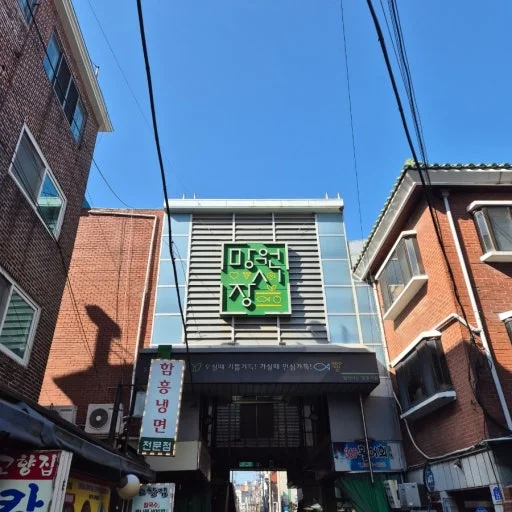
Mangwon requires more deliberate intention. It is reached from Mangwon Station on Line 6, and official tourism guidance places the market roughly a six-minute walk from Exit 2. You are traveling west into Mapo rather than staying inside the palace-and-Jongno sightseeing cluster.
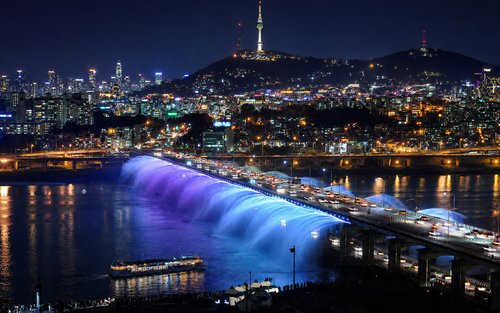
But Mangwon's location becomes an advantage if you build the correct day around it. Mangwon-dong has cafés, independent shops, and a much more relaxed residential feel, while Mangwon Hangang Park is close enough that official tourism material specifically recommends buying market food and taking it toward the river.
So Gwangjang wins for logistical efficiency. Mangwon wins for the quality of the neighborhood day around the market.
9. For a First Trip to Seoul, I Might Still Pick Gwangjang
♡ Mangwon is my food preference, but a first-time visitor is not choosing markets in a vacuum.
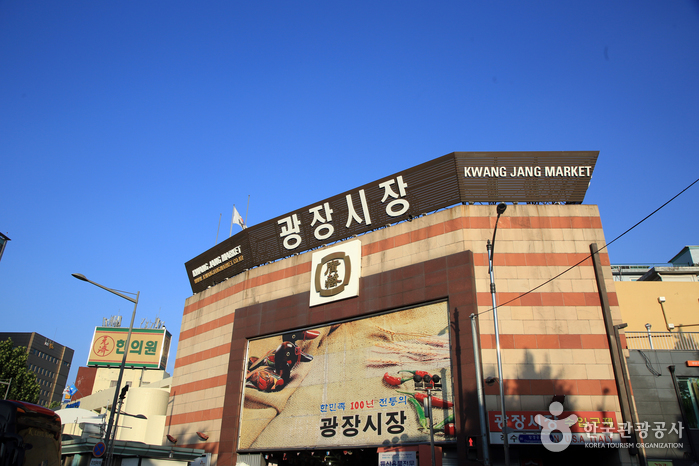
This is where my answer changes slightly. If someone told me, "I have been to Seoul several times and I just want a great market-food afternoon," I would say Mangwon. If they told me, "I have four days in Korea and this is probably my only traditional market," I would seriously consider Gwangjang.
Gwangjang gives a first-time visitor more layers in one stop. There is the food street, but also textile trading, traditional goods, the market's long history, and a location in one of Seoul's historically dense central districts. It fits the version of Seoul that many first-time travelers are already building around palaces, Jongno, Dongdaemun, and Cheonggyecheon.
It also has foods that travelers frequently associate specifically with Seoul market culture. Even if the experience is busier and more tourism-heavy, there is value in seeing the place that appears in so many food documentaries, guidebooks, and travel videos.
Mangwon becomes more appealing once the goal shifts from "experience the famous Seoul market" to "spend a genuinely pleasant afternoon eating around a Seoul neighborhood." That distinction is why both markets can be good recommendations without pretending they are interchangeable.
10. My Winner: Mangwon for Food, Gwangjang for the Experience
♡ If the question is literally which one I would choose for eating, Mangwon wins. The answer changes if sightseeing is equally important.
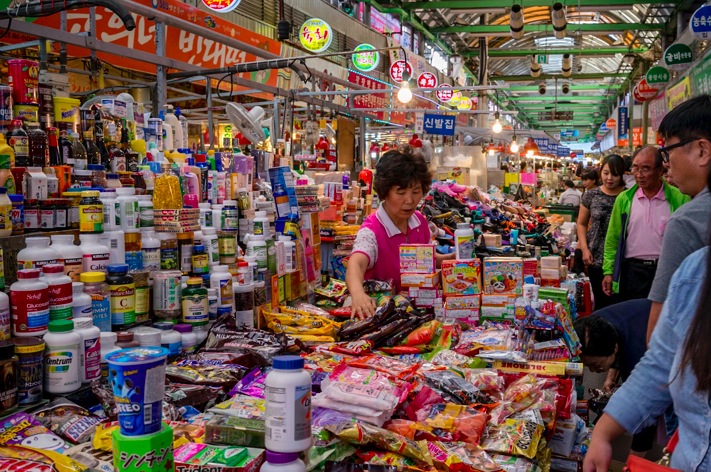
After comparing the two, my personal winner for a food-focused visit is Mangwon Market.
I prefer being able to move between small inexpensive foods, change my mind when I see something cooking, step outside into Mangwon-dong, take leftovers toward the river, and let the market become one part of the afternoon rather than the entire event. The experience feels easier and less performative, especially if I am eating with one other person rather than a large group.
Gwangjang still wins several categories. Its signature foods are more iconic. Its historical importance is much greater. Its central location is more convenient for a traditional sightseeing itinerary. And if somebody has dreamed about eating bindaetteok or yukhoe at Gwangjang after seeing it online for years, I would not redirect them somewhere else just because Mangwon is my personal preference.
I also would not cross Seoul specifically for Mangwon if I had already planned an entire day around Jongno and only wanted one quick market meal. That is where travel guides sometimes become unrealistic. A place can be slightly better in isolation and still be the worse choice for your actual itinerary.
My final rule is simple: choose Mangwon when the food crawl is the point; choose Gwangjang when the market is part of seeing Seoul.
11. FAQ: Mangwon Market vs Gwangjang Market
Is Mangwon Market or Gwangjang Market better for food?
For a relaxed food crawl with lots of smaller snacks, I personally prefer Mangwon Market. For famous market dishes such as bindaetteok, yukhoe, small gimbap, noodles, and bibimbap, Gwangjang Market has the stronger iconic lineup. The better choice depends on whether food variety or the classic Seoul market experience matters more to you.
Which market is cheaper, Mangwon or Gwangjang?
Prices vary by stall and change over time, so there is no universal answer. I find Mangwon easier for a low-budget crawl because many foods can be purchased as smaller snacks, while some of Gwangjang's signature dishes, particularly raw beef dishes, naturally cost more. Check current menu boards rather than relying on old online prices.
Which market is less touristy?
Mangwon generally feels more like a neighborhood market because local residents continue to shop there for groceries, produce, side dishes, and everyday goods. Gwangjang attracts far more sightseeing traffic, especially around its famous food street. That does not make Gwangjang inauthentic; it is also an important historic working market.
Which market is better for a first trip to Seoul?
I would lean toward Gwangjang for many first-time visitors because it is historically significant, centrally located, close to Jongno and Cheonggyecheon, and easy to combine with a classic sightseeing itinerary. If food and neighborhood atmosphere are more important than famous attractions, choose Mangwon.
Which market is better for solo travelers?
Mangwon is slightly easier for solo travelers because many foods can be bought in smaller portions and the market is simple to navigate. At Gwangjang, sharing helps if you want to sample heavier foods such as bindaetteok, yukhoe, noodles, and other full dishes.
Which market is better for couples?
I would choose Mangwon for a casual date because it combines naturally with Mangwon-dong cafés and Mangwon Hangang Park. Gwangjang is better for couples who want a more energetic central-Seoul food experience followed by Jongno, Cheonggyecheon, or Dongdaemun.
How long should I spend at Mangwon Market?
For food, I would allow around 90 minutes to two hours. The market itself is compact, but that gives you enough time to browse, queue, eat several foods, and avoid rushing. Add more time for cafés or Mangwon Hangang Park afterward.
How long should I spend at Gwangjang Market?
Around two hours is comfortable if you want to explore the food street and some of the wider market. You can eat much faster, but Gwangjang is larger and has more non-food sections worth seeing than Mangwon.
What are the current Gwangjang Market hours?
Official tourism listings currently give the main market hours as 09:00 to 18:00, with the food street open 09:00 to 23:00. The main market is generally closed Sundays, while the food street is listed as open year-round. Individual businesses may differ.
What are the current Mangwon Market hours?
Official tourism information currently lists general Mangwon Market hours as 10:00 to 21:00, with operating hours and holidays varying by store. Check a specific stall before visiting if that shop is the main reason for your trip.
Can I visit both Mangwon and Gwangjang Market in one day?
You can, but I would not recommend it unless markets are a major focus of your trip. They are in different parts of Seoul, and eating properly at both in one day can become exhausting. I would rather pair Gwangjang with Jongno and Cheonggyecheon, and Mangwon with Mangwon-dong and the Han River.
12. Sources and Planning Notes
This comparison combines verified practical information with my own recommendations about which market suits different kinds of travelers. Market hours, addresses, transportation, historically associated foods, and nearby attractions were checked against official Seoul and Korea tourism resources.
VISITKOREA: Mangwon-dong and Mangwon Market
VISITKOREA: Gwangjang Market Food Guide
At the time this article was prepared, official tourism information listed Mangwon Market at 27 Poeun-ro 6-gil, Mapo-gu, with general hours of approximately 10:00 to 21:00 and individual shop hours varying. Mangwon Station Exit 2 is the most useful subway approach.
Gwangjang Market is officially listed at 88 Changgyeonggung-ro, Jongno-gu. Visit Seoul currently lists the general market at 09:00 to 18:00 and the food street at 09:00 to 23:00, with the food street operating year-round. Jongno 5-ga Station Exit 8 on Line 1 is listed approximately 62 meters from the market.
Individual store hours, holidays, menus, prices, and food availability can change. Always check current information if a specific restaurant or stall is essential to your visit.
Statements such as Mangwon being better for casual food crawling, Gwangjang being better for iconic food and first-time sightseeing, and my recommendations for solo travelers, couples, or crowd avoidance are personal planning judgments, not official rankings.
Want More Seoul Food and Neighborhood Guides?
Join the list for Seoul food finds, Korean culture, cafés, neighborhoods, K-beauty, shopping, markets, and practical local guides that help you decide what is actually worth fitting into your Seoul itinerary.
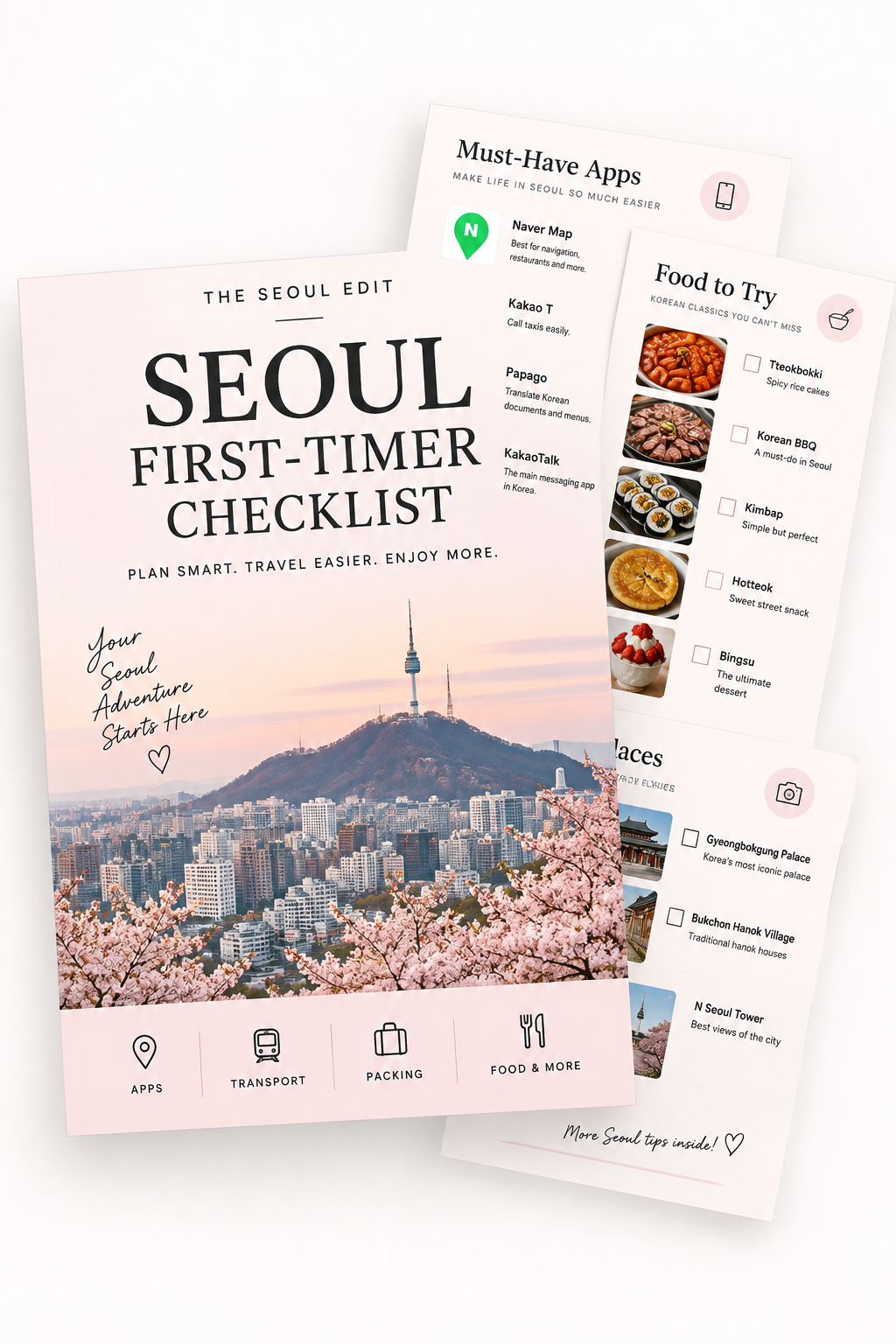
Planning a trip to Seoul?
13. Final Thoughts
If you forced me to choose one market purely based on where I would rather spend two hours eating, I would go to Mangwon.
It fits the way I like to eat at markets. I can buy a small serving of something, keep walking, change my mind when another stall looks better, and leave enough appetite for dessert. When I am done, I am already in a neighborhood where getting coffee or walking toward the Han River feels like the obvious next step.
But I would never tell somebody that Gwangjang is unnecessary. The reason it is famous is not invented. Its history is important, its central location is extremely useful, and foods like bindaetteok and yukhoe are genuinely tied to the experience of eating there.
The mistake is thinking one market has to replace the other. Gwangjang is the one I would include when showing somebody classic central Seoul. Mangwon is the one I would choose when I want a food afternoon I actually enjoy at a slower pace.
So if your question is "which is better for food?" my answer is Mangwon. If your question is "which gives me the most iconic Seoul market experience in one stop?" Gwangjang wins.
And if you have enough time, stop comparing them and eat at both.