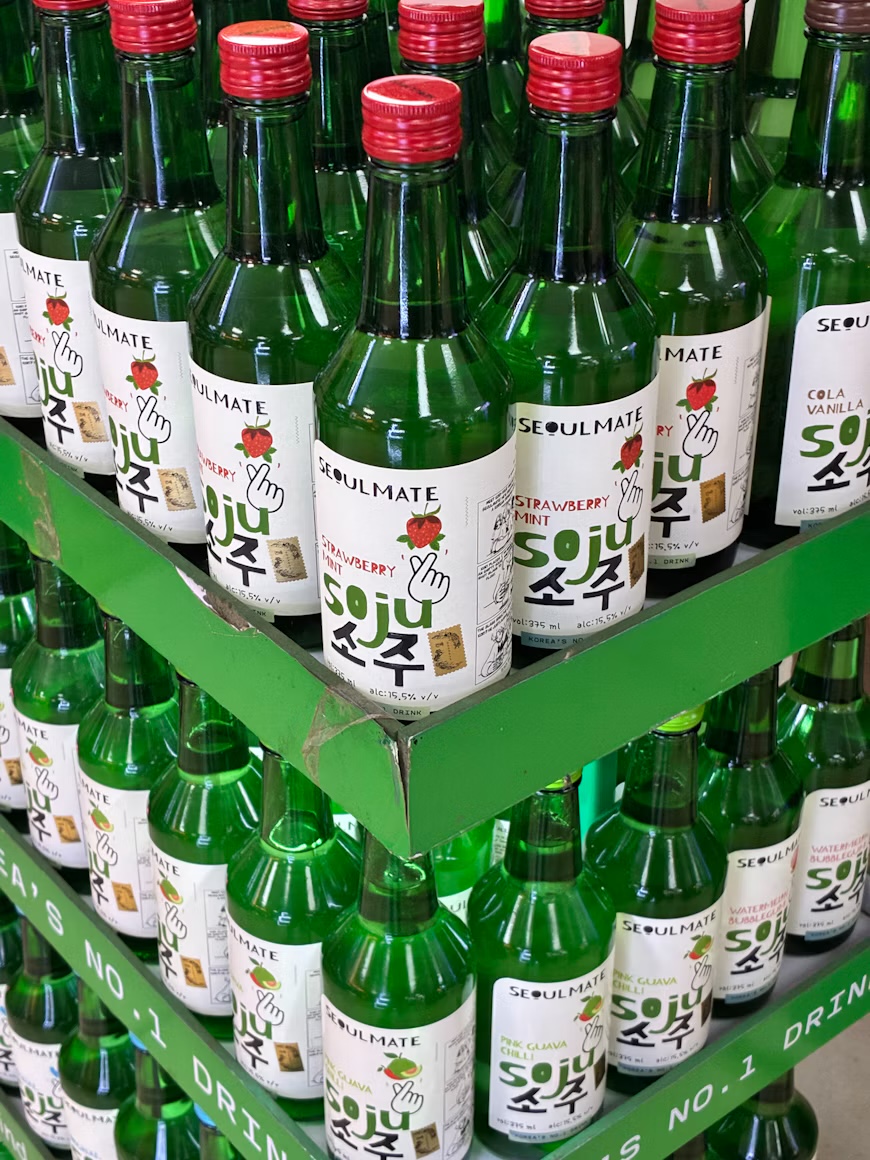
What is the difference between Chamisul, Jinro, Chum Churum, Saero, and the fruit-flavored bottles lining Korean convenience-store shelves? More than the label. Strength, sweetness, production method, and even regional history can change what you are buying.
This guide is for adults who want to understand Korean soju rather than blindly order the most recognizable green bottle. It covers mainstream diluted soju, regional brands, fruit varieties, and traditional distilled spirits. It also explains what Korean labels actually say, how to compare bottle strength, and what to try with food.
If you are planning a meal, see our Korean BBQ guide. And if you are choosing between Seoul nightlife neighborhoods, read Hongdae vs Itaewon.
Quick answer: For a classic Korean restaurant experience, choose a mainstream unflavored soju and check its ABV. For sweetness, look at flavored bottles but do not mistake sweet for weak. For a distinctly different spirit, explore traditional distilled soju. No single brand is objectively best.
1. Soju Is Not Just One Drink
The most important distinction is how the bottle is made.
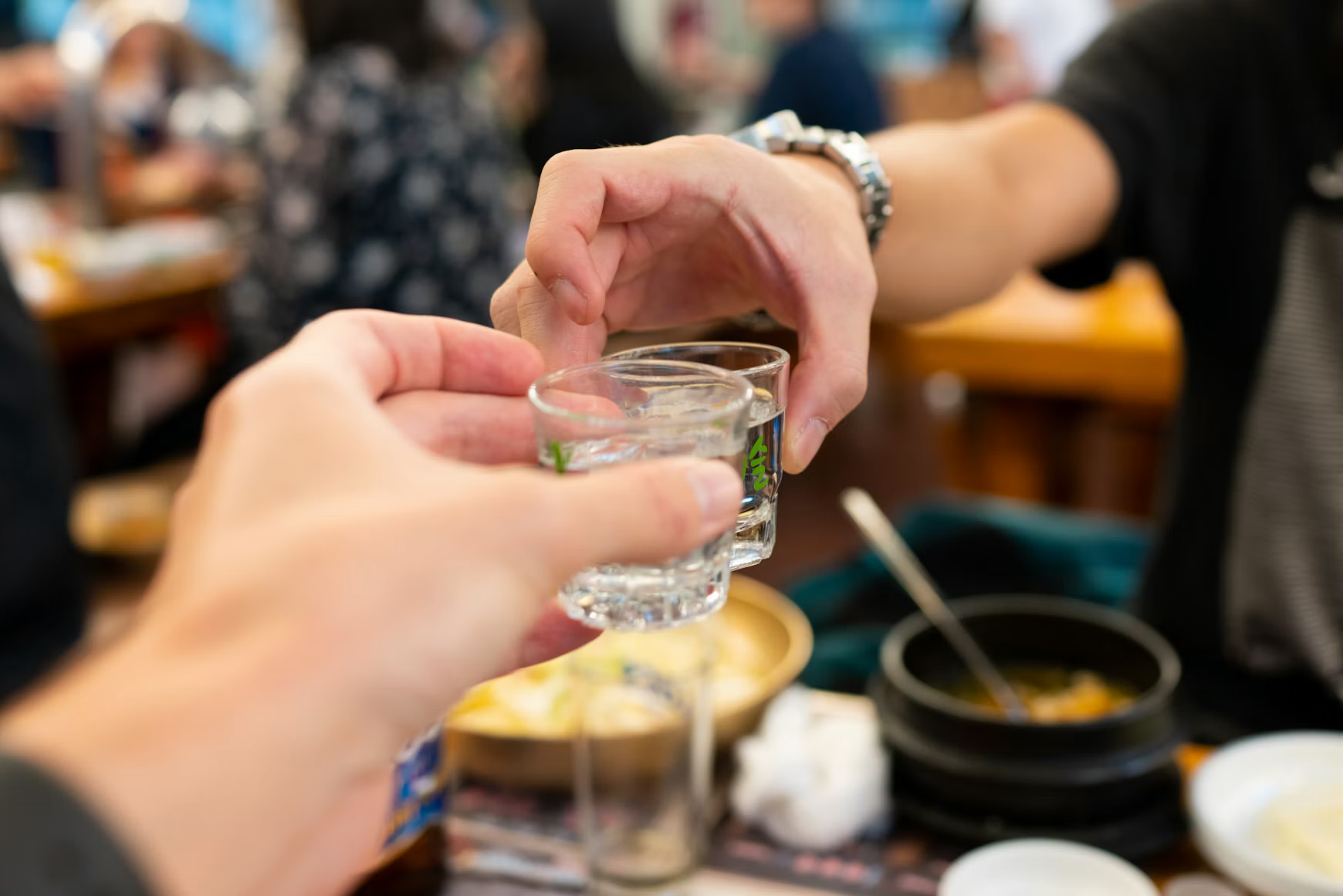
Walk into a Korean convenience store and the green bottles can look interchangeable. They are not. The inexpensive, widely distributed soju served at barbecue restaurants is usually a diluted soju: highly purified alcohol is blended with water and adjusted for flavor. Traditional distilled soju is made by distilling a fermented base and may retain more character from its ingredients and production process. These are production categories, not simple labels for cheap and expensive.
That difference matters more than the color of the bottle. If you want a light, cold drink alongside grilled pork, a mainstream diluted soju may be exactly right. If you want to explore aroma, grain character, and a slower sipping experience, a traditional distilled bottle is a different direction entirely.
Also distinguish unflavored soju from fruit-flavored soju. Fruit varieties often have a lower stated alcohol percentage and a sweeter taste, but the actual strength and sugar content depend on the specific product. Read the label rather than assuming every green-grape bottle has the same recipe.
2. The Major Soju Brands: What Actually Changes?
Start with the bottle name, then check the exact variant.
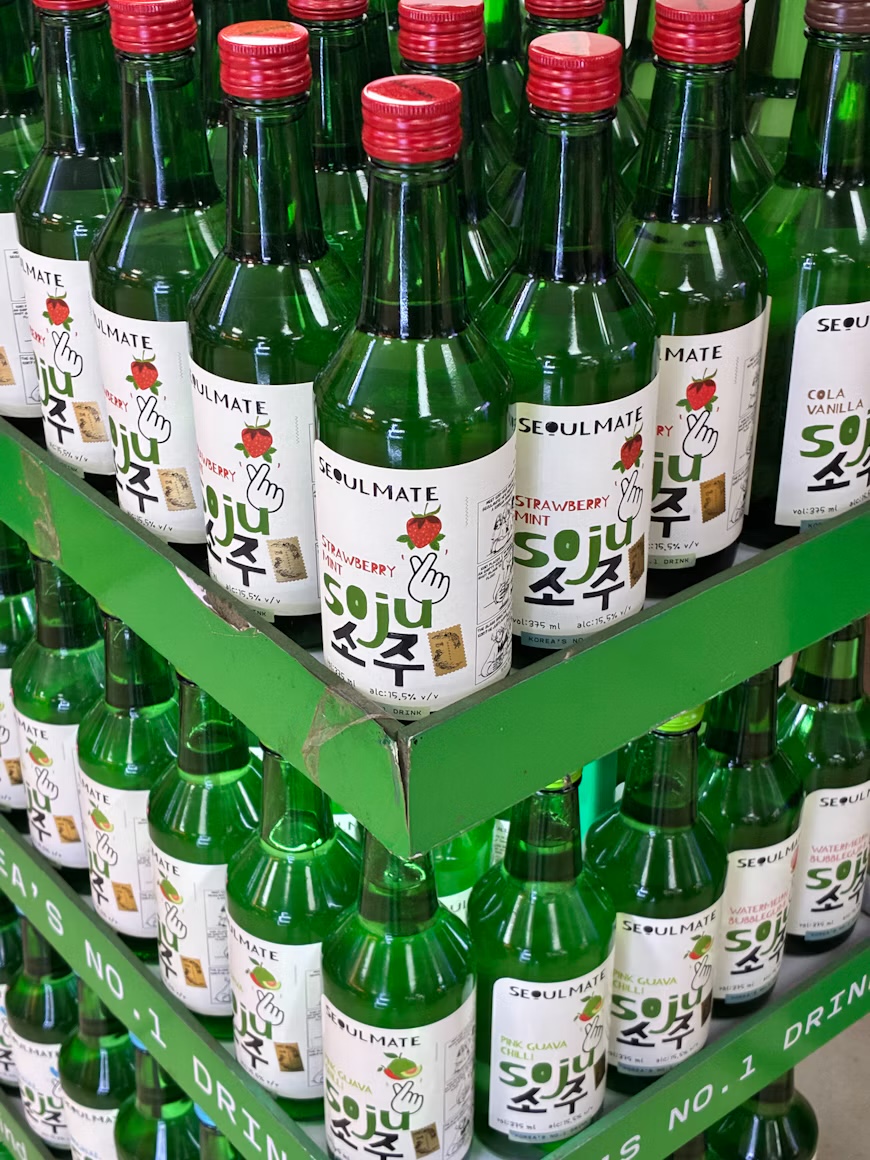
Chamisul (참이슬), from HiteJinro: One of the best-known names in the category. You may see different variants such as Fresh and Original, which should not be treated as the same strength or taste. If a menu says only Chamisul, ask which version is available.
Jinro (진로), from HiteJinro: A separate product line from Chamisul, even though they share a producer. The retro-style branding is easy to recognize. It is worth comparing with Chamisul side by side rather than assuming the company makes only one soju recipe.
Chum Churum (처음처럼), from Lotte Chilsung: Another major mainstream alternative. Its identity has often centered on a softer-drinking profile. Whether you personally find it smoother depends on serving temperature, food, and your own palate, not just advertising language.
Saero (새로), from Lotte Chilsung: A widely recognized zero-sugar-positioned line. The important detail is that zero sugar does not mean zero alcohol or zero calories. Alcohol itself contributes energy. Check the precise product and label, especially when comparing flavored extensions.
Good Day (좋은데이): Associated with the southern regional market and also known for fruit-flavored varieties. It is a useful reminder that Korea's soju landscape has strong local histories beyond the two biggest national names.
Hallasan (한라산): Closely associated with Jeju. If you are traveling to Jeju, trying a local bottle alongside the island's food can be more interesting than choosing the same national brand you drink in Seoul. Strength and variants can differ, so check the label.
Other regional names: Depending on the city and retailer, you may encounter brands associated with Busan, Daegu/Gyeongbuk, or other regions. A restaurant's default soju can reveal something about local distribution and habits, but a brand's regional roots do not mean it is sold only there.
Useful comparison: Buy two unflavored bottles in the same approximate strength, chill them to the same temperature, and compare aroma, sweetness, finish, and how they work with food. Comparing a 12% fruit soju with a much stronger unflavored bottle will mostly tell you that alcohol strength and added flavor matter.
3. Soju Flavors: Which One Should You Try?
Think of the fruit name as a flavor direction, not a guaranteed taste profile.
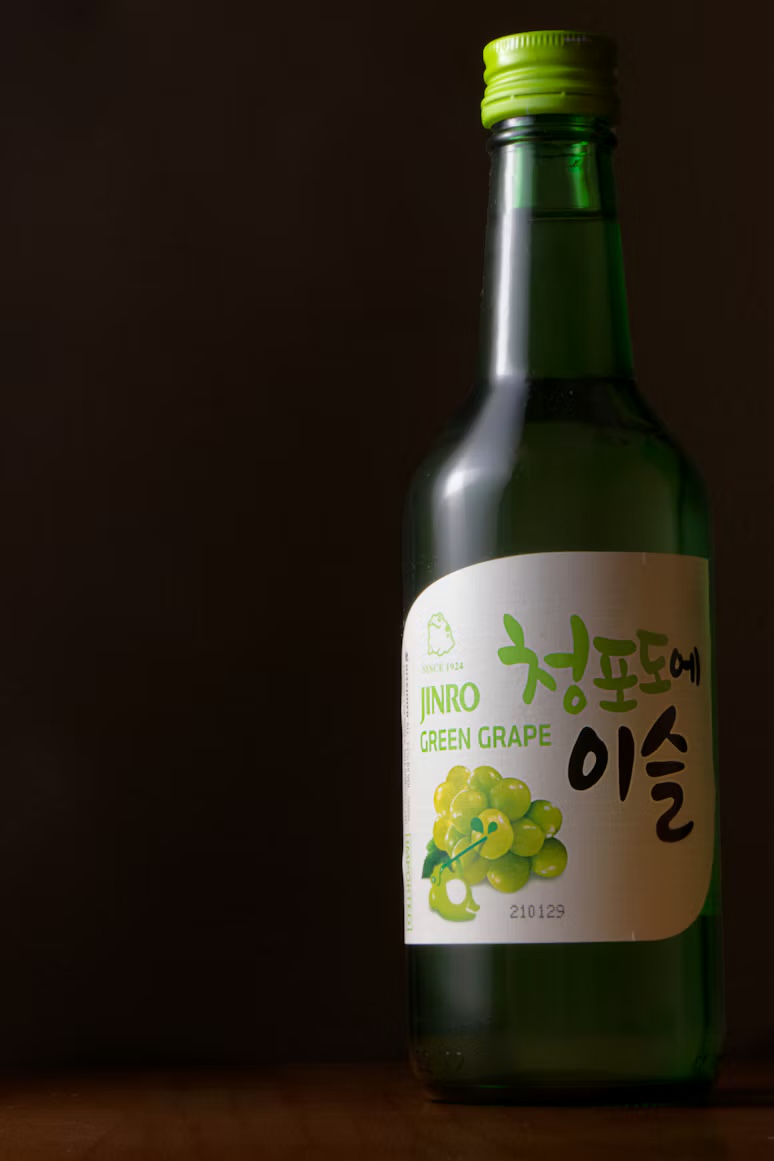
Green grape (청포도): A common entry point for people who prefer a sweet, candy-like fruit profile. It may feel easy to drink, which makes checking the ABV especially important.
Peach (복숭아): Often perceived as soft and fragrant. A good choice if you like peach-flavored drinks, though individual products vary in sweetness and aroma.
Grapefruit (자몽): Typically marketed around citrus character. Some versions give the impression of tartness or bitterness alongside sweetness, which can be appealing if very sweet fruit drinks are not your preference.
Strawberry (딸기): Usually a sweeter, dessert-like direction. Check availability by brand because seasonal releases and export selections can differ from what is stocked locally.
Plum (매실 or 자두): These Korean words refer to different fruits. Maesil generally refers to green plum/Japanese apricot, while jadu is plum. Do not assume every product labeled 'plum' in English tastes the same.
Yogurt and other novelty flavors: Some products lean creamy, candy-like, or cocktail-inspired rather than resembling fresh fruit. If you dislike sweet drinks, an unflavored soju or a mixed drink with a measured amount of soju may suit you better.
My practical rule: Choose the flavor you already like in other drinks, but compare the ABV and serving size before deciding it is a lighter option. A sweet taste can mask how much alcohol you are drinking.
4. How to Read a Korean Soju Label
A few Korean words reveal more than the branding does.
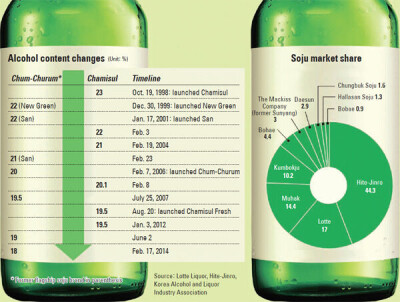
Look for 알코올 or 알코올 도수 (alcohol strength), followed by a percentage. 용량 means volume, usually given in mL. 원재료명 means ingredients. 무설탕 means no sugar; 제로슈거 is the English-derived 'zero sugar' claim. 증류식 소주 indicates distilled soju, while 희석식 소주 refers to diluted soju.
Do not confuse a lower alcohol percentage with a lower total amount of alcohol unless the bottle sizes are the same. For a quick comparison, multiply volume in mL × ABV as a decimal. For example, a hypothetical 360 mL bottle at 16% contains about 57.6 mL of pure alcohol, while a hypothetical 360 mL bottle at 12% contains about 43.2 mL. These are calculation examples, not claims about any specific brand.
Zero-sugar labeling is another trap for quick comparisons. Sugar is not the same thing as alcohol, and the absence of added sugar does not make an alcoholic drink calorie-free or automatically healthier. The precise nutrition and ingredient information depends on the bottle.
5. Traditional and Premium Distilled Soju
The category that deserves more attention than another green-bottle ranking.
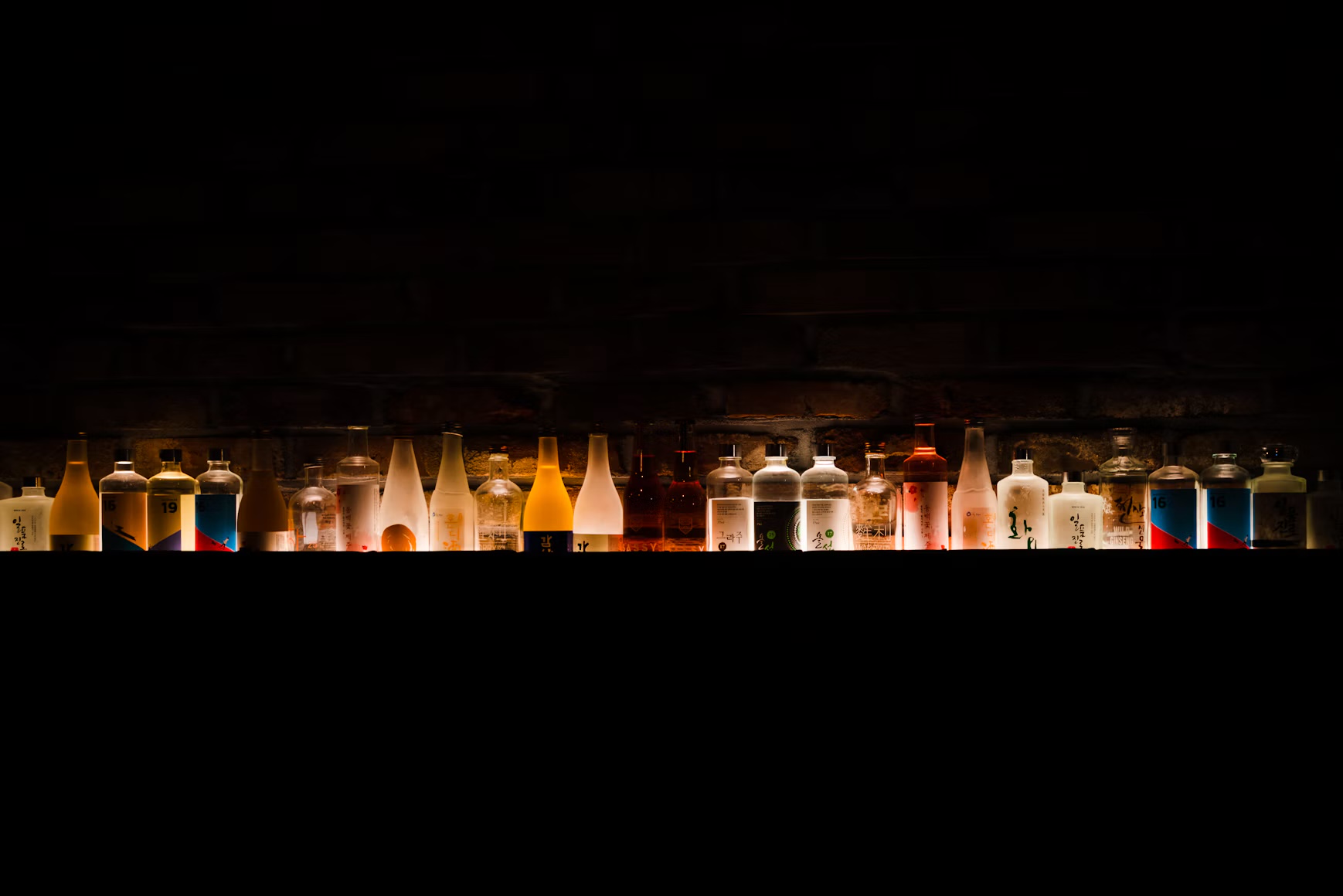
Andong soju (안동소주) refers to a traditional distilled style associated with Andong. Different producers and bottlings exist, so there is no single universal ABV or tasting note. Some are considerably stronger than mainstream diluted soju and are better approached in small pours.
Hwayo (화요) is a recognizable modern premium distilled-soju brand with several expressions. Its different bottlings are not interchangeable. Check the strength and product description before deciding how to serve one.
Other craft and traditional Korean spirits may use rice or other grains, fermentation starters such as nuruk, and different aging or distillation methods. The meaningful questions are: What was fermented? How was it distilled? Was anything blended or aged? What is the final strength?
If you are curious about the category, try a small tasting at a licensed bar or restaurant that can explain the producer. Comparing two traditional bottlings thoughtfully can teach you more than sampling six nearly identical mass-market bottles.
6. Which Soju Should You Try First?
Choose by the experience you want, not a universal 'best' ranking.
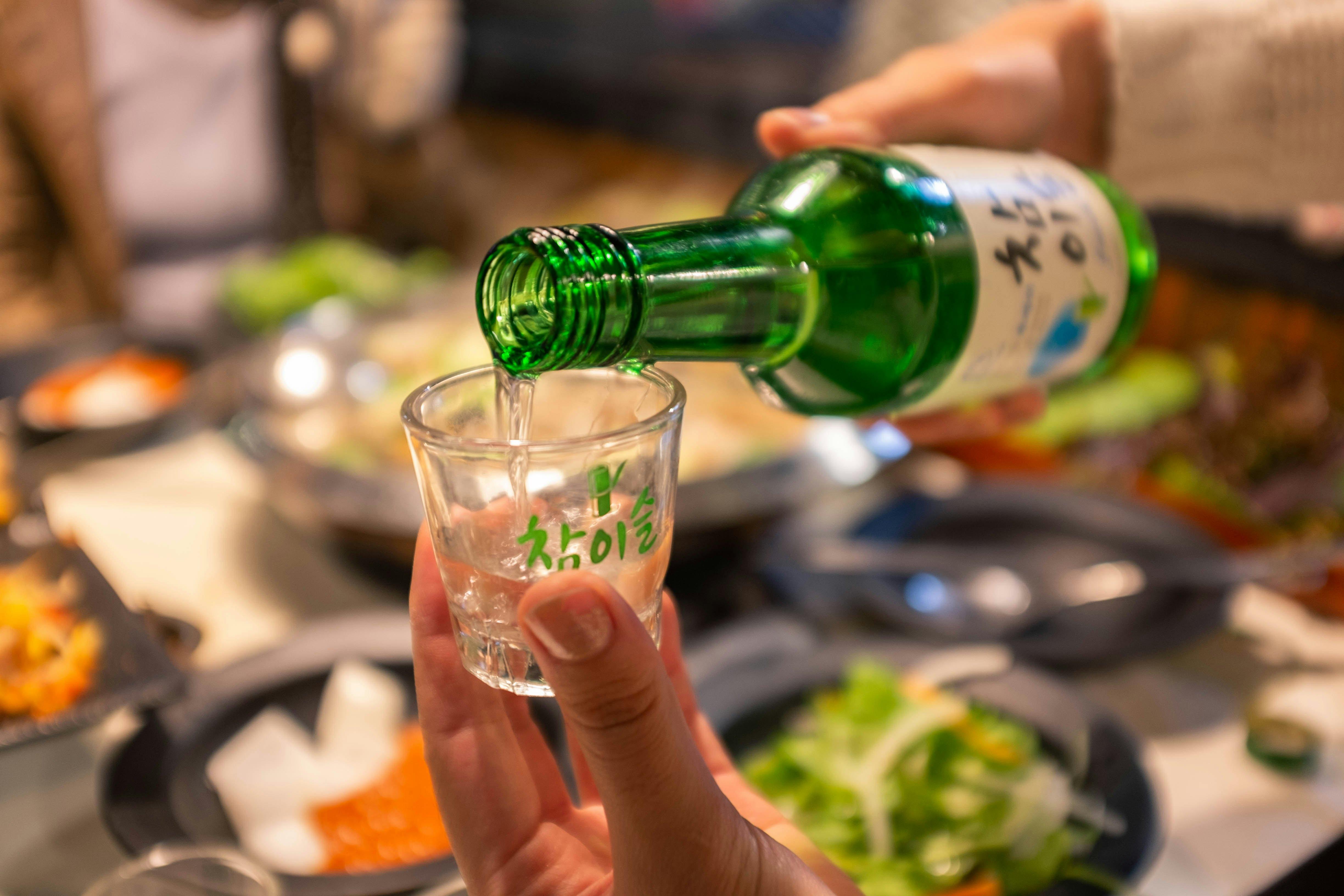
If you want the classic Korean barbecue experience: Start with one mainstream unflavored diluted soju sold by the restaurant. It is usually designed to be served chilled alongside savory food.
If you dislike a strong alcohol taste: A fruit-flavored variety may taste sweeter, but it still contains alcohol. Check the strength and pace yourself rather than assuming sweetness means low impact.
If you want to compare the big brands: Try Chamisul Fresh, Jinro, and Chum Churum on separate occasions or in a small, responsible comparison, checking their current strengths. Pay attention to finish and sweetness instead of relying on 'smooth' marketing claims.
If you want a Jeju-specific souvenir: Look at Hallasan and check the exact version. If you are interested in Korean spirits as a craft: Choose a clearly labeled distilled soju, such as an Andong-style bottling or a Hwayo expression, and learn about its producer.
If you do not drink alcohol: You can still enjoy the food and social ritual with a nonalcoholic drink. You do not need to drink soju to experience Korean dining culture.
7. What to Eat with Soju in Korea
Pairing is about contrast, temperature, and the meal around you.
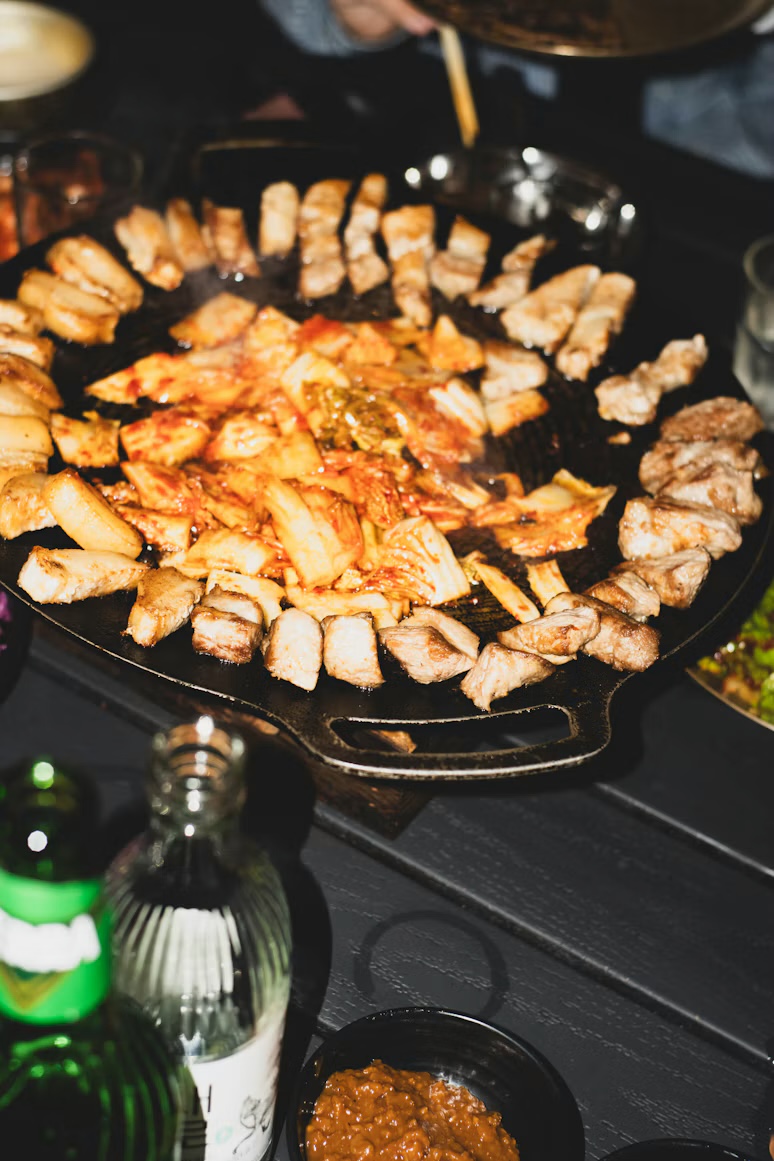
Samgyeopsal and other grilled meats: Chilled unflavored soju is a familiar accompaniment to fatty, salty, smoky dishes. The food does not make alcohol safer, but the contrast can explain why the pairing is popular.
Spicy stews and stir-fries: Some people like a neutral soju alongside bold flavors, while others find alcohol intensifies the heat. Water and food are sensible companions regardless of what you order.
Seafood and Jeju meals: A local soju can make the meal feel more connected to the place, but there is no rule that seafood requires a particular brand.
Fruit-flavored soju: Its sweetness can clash with some savory meals. It may make more sense as an occasional standalone drink than as a replacement for a dry-tasting spirit at dinner.
For food inspiration, see The Seoul Edit's Korean barbecue guide and Itaewon food guide.
8. Buying Soju: Convenience Store vs Restaurant vs Souvenir Shop
The bottle you see most often is not necessarily the most interesting one.
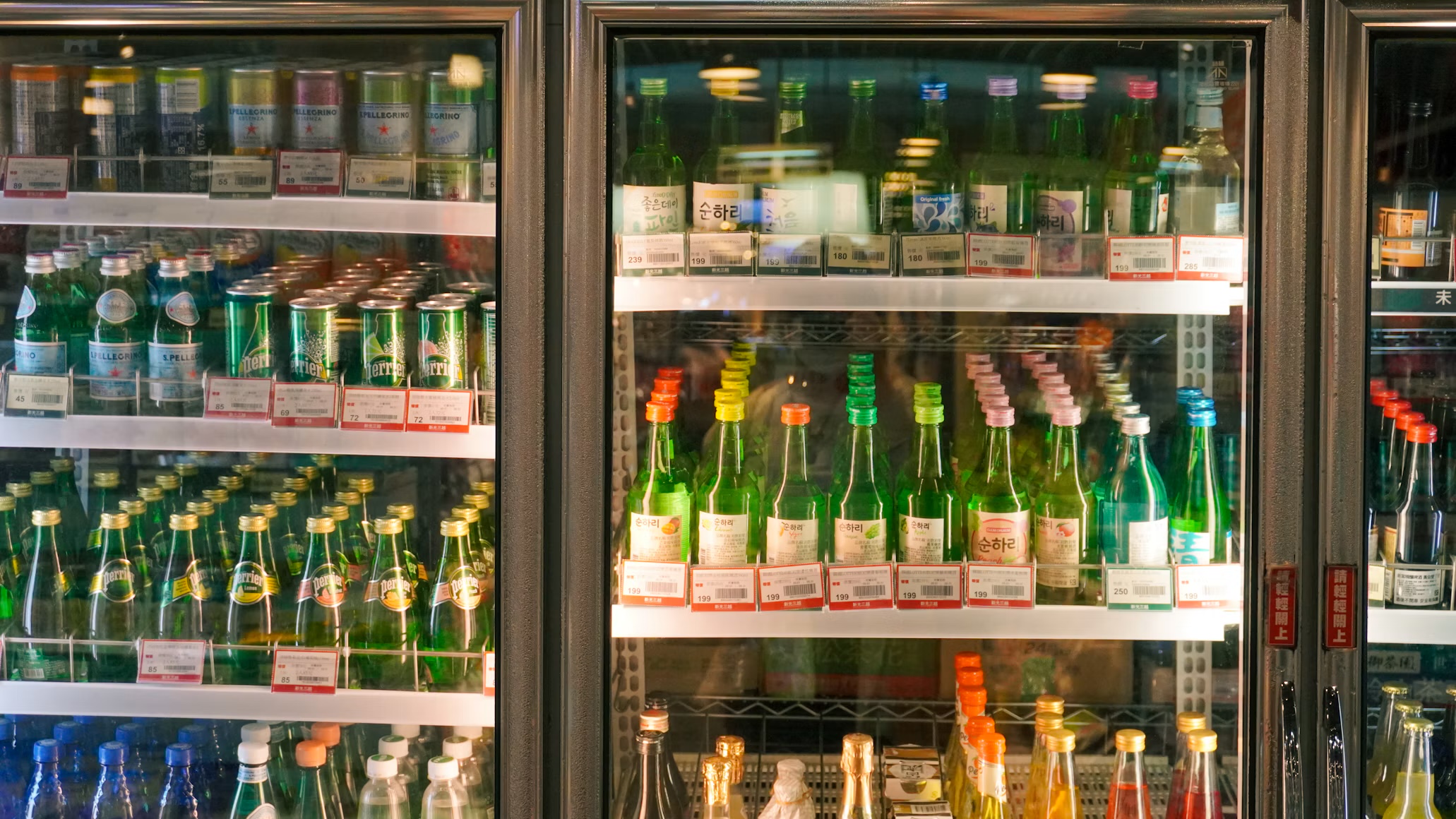
Convenience stores: Convenient for mainstream and selected flavored bottles. Stock varies by chain, location, and promotion. Do not assume every branch carries every flavor.
Supermarkets: Often more useful for comparing labels and larger selections. Check bottle size, exact variant, and price per volume rather than the shelf price alone.
Restaurants: Expect a narrower range and a higher per-bottle price because you are paying for the dining setting and service. Ask what the house soju is if the menu only lists 'soju.'
Traditional liquor shops: Better places to ask about producers, grain base, and distilled styles. Packaging and premium branding do not automatically guarantee quality; ask what makes the particular bottle different.
Travel note: Alcohol purchasing and consumption are restricted by age. In Korea, the legal youth-protection age rule is based on the calendar year in which someone turns 19. Travelers should carry acceptable identification, and check their destination country's customs and airline restrictions before transporting alcohol.
9. Korean Soju Etiquette Without the Myths
Know the gestures, but don't treat social customs as compulsory drinking rules.
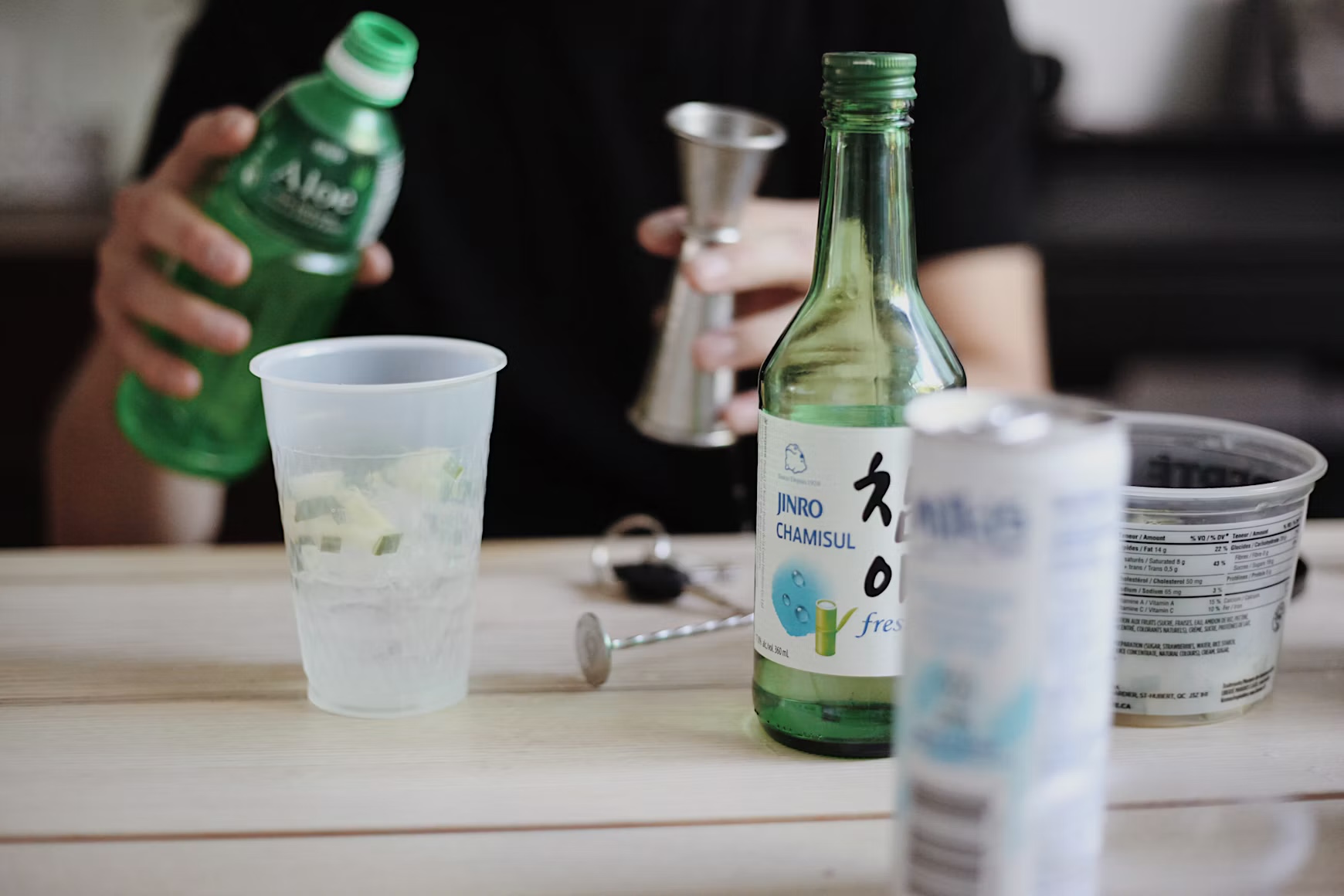
In some formal or intergenerational settings, people pour for one another and use two hands when offering or receiving a drink, especially when showing respect to someone older. In casual groups of friends, habits are often much more relaxed. Context matters more than following a rigid checklist.
You may hear that you must finish every glass or always accept a refill. You do not. It is fine to decline alcohol, leave a glass unfinished, or choose a nonalcoholic drink. Good company matters more than drinking at someone else's pace.
If you are visiting, observe the people you are dining with and follow their lead on formality. Never drive after drinking, and avoid treating drinking games as a requirement for participating in Korean culture.
10. FAQ: Korean Soju Brands and Flavors
What is the difference between Chamisul and Jinro?
They are separate soju product lines from HiteJinro. Compare the exact variant, current alcohol strength, and ingredient label rather than assuming they are the same drink.
Is zero-sugar soju alcohol-free or calorie-free?
No. Zero sugar is a sugar-related claim, not a claim of zero alcohol or zero calories. Alcohol itself provides energy, and the exact product label matters.
Which flavored soju is best for beginners?
Green grape and peach are familiar sweet flavor directions, but taste is personal. Read the ABV and bottle size, and remember that sweet flavors can make alcohol less noticeable.
Is traditional Andong soju the same as green-bottle soju?
Not necessarily. Traditional Andong-style soju is a distilled spirit associated with a specific regional tradition; mainstream inexpensive green-bottle soju is usually a diluted product. Producers and strengths vary.
Can tourists buy soju in Korean convenience stores?
Adults who meet Korea's legal age requirements can generally purchase alcohol with acceptable ID. Availability varies by store, and travelers should check transport and customs restrictions before taking bottles abroad.
11. Sources and Editorial Notes
Editorial note: This is a comparison and shopping-literacy guide, not a personal taste test. Flavor descriptions are general tendencies, not measured tasting results. Product recipes, ABVs, nutrition claims, and availability change; verify the exact bottle before purchase.
Last reviewed: October 17, 2026. For exact current variants and strengths, consult the producers' official product pages and the bottle label.
Discover More of Korea Beyond the Bottle
Get practical Seoul food, neighborhood, café, and culture guides from The Seoul Edit.
Planning a trip to Seoul?
12. Final Thoughts: Choose the Style, Not Just the Brand
Instead of asking which Korean soju brand is the best, ask what kind of drink you actually want. A familiar chilled diluted soju with Korean barbecue, a sweet fruit variety, and a traditional distilled spirit are different experiences. Understanding those differences makes the shelf much less confusing.
Read the alcohol percentage, check the exact variant, and let the meal or occasion guide your choice. You can appreciate Korean food and drinking culture without feeling obliged to drink at all.