If you have never eaten Korean BBQ in Korea before, the confusing part usually starts after you sit down.
You know you are there to eat grilled meat. That part is obvious. Then the staff start placing tiny dishes across the table, someone turns on a grill in front of you, raw meat appears beside a pair of tongs and suddenly you are wondering whether you are supposed to cook it yourself, which sauce goes with what and what exactly you are meant to do with the pile of lettuce.
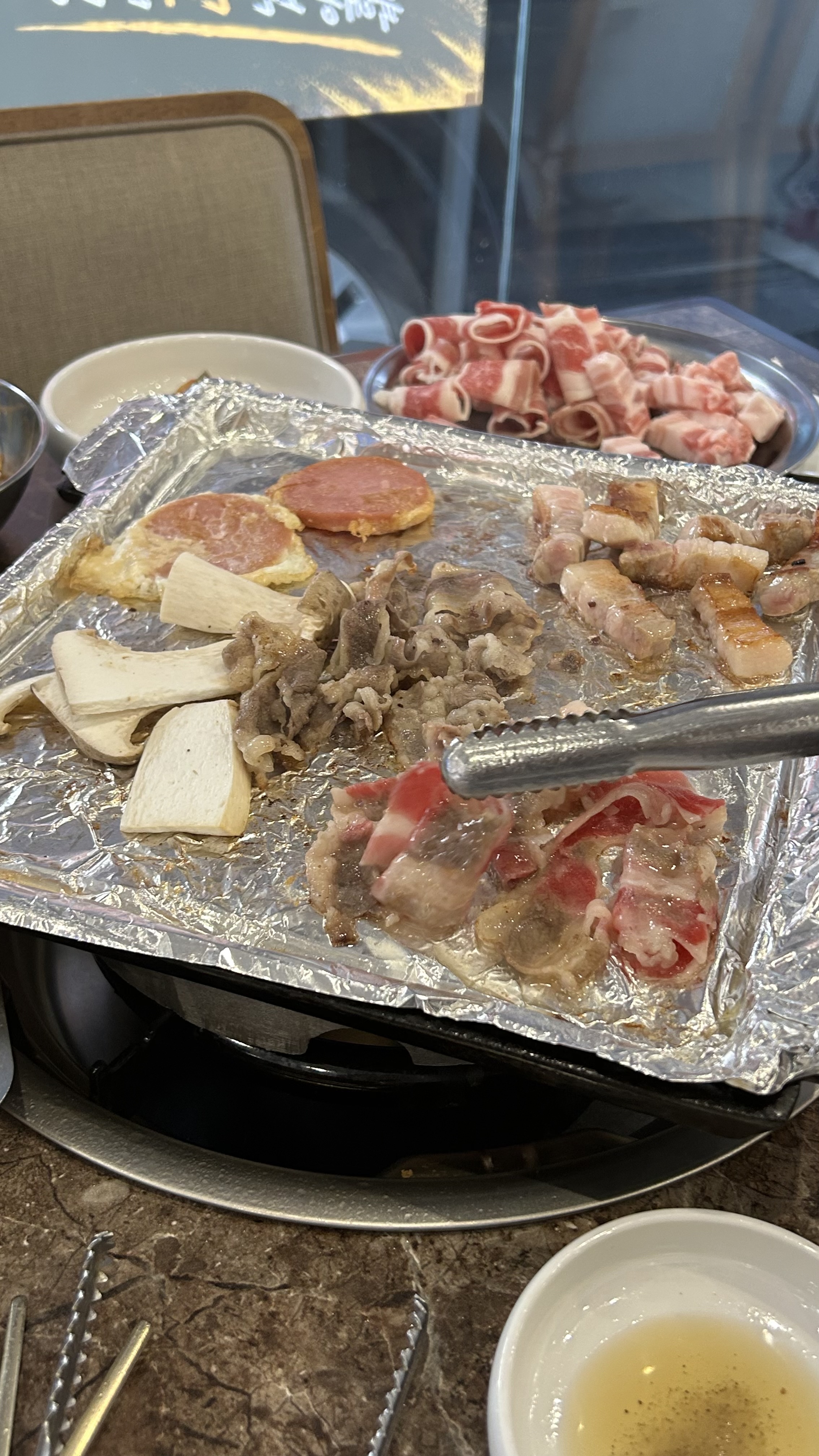
I live in Seoul, and this particular meal was at a casual Korean BBQ restaurant in Wangsimni near Hanyang University. It was not a luxury hanwoo experience or a restaurant I booked weeks in advance. We had thinly sliced beef, pork belly, all the little things around the grill, made ssam wraps and added a pot of army stew.
That normality is why I think it makes a useful guide. Most people visiting Korea do not need a complicated lesson in every regional meat cut. They need to know what happens when they walk into a KBBQ restaurant, how to actually eat what arrives and how not to feel completely lost during their first ten minutes at the table.
The short version: Start with a manageable amount of meat, cook it in batches, try the banchan throughout the meal, make a few lettuce wraps and order more only after you know what you like. Personally, I am coming back for the pork belly.
1. The KBBQ Meal I Had in Wangsimni
This was not a famous restaurant I crossed Seoul to visit. It was a normal Korean BBQ meal near Hanyang University, which is exactly why it works so well as an example.
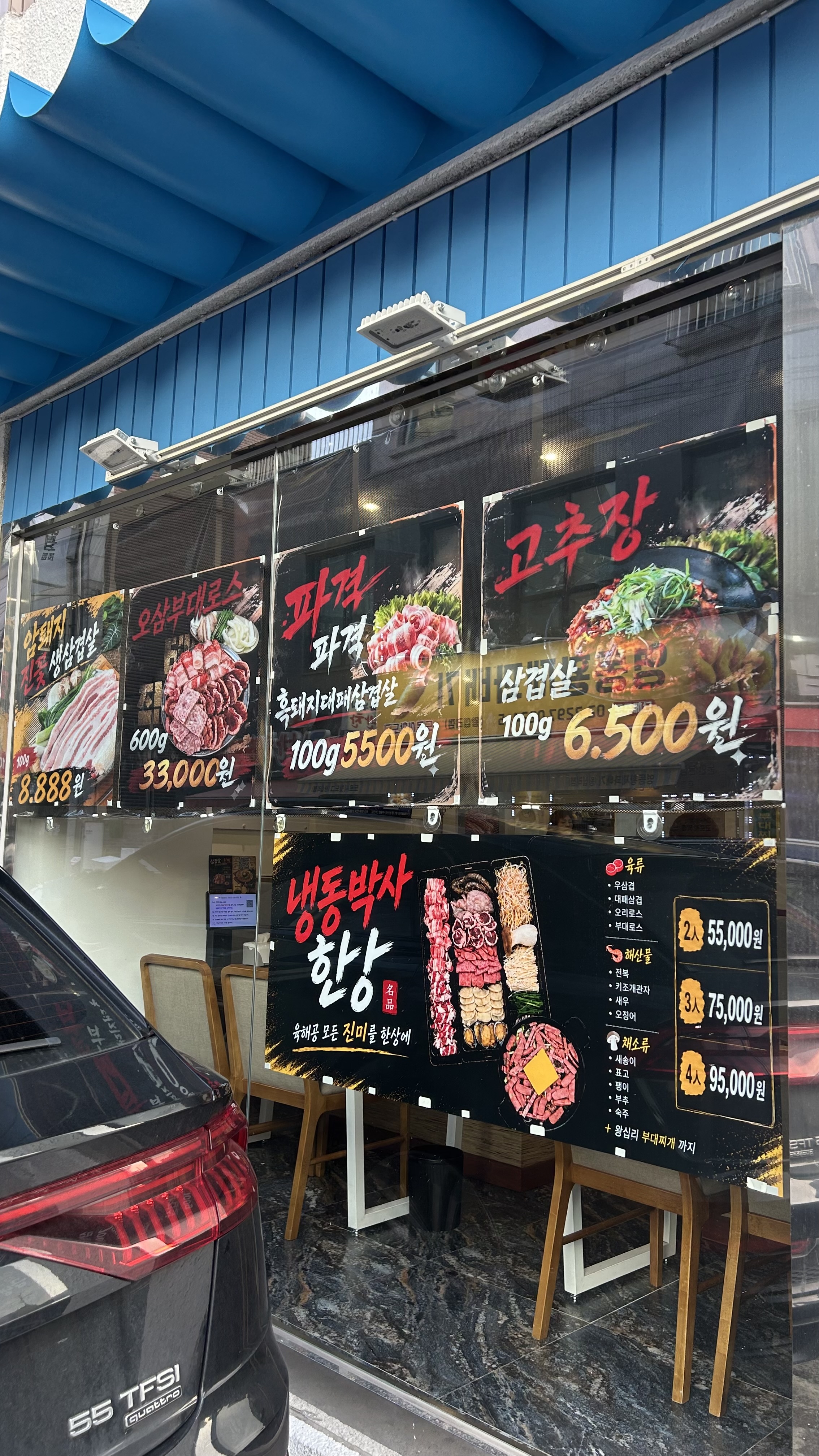
The Korean BBQ meal in these photos came from a random restaurant in Wangsimni, close to Hanyang University. I am deliberately not turning this into a review of one specific restaurant because that is not really the useful part of the experience. What happened at our table is something you can recreate at countless Korean BBQ restaurants around Seoul.
Wangsimni is actually a good area for this kind of meal. Because Hanyang University is nearby, the broader neighborhood has plenty of places aimed at students and ordinary local diners rather than only visitors looking for famous restaurants. If you study at Hanyang, are staying around eastern Seoul, or already have plans in Wangsimni, you do not need to travel across the city just to experience Korean BBQ.
That is one thing I think first-time visitors sometimes get wrong about eating in Seoul. You can spend a lot of time hunting for a restaurant that went viral on TikTok, but Korean BBQ is not a food where you necessarily need the most famous address. A busy neighborhood restaurant filled with students, coworkers or groups of friends can give you the experience you were looking for without turning dinner into another sightseeing mission.
Good to know: This article uses my Wangsimni meal as a real example of how Korean BBQ works. It is a guide to the eating experience rather than a recommendation for one specific restaurant.
2. First, Your Table Starts Filling Up With Banchan
Before the meat becomes the center of attention, Korean BBQ usually starts with a table full of small side dishes, vegetables and sauces.
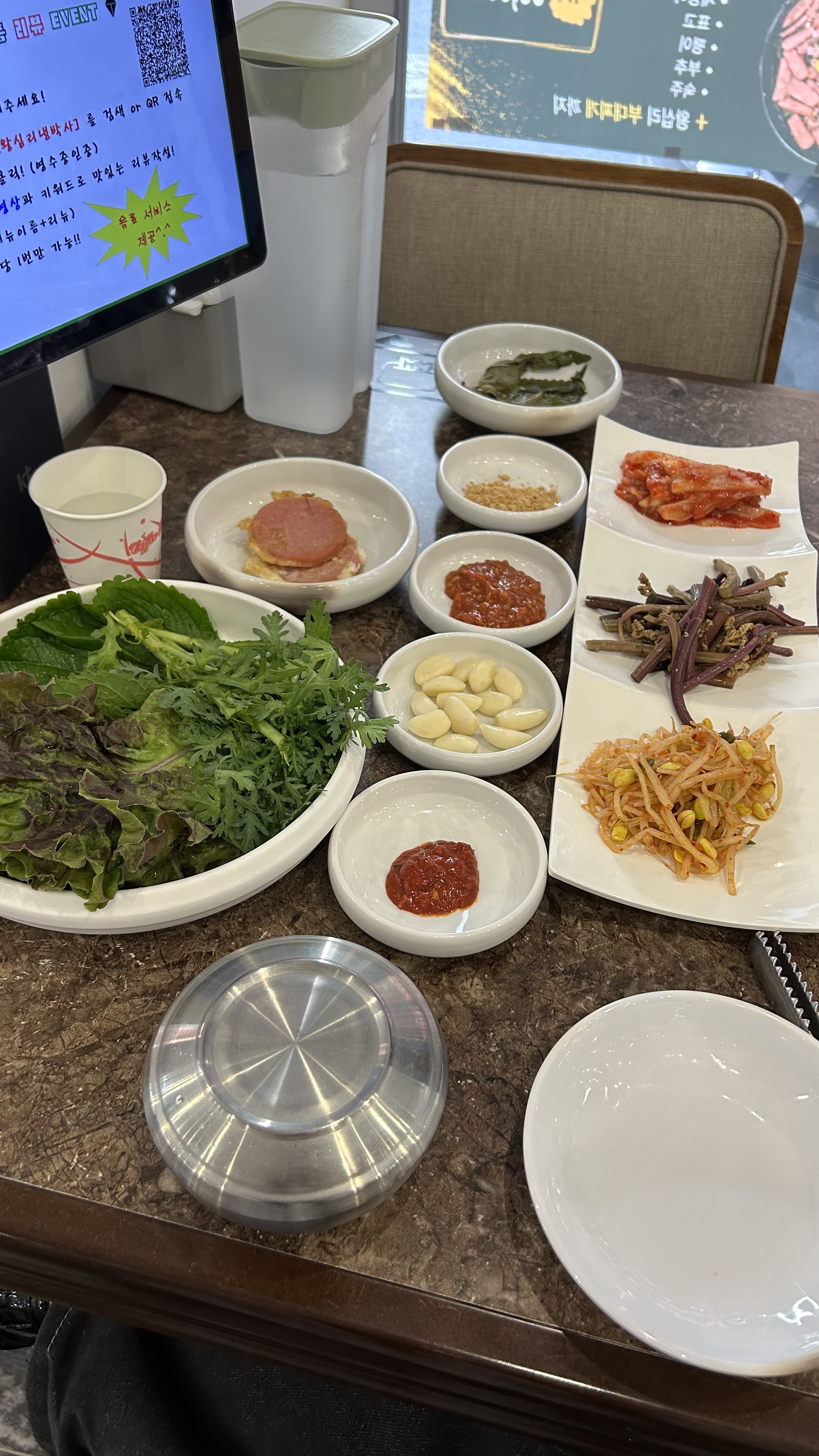
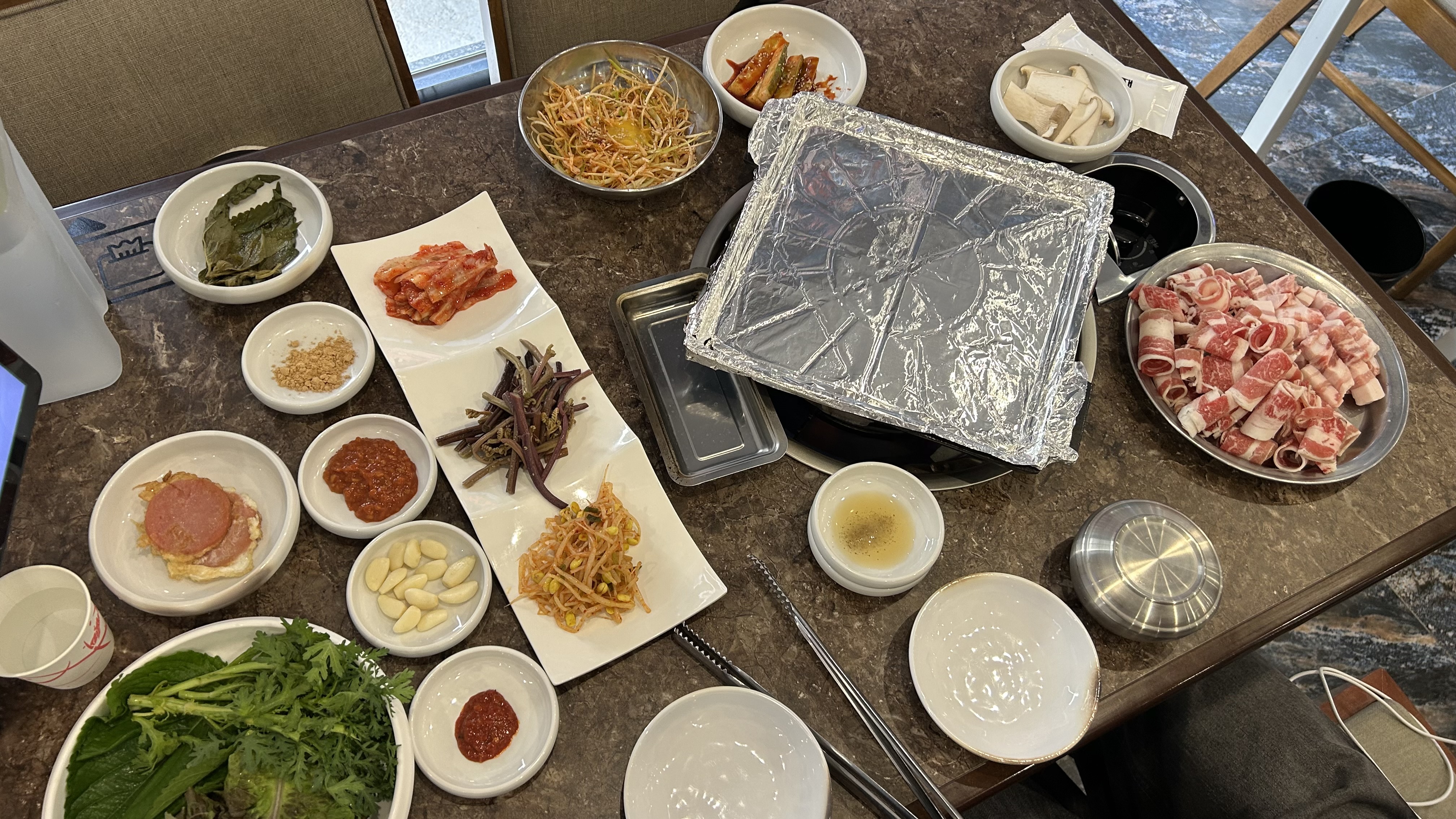
One of the first things that can surprise you at Korean BBQ is how quickly the table fills up. You order meat, but suddenly there are little dishes everywhere. These are banchan, the side dishes that accompany the meal, and they are not just decoration around the grill.
Exactly what appears depends on the restaurant. You might get kimchi, seasoned vegetables, pickled radish, onions, garlic, salad, dipping sauces or other small sides. There is no universal set that every Korean BBQ restaurant serves, so do not worry if your table looks different from a photo you saw online.
I like eating the side dishes throughout the meal rather than treating them as a separate starter. Fatty grilled meat can become heavy after several pieces, and something acidic, pickled or fresh in between bites makes the whole meal much easier to keep eating. That contrast is part of what makes the table work.
At many restaurants, some basic banchan can be refilled. Sometimes staff bring refills, while other restaurants have a self-service station. I would look around first rather than assuming everything is automatically unlimited, especially because individual restaurants handle side dishes differently.
3. Do Not Be Intimidated by the Full KBBQ Table
The grill, meat, lettuce, sauces, garlic and side dishes can look chaotic at first, but you do not need to combine everything into every bite.
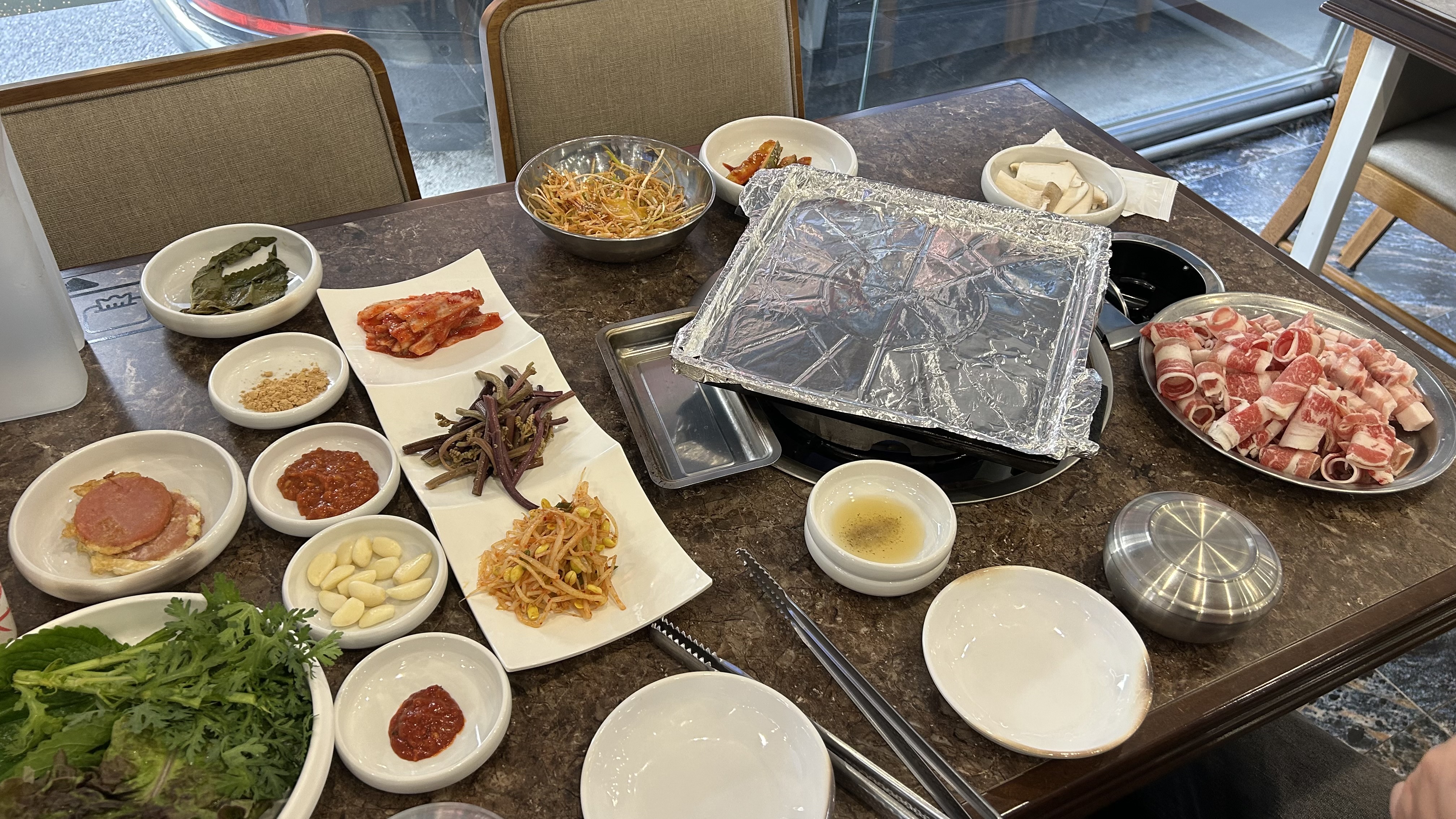
Once the meat arrives, a Korean BBQ table can look like there are twenty different things you are somehow expected to understand. There is the grill in the middle, raw meat waiting to be cooked, lettuce or other greens, little sauces, garlic and whatever banchan the restaurant has brought out.
The easiest way to understand it is that the meat is the center of the meal and everything else lets you change each bite. You can eat one piece of meat by itself, dip the next one in sauce, eat another with kimchi, and then make a full lettuce wrap. There is no requirement to build the exact same combination every time.
I actually think KBBQ becomes more enjoyable once you stop trying to find the one "correct" way to eat it. Korean tables are communal, and part of the fun is picking at different things while another batch of meat cooks. The meal has a rhythm rather than a strict sequence of courses.
If you are visiting with friends, this is also why KBBQ works better as a social meal than a rushed dinner. You cook, talk, eat a few pieces, put more meat down and keep going. I would give yourself at least an hour rather than trying to squeeze Korean BBQ into a tiny gap between sightseeing plans.
4. Thinly Sliced Beef Cooks Much Faster Than You Think
Thin beef can go from raw to ready very quickly, so this is not the meat to put on the grill and forget while you talk.
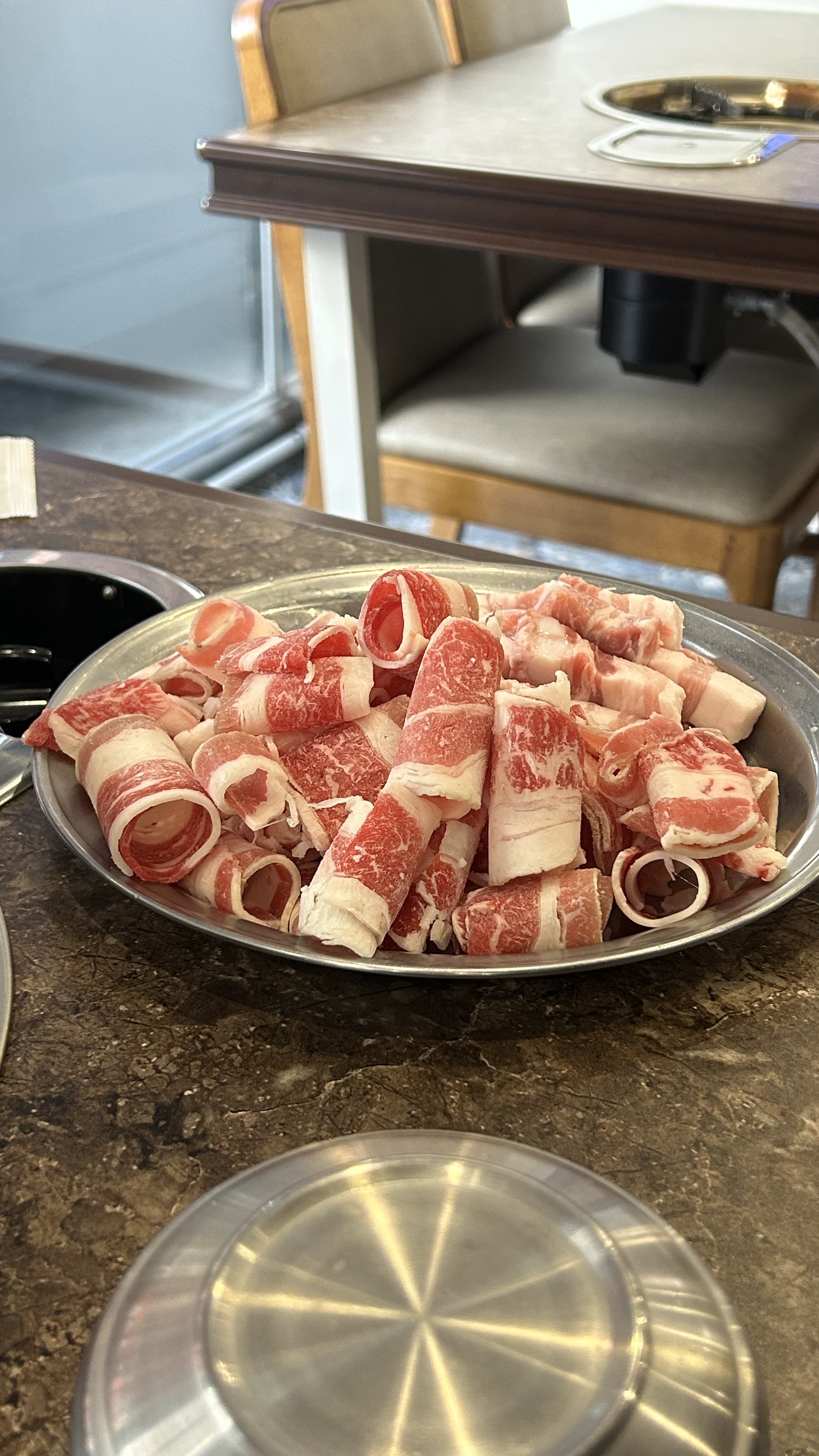
We started with thinly sliced beef, and this is probably one of the easiest meats for a beginner to underestimate. Because the pieces are so thin, they cook incredibly quickly compared with a thick steak or chunkier cuts of pork.
Spread the pieces across the hot grill instead of leaving them in one giant pile. Once the underside has changed color and started browning, turn the meat and watch the other side. You are looking for cooked, browned beef rather than leaving it over the heat until every thin piece becomes dry.
This is also why I would not dump the entire order onto the grill at once unless everyone at the table is ready to eat quickly. Cooking smaller batches means you get hot meat throughout dinner instead of creating a mountain of cooked beef that sits there getting colder and tougher.
Thin beef is great when you want that immediate grilled-meat flavor without waiting long, but personally it is not the meat I get most excited about at KBBQ. Once pork belly comes out, that is usually where my attention goes.
5. How Cooking the Meat at Korean BBQ Actually Works
Sometimes you cook it yourself and sometimes staff help. Watch what the restaurant is doing before assuming you need to take over the grill.
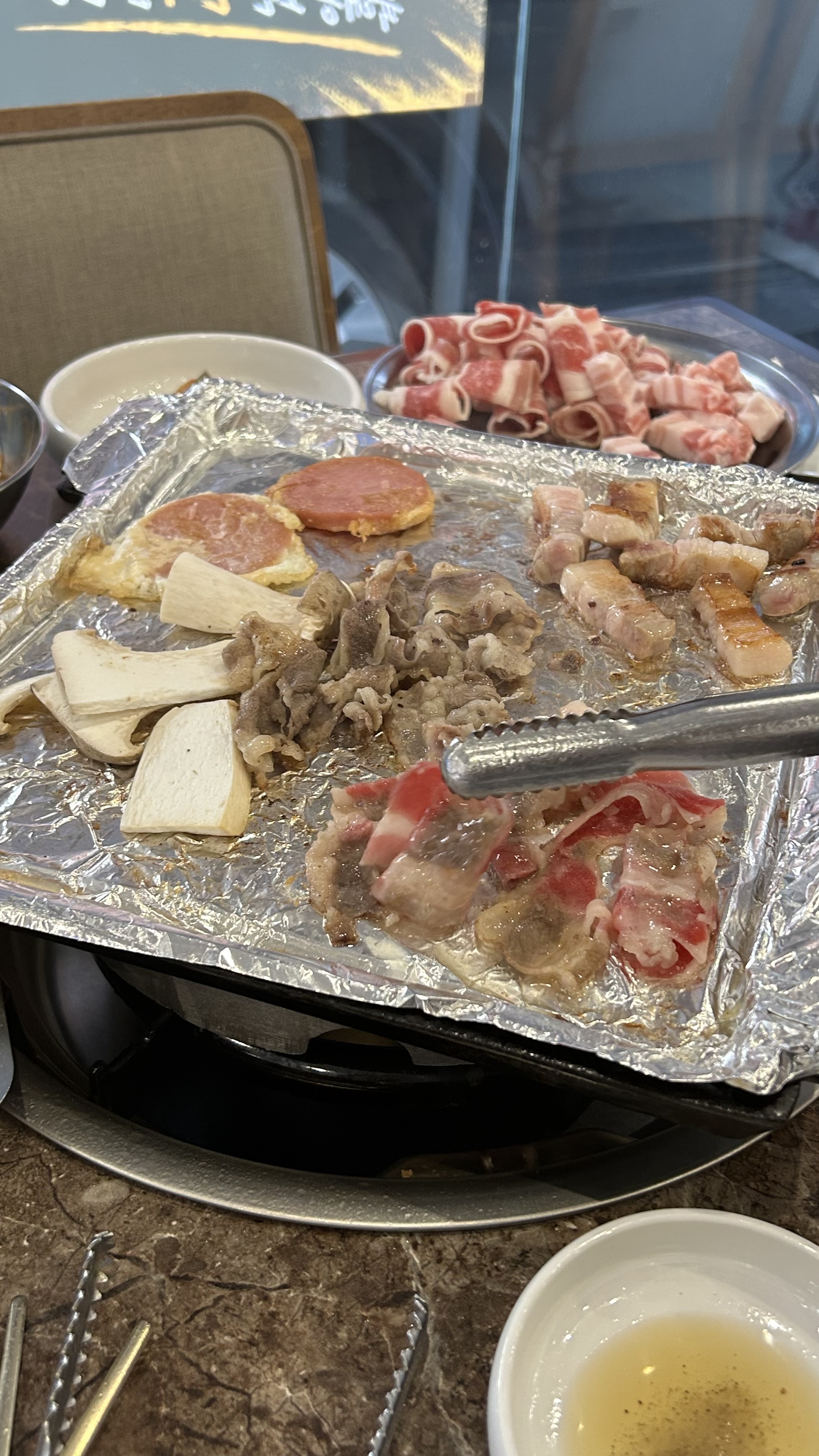
The part that makes Korean BBQ feel different from ordering a normal meat dish is that the grill is right in front of you. Depending on the restaurant, you may be expected to cook most of the meat yourself, or staff may come over and handle certain cuts for you.
My advice for a first visit is simply to observe for a moment. If a staff member immediately starts arranging and turning the meat, let them do it. If they bring the raw meat, set up the grill and leave, that is a pretty good sign that your table is taking care of the cooking.
Use the provided tongs for moving raw meat around the grill. If separate utensils are provided for eating, use those once the meat is cooked. Restaurants differ in their setup, but keeping utensils that touched raw meat away from food you are about to eat is the sensible approach.
Another thing beginners sometimes worry about is whether they are being rude by asking for help. You are not. If you genuinely cannot tell whether a particular cut is ready, asking the staff is much better than either eating undercooked meat or burning an expensive order because you were embarrassed to say anything.
6. How to Make a Korean BBQ Ssam Wrap
Lettuce, meat, sauce and whatever extras you like become one of the best bites at the table, but do not build a wrap so enormous that you cannot eat it.
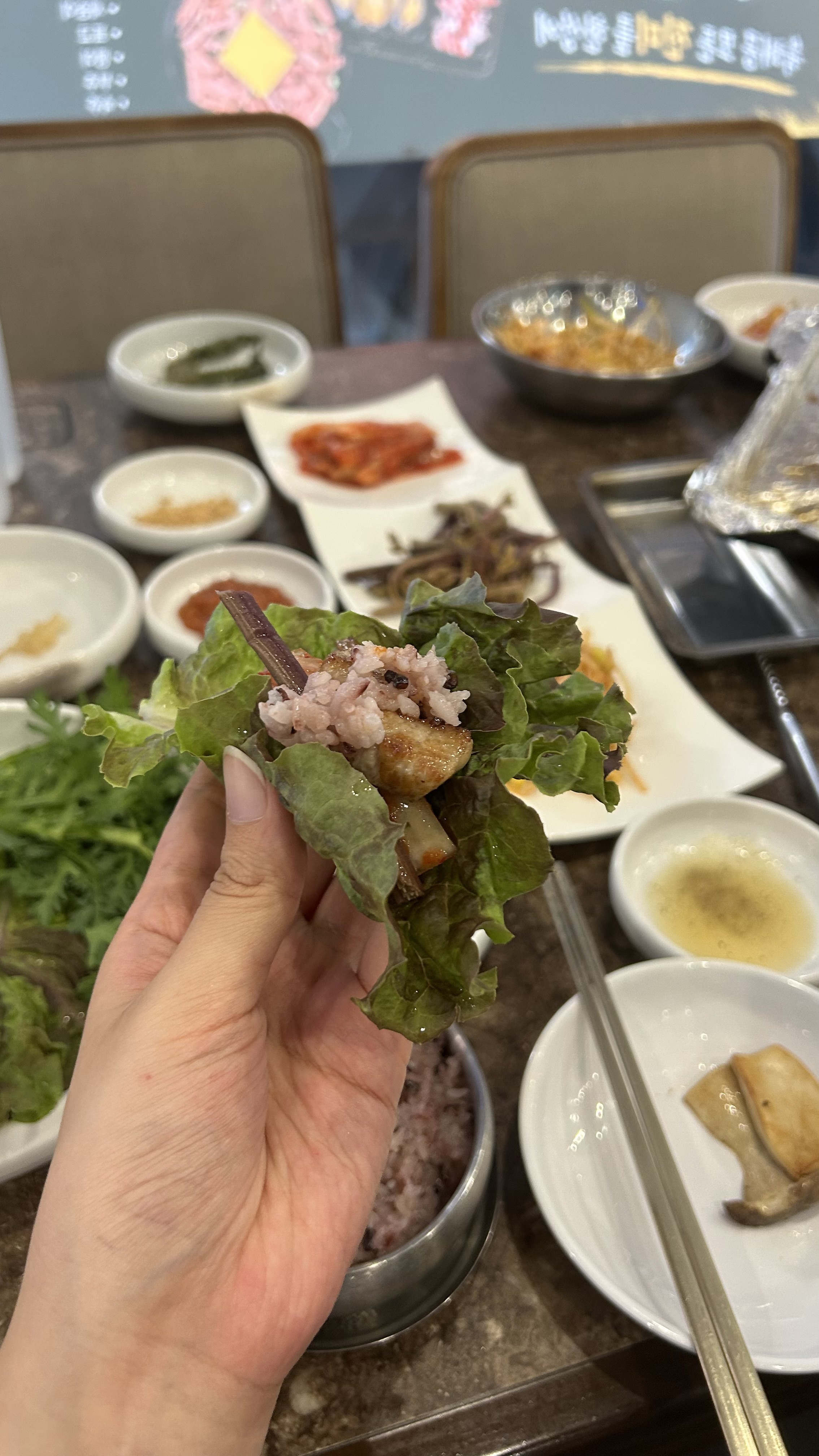
One of my favorite ways to eat grilled meat is as ssam, basically a little wrap made with leafy vegetables. Take a lettuce leaf or another green provided by the restaurant, place a piece of cooked meat inside and add whatever combination of sauce, garlic, kimchi or other sides you actually want.
Ssamjang is one of the sauces you will commonly encounter with Korean grilled meat. You do not need much. A little adds salty, savory depth without completely covering the flavor of the meat. I also like adding something sharper or fresher when the meat is particularly fatty.
The beginner mistake is trying to put half the table into one lettuce leaf. Then the wrap becomes impossible to close and everything falls out before it reaches your mouth. A piece of meat plus two or three things you actually like is usually much better.
Once I make the wrap, I fold the leaf around everything and eat it together. You will sometimes hear people talk about eating ssam in one bite. Practically, the important thing is that the ingredients are meant to be tasted together. Build it small enough that eating it is enjoyable rather than turning dinner into a challenge.
7. Pork Belly Is Usually the Meat I Want More Of
I personally prefer samgyeopsal to the thin beef because it is fattier, more flavorful to me and often a more budget-friendly way to keep the grill going.
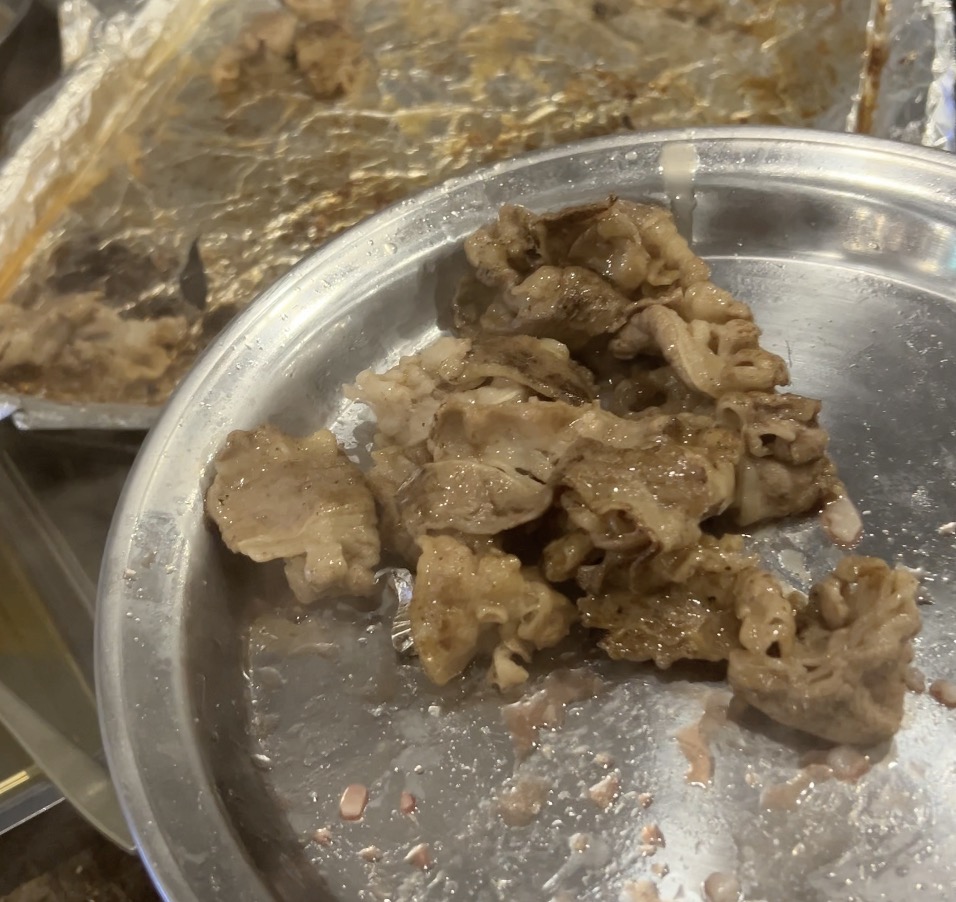
Then there is pork belly. Samgyeopsal is one of the meats most people associate with Korean BBQ, and between the meats we ate, this is the one I preferred. Pork belly has much more visible fat, and that fat is exactly why I find it so satisfying once it hits a hot grill.
As the pork cooks, the outside starts browning while the fat renders. I like it when the edges get properly golden rather than pulling it off the second it technically looks cooked. You still want to avoid drying it out, but a little crispness with the softer fatty sections gives each piece much more texture.
It also stands up particularly well to all the other things on a KBBQ table. Pork belly with ssamjang, garlic, kimchi and lettuce makes more sense to me than trying to make every bite delicate. It is rich, salty, fatty food, and the fresh and fermented sides are there to balance that richness.
Pork belly can also be a more approachable option when you want to order additional meat without continuing to spend on pricier beef cuts. Exact prices vary enormously by restaurant, meat origin, portion and quality, so I would compare the actual menu rather than assuming pork will always be cheaper. At casual places, though, it is often the direction I personally go when I want more meat without making dinner unnecessarily expensive.
8. We Added Army Stew to the Meal
Budae jjigae turned an already big meat dinner into the kind of warm, messy table that feels especially satisfying when you are eating with other people.
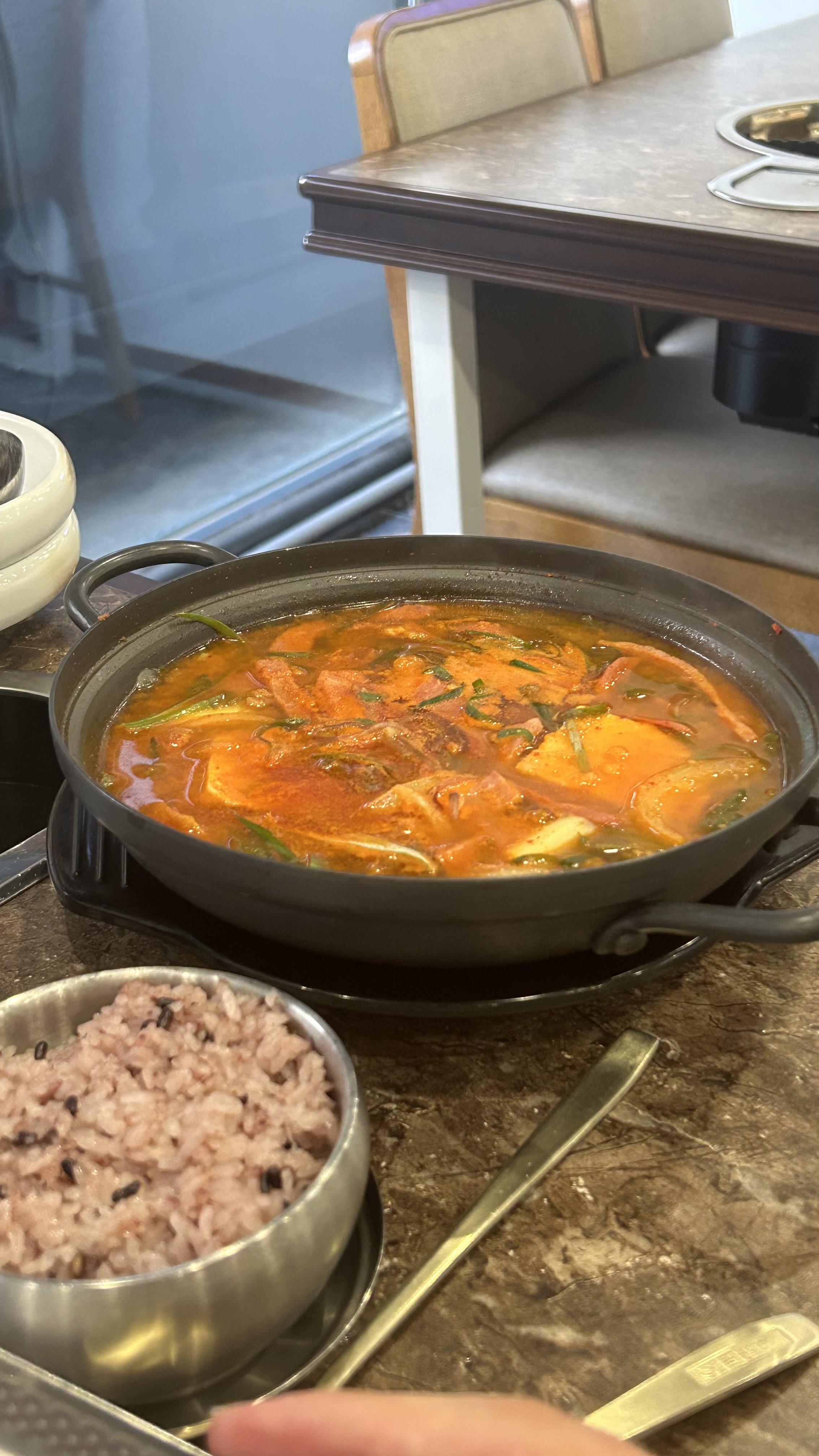
Our meal did not stop with grilled meat. We also had budae jjigae, usually translated as army stew, bubbling at the table. It is a very different kind of food from grilled beef or pork belly, but I like having something hot and soupy alongside a meat-heavy dinner.
Budae jjigae is associated with Korea's postwar history and developed using foods such as processed meats together with Korean ingredients. Modern versions vary by restaurant, but commonly include ingredients such as sausage or Spam-style meat, kimchi, noodles and a spicy broth. The exact pot you receive can contain a different combination.
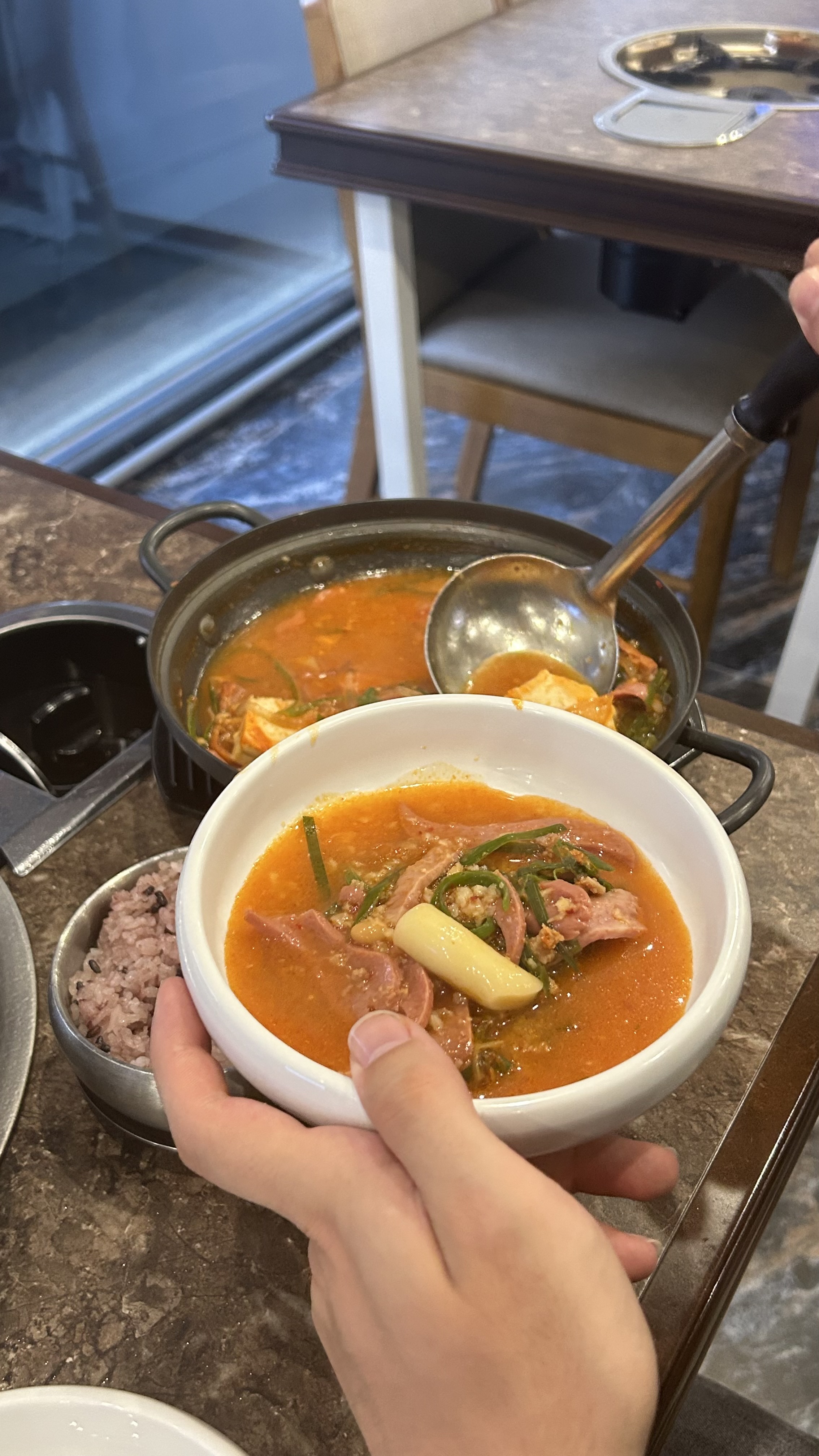
From an eating perspective, you do not need to overthink it. Let the stew cook properly, then ladle portions into the small bowls at your table. Be careful because both the pot and broth can stay extremely hot even when everyone is distracted by the grill.
Would I say you need budae jjigae every time you eat Korean BBQ? No. If two people already ordered plenty of meat, adding a large stew can be overkill. But with a hungry group, especially when you want something soupy between richer bites of pork, it can make the meal feel much more complete.
9. What I Would Order for Your First Korean BBQ Meal
You do not need six kinds of meat. Start smaller, learn what you actually like and add another order if everyone is still hungry.
If I were taking someone to Korean BBQ for the first time, I would not start by ordering every interesting cut on the menu. I would rather get a manageable amount of meat, eat it while it is hot and order more once we know what everyone likes.
For a simple first meal, I would personally want pork belly plus one other meat. If you really want beef, add a beef option so you can compare the two. Then use the banchan, vegetables and sauces already on the table instead of feeling like you need to order ten additional sides immediately.
Rice is useful if you want a more filling meal, while stew is great when the group wants something warm and shareable. Some restaurants also have fried rice, noodles or other dishes that work well toward the end. What is available varies enough that I would look at the actual menu rather than arriving with a rigid list.
Also check the ordering rules before deciding how much you need. Korean BBQ restaurants commonly sell meat by portion and some have a minimum initial order, especially for groups. Those rules are restaurant-specific. If you are alone, this is one reason Korean BBQ can occasionally be less convenient than it looks online.
10. KBBQ Tips I Would Give a First-Time Visitor
The hardest part is usually not the food. It is understanding the pace of the meal, the grill and the little restaurant-specific rules nobody explains beforehand.
First, do not wear the outfit you desperately need to keep smelling fresh. Korean BBQ restaurants have ventilation systems, but you are still sitting directly beside sizzling meat. Depending on the restaurant and how effective its ventilation is, your hair and clothes may leave smelling like dinner.
Second, I would choose KBBQ when you actually have time to sit down. It is not my favorite choice before an appointment where I need to rush away in forty minutes. Part of the experience is cooking batches of meat and eating while the next ones grill.
Third, solo travelers should check the restaurant before committing. Korea has become much friendlier to solo dining in general, but barbecue is still naturally built around shared grills and group orders. Some restaurants are perfectly happy to serve one person, while others have minimum portions that make the meal awkward or expensive alone.
Finally, you do not need to perform Korean BBQ perfectly. Nobody is grading how much ssamjang you used or whether you wrapped every piece of pork in lettuce. Cook the meat safely, pay attention to what the restaurant staff are doing, try the sides and figure out which combinations you actually enjoy. That is a much better first KBBQ experience than spending dinner worrying about invisible etiquette rules.
11. FAQ: Eating Korean BBQ in Seoul
Do you cook Korean BBQ yourself?
Often, yes, but it depends on the restaurant. Some Korean BBQ restaurants expect customers to grill their own meat, while staff at others cook or manage certain cuts for you. Watch what the staff do when the meat arrives and ask for help if you are unsure.
What is the easiest Korean BBQ meat to order for a first timer?
Pork belly, or samgyeopsal, is an easy place to start if you eat pork. I like its fatty flavor and how well it works with lettuce, ssamjang, garlic and kimchi. Adding one beef option gives a first-time group a useful comparison without ordering too much.
How do you eat a Korean BBQ lettuce wrap?
Place a manageable piece of cooked meat on a lettuce leaf, add a small amount of ssamjang and any garlic, kimchi or other sides you like, then fold the leaf around the filling. Keep the wrap small enough to comfortably eat together.
Are Korean BBQ side dishes free?
Basic banchan are commonly served with the meal, and many restaurants refill at least some of them without an additional charge. Policies differ, though, and some extra dishes or premium sides are separate menu items. Look for a self-service station or ask staff if you are unsure.
Can I eat Korean BBQ alone in Seoul?
Sometimes. Solo dining is common in Seoul, but traditional Korean BBQ is designed around a shared grill and some restaurants require a minimum meat order. Check the restaurant's ordering rules before sitting down if you are dining alone.
Is Korean BBQ expensive in Seoul?
It can be either fairly casual or very expensive depending on the meat. Student-area pork restaurants and premium Korean beef restaurants are completely different price categories. Check whether the menu price is per portion and whether there is a minimum initial order before comparing restaurants.
Is Wangsimni a good area for Korean BBQ?
It can be a very practical area for it, especially if you are already around Wangsimni or Hanyang University. The university surroundings have many restaurants serving students and local groups. I would not travel there solely because Korean BBQ only exists there, but it makes sense if the neighborhood is already part of your day.
What should I wear to Korean BBQ?
Wear something you are comfortable having around smoke and cooking smells. Ventilation quality varies between restaurants, and even with exhaust systems your clothes or hair can sometimes smell like grilled meat afterward.
12. Sources and Planning Notes
The descriptions of this particular meal, the thinly sliced beef, pork belly, side dishes, ssam, army stew and my preference for fattier pork belly are based on my own experience eating Korean BBQ in Wangsimni. The restaurant shown in the photos is being used as a real example rather than presented as a specifically verified restaurant recommendation.
Restaurant prices, minimum meat orders, banchan refills, solo dining policies, staff grilling service and individual menu items vary by restaurant. Check the current menu and restaurant listing before visiting a specific place, particularly if you are dining alone or have dietary restrictions.
Visit Seoul restaurant and food information
For food safety, make sure meat is properly cooked and avoid transferring raw-meat contamination to food that is ready to eat. If restaurant staff are managing the grill, follow their instructions for the specific meat being served.
Information about individual restaurants and transport can change. If you are planning a trip specifically around one restaurant, confirm its current Korean map listing, opening hours, menu and ordering requirements before visiting.
Planning More Seoul Food Stops?
Join The Seoul Edit for Seoul restaurants, cafés, neighborhoods, Korean culture, K-beauty and practical local guides from someone actually living here.
Planning a trip to Seoul?
13. Final Thoughts
Korean BBQ is one of those meals that looks more complicated from the outside than it feels once you actually start eating. After the first batch of meat hits the grill, the table makes much more sense. Cook something, eat it with whatever side or sauce sounds good, make a wrap when you want one, and put the next batch on.
The thinly sliced beef was good and cooked ridiculously fast, but I am still choosing pork belly if you put both in front of me. The extra fat gives it more flavor for me, I like the texture once the outside browns properly, and it works so well with kimchi, garlic, ssamjang and lettuce. At casual restaurants, it can also be easier on the budget than continuing to order beef, although actual prices depend on the restaurant and cut.
I also would not underestimate the rest of the table. The banchan stops a meat-heavy dinner from feeling monotonous, and building a ssam changes the same piece of pork into a completely different bite. The army stew was not necessary for understanding Korean BBQ, but with several people around the table it made an already comforting meal even better.
If you are a student around Hanyang University, Wangsimni is an easy area to look for this kind of casual dinner. If you are a tourist staying somewhere else in Seoul, though, I would not tell you to cross the city solely to recreate my exact restaurant visit. Korean BBQ is everywhere. Find a well-reviewed place that fits your route, bring someone hungry if you can and spend your energy enjoying the table instead of chasing the most viral address.
And if it is your first time, you really do not need to know every rule before you walk in. Pay attention to the staff, cook your meat safely, try things and figure out what you like. By the end of the meal, you will probably be much more concerned with getting the last good piece of pork belly than whether you are eating KBBQ correctly.