This is technically The Seoul Edit, but every once in a while I leave Seoul and remember that the rest of Korea has food too.
Busan was one of those trips where I had a lot of fun precisely because we did not research every single minute beforehand. Jagalchi Market is a perfect example. We opened NAVER Map, started following it and only realized what kind of market experience we were walking into when the directions took us inside the building.
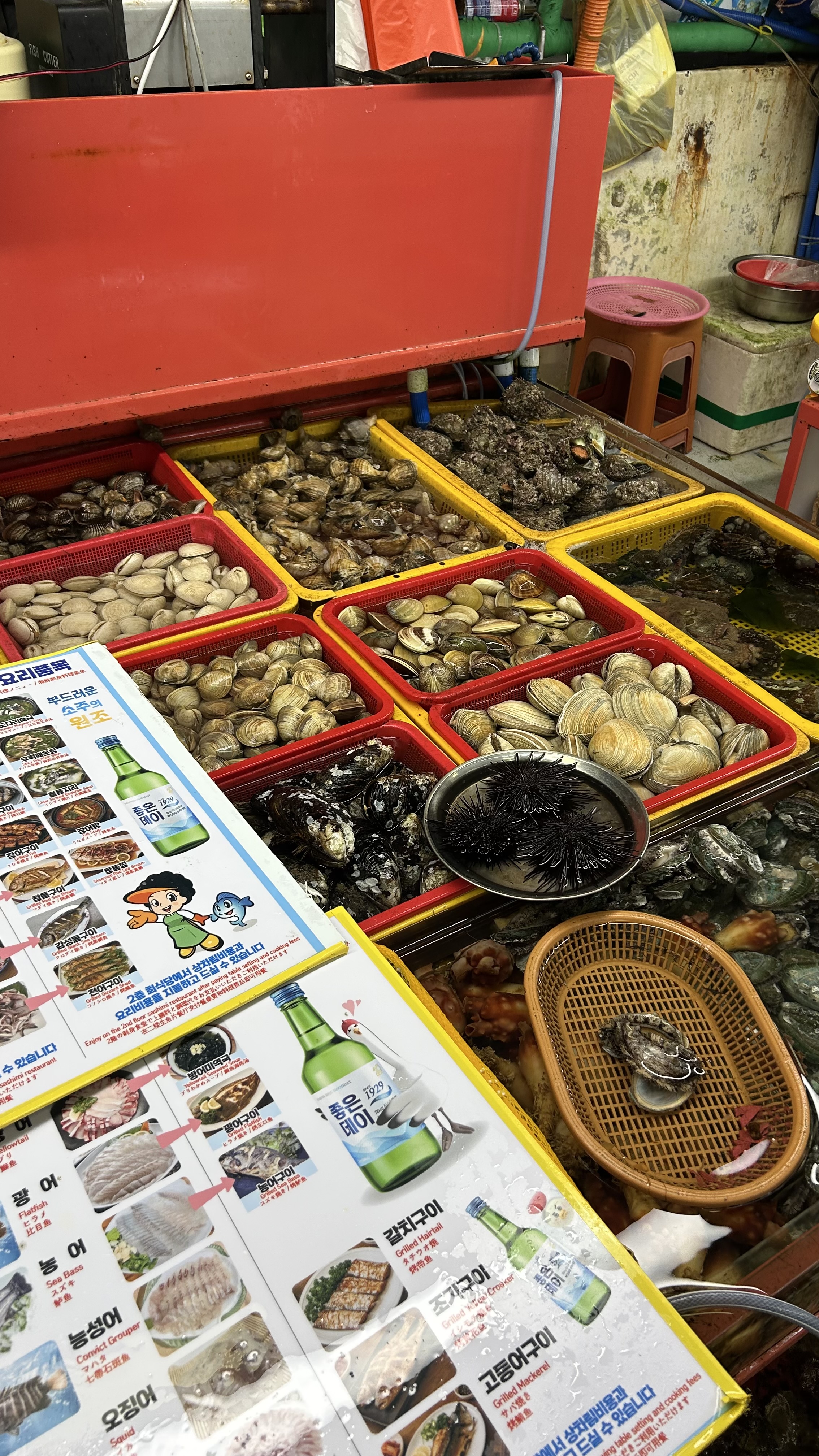
Then everything happened at once. There were endless seafood stalls, vendors calling us over, giant crabs, things swimming in tanks that I could not identify and a random sea urchin display that led to a vendor teaching me how the whole market works.
We bought fish downstairs, went upstairs for sashimi and grilled fish, cooled down with bingsu afterward, accidentally found a hotteok stall with a Running Man connection and finished with Busan fish cake because apparently we had decided eating was our only responsibility that afternoon.
And because I live in Seoul, I also spent part of the day comparing everything to Seoul. Sometimes Busan won. Sometimes I was sitting there thinking, no, Seoul does this better. This is the completely unscientific result.
My quick verdict: Go to Jagalchi for the experience as much as the meal. Order one or two seafood items instead of trying to get completely full, ask about all extra fees before committing, and save room to walk toward Nampo and BIFF Square for street food afterward.
1. Finding Jagalchi Market Was More Confusing Than I Expected
We followed NAVER Map with basically no research and briefly thought the directions had sent us somewhere wrong.
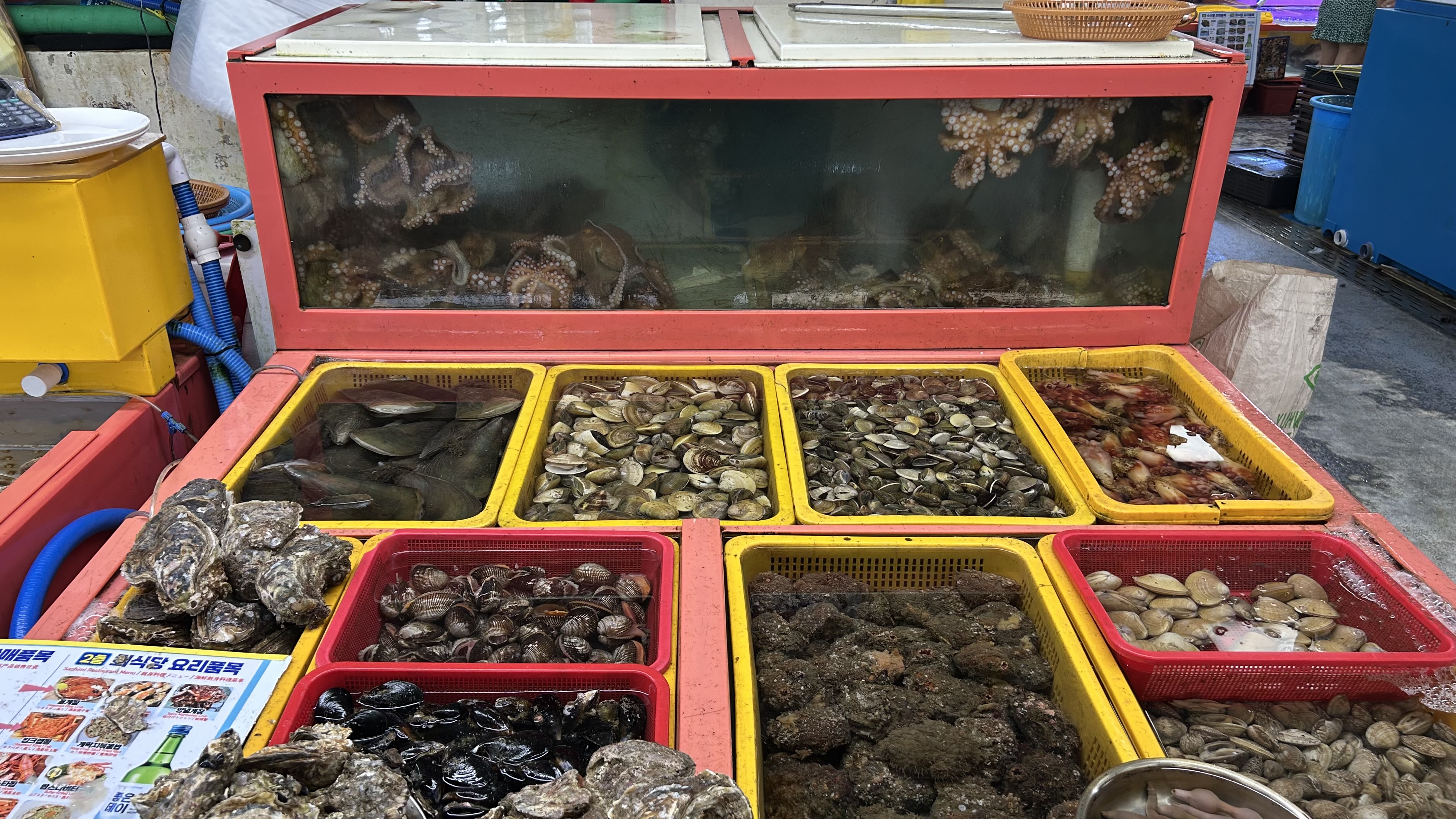
We arrived at Jagalchi Market in the least prepared way possible. We knew we wanted to go, opened NAVER Map and followed the directions, but we had not actually researched what the market looked like or where the seafood part began. When the map seemed to be directing us straight into a building, I kept wondering whether we were in the right place.
The answer was yes. If your map is telling you to go inside the Jagalchi Market building, trust it. The moment we went in, the whole experience suddenly made sense. Instead of a neat little row of outdoor seafood stalls, we were surrounded by tanks, fish, shellfish and vendor after vendor.
Official tourism information currently lists Jagalchi Market at 52 Jagalchihaean-ro, Jung-gu, Busan. It is about a six-minute walk from either Jagalchi Station Exit 10 or Nampo Station Exit 2, so the market is very easy to combine with Nampo, BIFF Square and the surrounding food streets.
Current Jagalchi Market basics
Address: 52 Jagalchihaean-ro, Jung-gu, Busan
Current listed hours: 5:00 AM to 10:00 PM
Closed: 1st, 3rd and 5th Tuesday of each month
Subway: Jagalchi Station Exit 10 or Nampo Station Exit 2
Official guidance: individual store fees vary
If this is your first visit, I would give yourself at least an hour for the market itself, and longer if you plan to buy seafood and eat upstairs. Our visit turned into a much longer food afternoon because we kept eating around the neighborhood afterward.
2. Welcome to the Most Intense Fish Sales Pitch of My Life
Korea is usually very polite and low-pressure, but Jagalchi vendors absolutely will try to win you over with seafood.
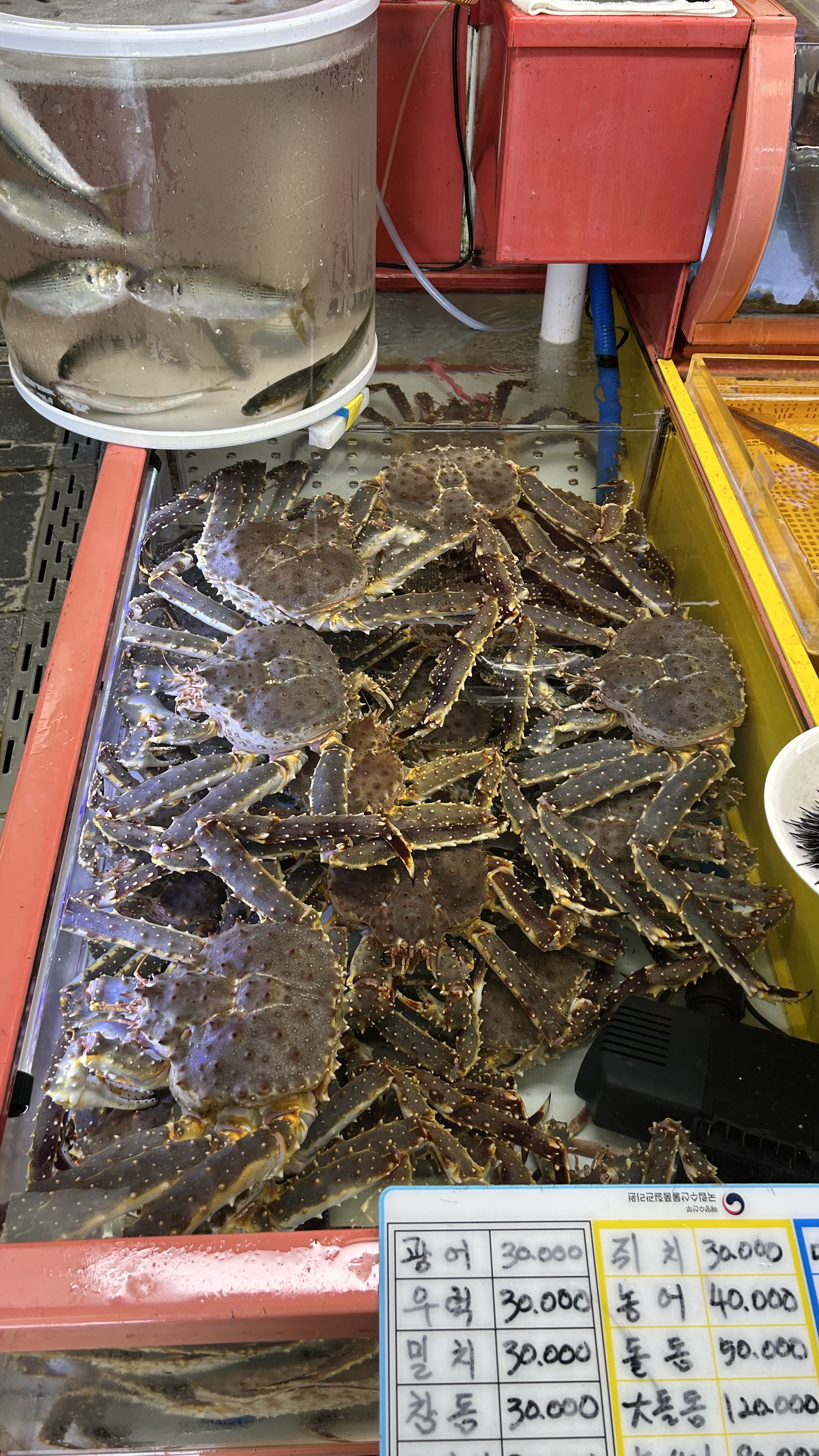
One of the funniest parts of walking through the market was how different it felt from normal shopping in Korea. Korea is not a place where I am constantly being shouted at or aggressively pulled into stores. Most everyday shopping interactions are pretty polite and hands-off.
Jagalchi is different. I started calling it fishcalling. Vendors were trying to get our attention from every direction, showing us what they had, encouraging us to stop, calling us over and occasionally throwing compliments into the sales pitch. It was not uncomfortable for me. It actually became one of the most memorable parts of the market.
There is also simply a lot to look at. Giant crabs, fish I recognized, fish I definitely did not recognize, shellfish, sea squirts and entire tanks of things moving around beside you. Even if you do not intend to order immediately, I would walk through at least part of the market before committing to a stall.
That is especially useful because there is no single fixed market-wide price for everything. Different seafood, sizes, vendors and cooking choices can mean different totals. Official Visit Busan information also notes that service fees differ by store, so ask before agreeing if you are trying to stay within a specific budget.
3. A Sea Urchin Is How I Accidentally Learned How Jagalchi Works
I stopped because I love sea urchin, and the vendor ended up explaining the entire buying and eating process to me.
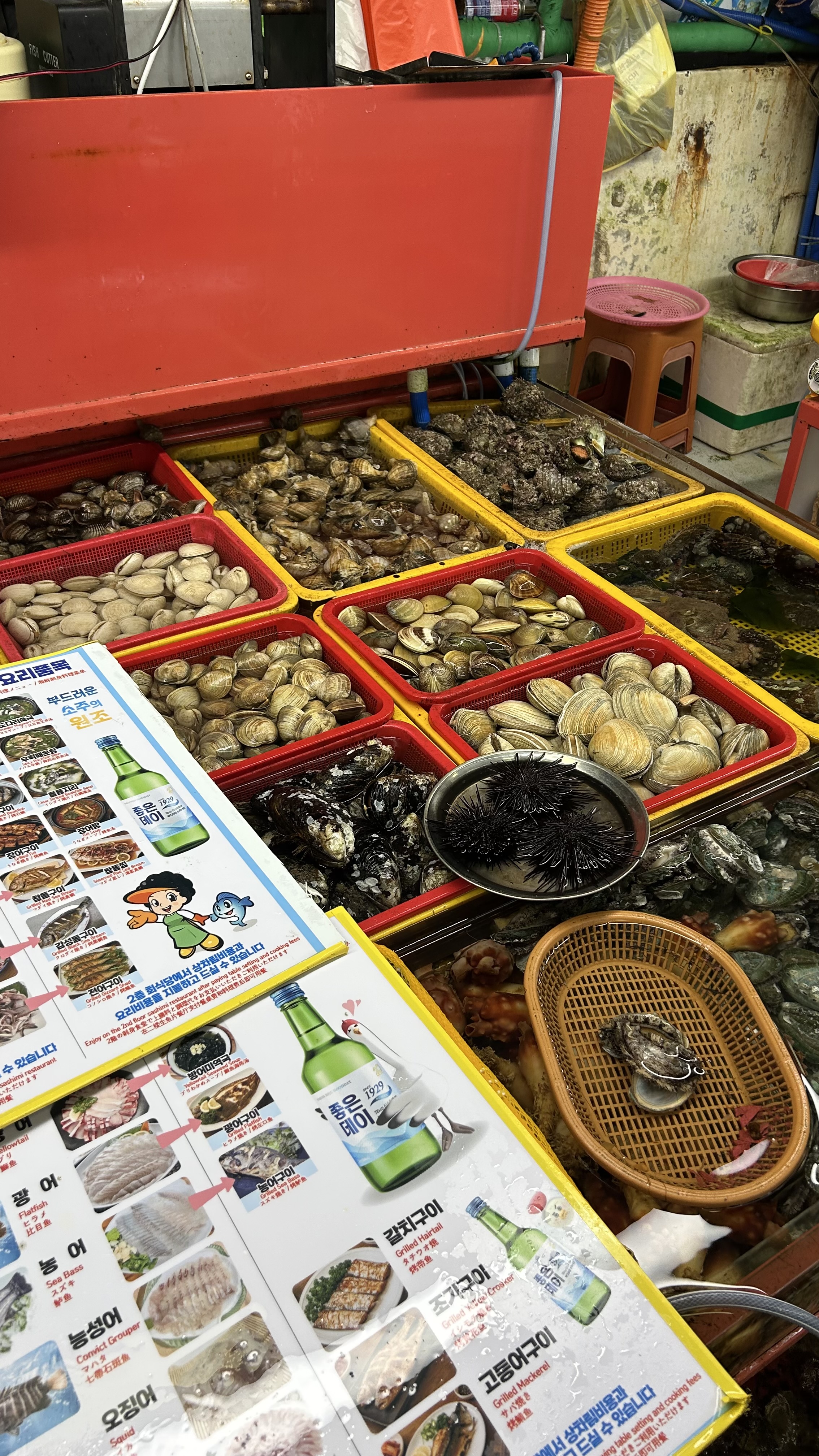
I did not carefully compare every vendor and select one using a spreadsheet. I stopped at a random stall because it was the first one where I noticed sea urchin. I love sea urchin, so naturally I started staring at it and asking questions.
The uncle running the stall was really nice and, while I was deciding what to eat, explained the process to me. That conversation was honestly more useful than anything I had looked up beforehand because I finally understood why the market has seafood vendors downstairs and eating areas upstairs.
The basic system during my visit was this: first, choose the seafood from the vendor. You pay the vendor for the actual seafood. You also tell them how you want each item prepared, for example sashimi, grilled or another preparation. They then tell you where to go upstairs, and the restaurant side handles the table setup and cooking.
Upstairs, the seafood arrives prepared, and you pay the additional table and preparation charges there. In other words, do not assume that the price you negotiate downstairs is automatically the final amount for the entire meal.
How it worked for us
1. Pick seafood downstairs
2. Pay the seafood vendor
3. Tell them how you want each item prepared
4. Follow their directions upstairs
5. Sit down and receive the prepared seafood
6. Pay the table and applicable preparation fees upstairs
Treat this as my experience rather than a universal pricing formula. Jagalchi contains many individual businesses, and both prices and service fees can differ.
4. What I Ordered and What I Actually Paid
I chose one fish for sashimi and another for grilling instead of trying to build a giant seafood feast.
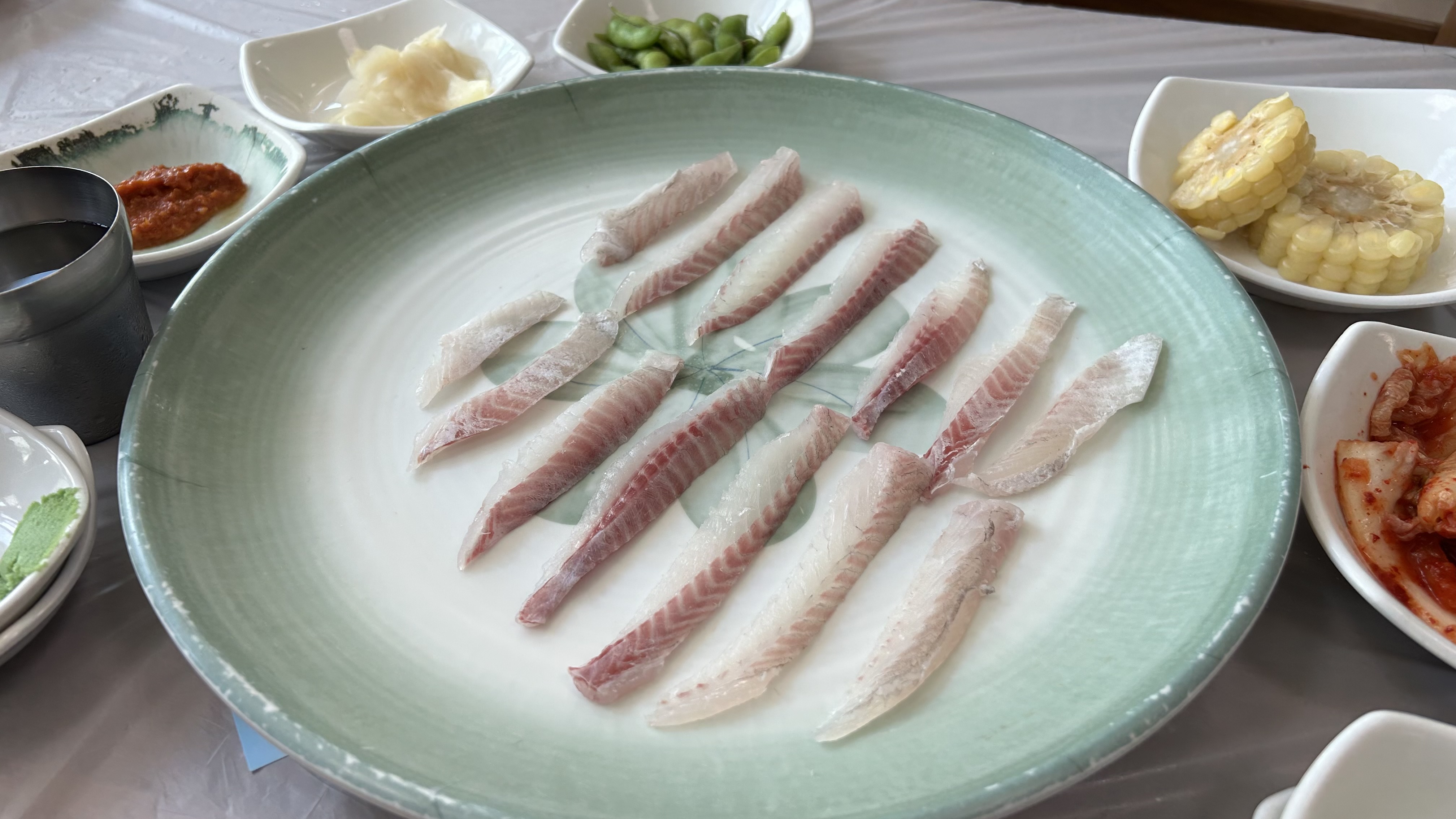
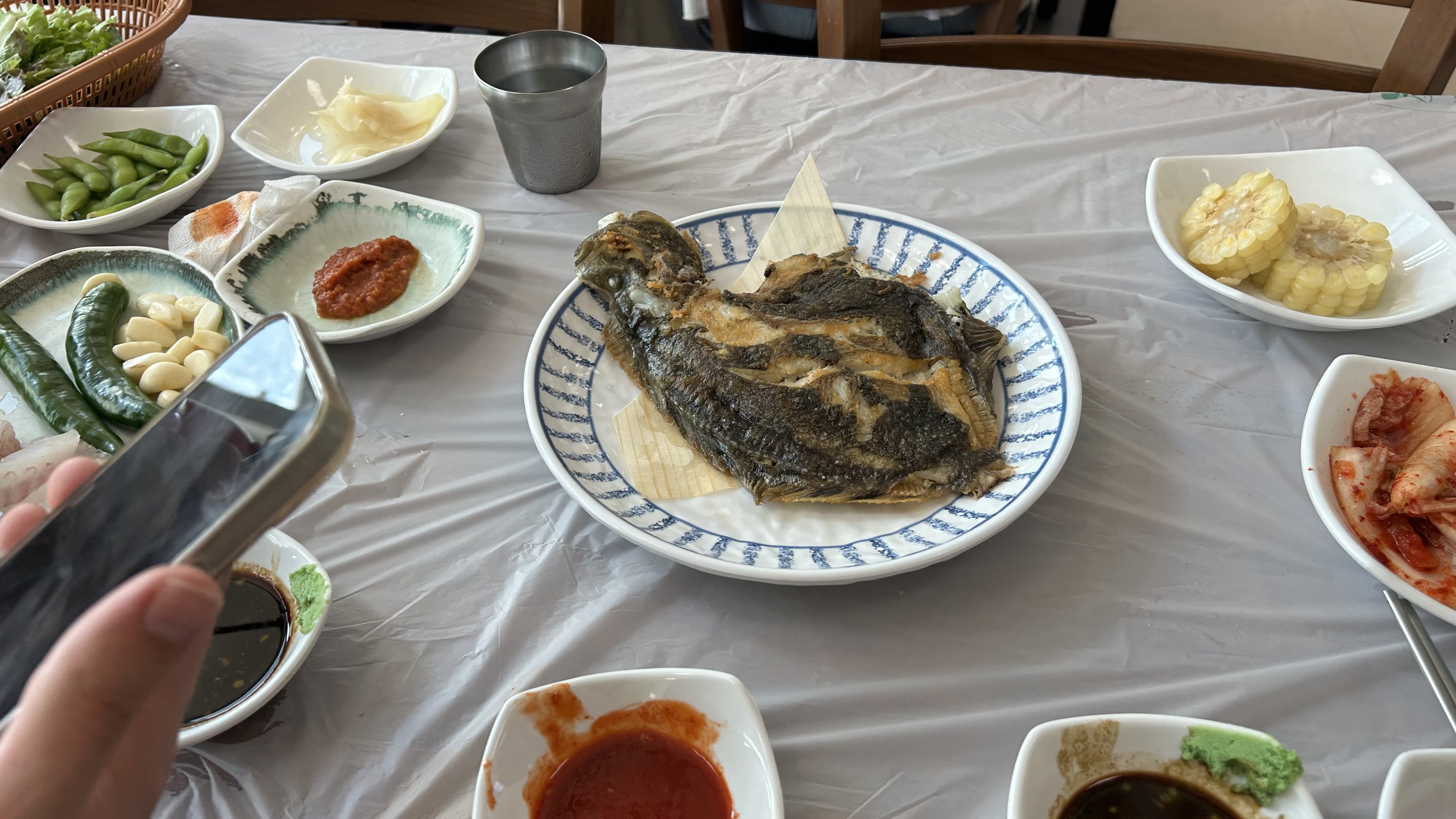
We eventually chose what the vendor identified to us as rockfish for grilling and striped beakfish for sashimi. The seafood itself came to under roughly ₩30,000 for the two fish together during my visit.
I also asked about the sea urchin because that was what had stopped me in the first place. The vendor quoted around ₩10,000 for three. I ended up not buying them, but at the time I remember thinking the price sounded extremely tempting.
Upstairs, our table fee was ₩5,000 per person. That included the table setup with water, utensils, sauces and side dishes. The grilled fish had an additional preparation charge, although I did not write down the exact amount and I do not want to invent one now.
Our sashimi did not have an additional cooking fee in our case, whereas grilling did. Again, that is what happened with the stall and restaurant handling our meal. Ask your own vendor what will be charged before ordering if the total matters to you.
The sashimi itself was fresh and I really enjoyed being able to see the seafood downstairs first and then eat it upstairs shortly afterward. That directness is what makes Jagalchi more interesting to me than simply going to a normal seafood restaurant.
5. Half the Fun Is Seeing Seafood You Have Never Seen Before
I spent almost as much time staring into tanks as I did deciding what to eat.
Even if you are not planning a huge meal, I think the market itself is worth walking through because some of the seafood looks genuinely bizarre if you did not grow up around major fish markets.
At one point I found this long, strange-looking sea creature moving around in a tank and immediately stopped to film it. I still do not know exactly what species it was, so I am not going to confidently give it a random seafood name just for SEO. It was simply one of those moments where you stand there asking, what on earth am I looking at?
That curiosity is part of the appeal of Jagalchi. This is not a polished food hall where every ingredient has already been cleaned, cut and turned into a neat menu photograph. You are seeing live seafood as a product before it becomes lunch.
If live tanks, whole fish and visibly living seafood make you uncomfortable, know that before going. Jagalchi is a working seafood market, not an aquarium-themed tourist attraction.
6. The Grilled Fish Was Easily My Favorite Part
The sashimi was good, but the hot grilled rockfish was the dish I kept thinking about afterward.
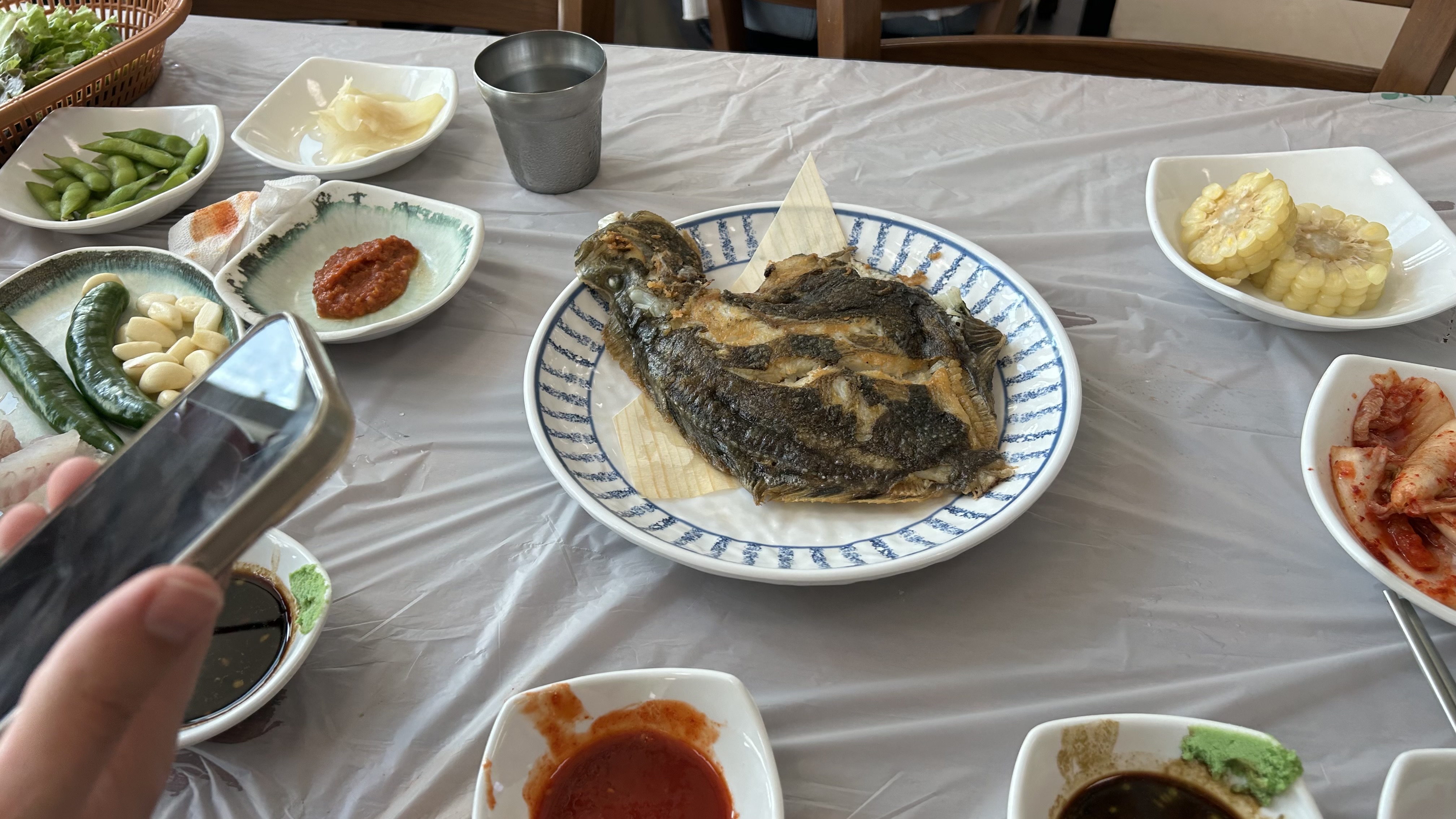
The grilled fish was so good. It came out hot, simply prepared and much more satisfying than I expected when I was pointing at a fish downstairs and deciding what should happen to it.
I liked the sashimi too, especially because sashimi makes sense in a market built around fresh seafood. But personally, if I returned and wanted to repeat only one part of our meal, I would probably choose another grilled fish.
There is one important tradeoff, though. I would not necessarily come to Jagalchi starving and expect the cheapest huge meal of your life. Seafood prices, table charges and preparation fees can accumulate surprisingly quickly if you start ordering several species.
My strategy next time would be the same as what accidentally worked for us: treat Jagalchi as a tasting experience. Choose one or two seafood items you genuinely want to try, enjoy them properly, and leave some stomach space for the rest of Nampo.
That is especially true because the neighborhood around the market is full of snacks. If you spend your entire food budget and appetite at the first seafood stall, you miss the fun of walking outside and continuing the day.
7. Then We Went for Bingsu Nearby
It was a perfectly decent dessert stop, although my Seoul bias came out immediately.
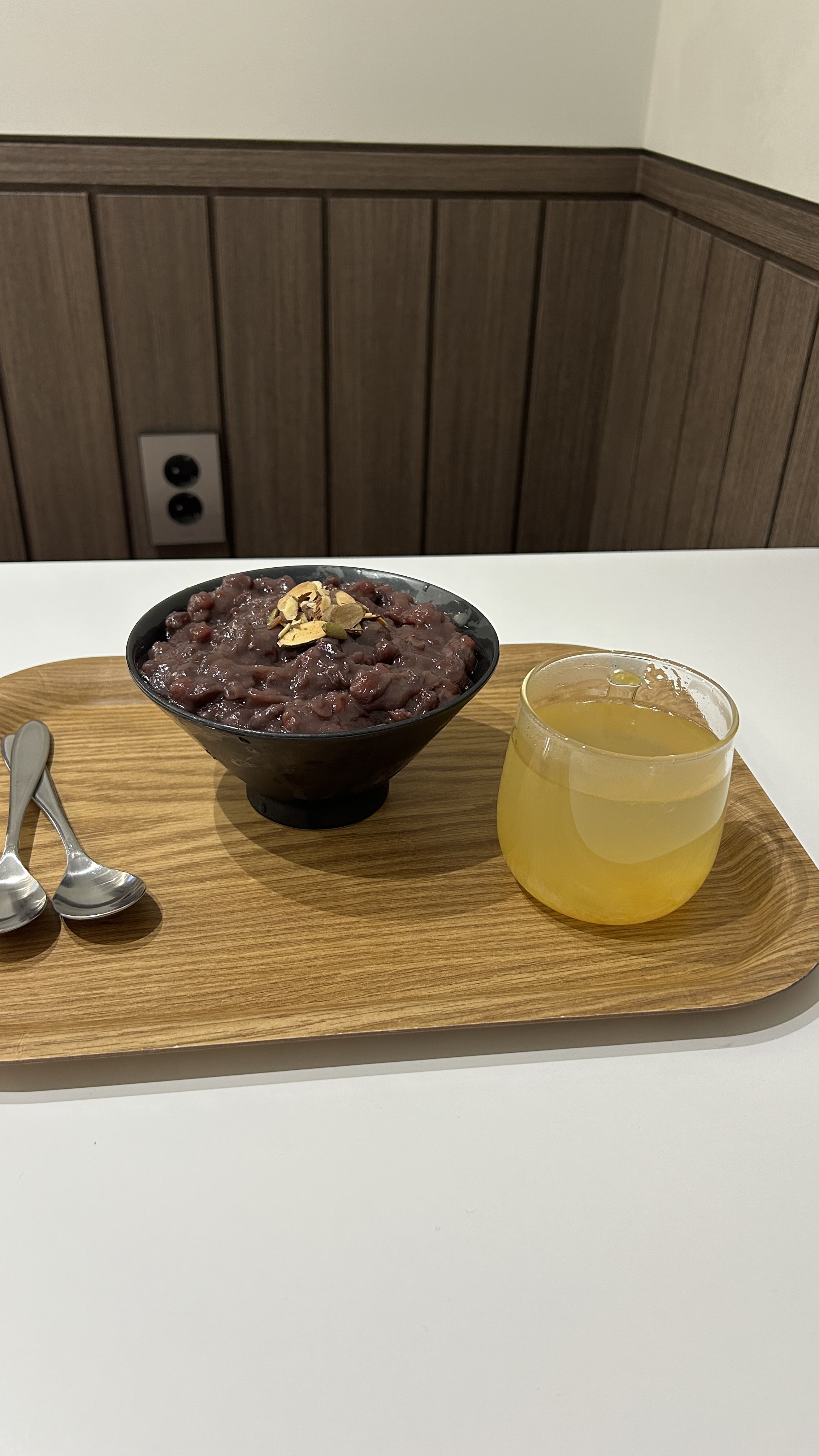
After seafood, we wanted something cold, so we stopped at a nearby bingsu place. I am not naming it here because this is not really a restaurant review and the stop was much more spontaneous than researched.
The bingsu was not bad at all. It was a perfectly decent traditional red-bean-style bingsu. My problem is simply that I have a very specific preference. I like bingsu with condensed milk and a creamier, sweeter balance rather than one where plain red bean is doing most of the work.
This was also the moment my Seoul bias started showing. I kept thinking, Seoul does this better. That is obviously personal taste, not an objective ranking of two cities, but I would rather say what I actually thought than pretend every single thing I ate on vacation was life-changing.
I still liked having bingsu in the middle of the food crawl because it gave us something cold between seafood and the much heavier street snacks that came next.
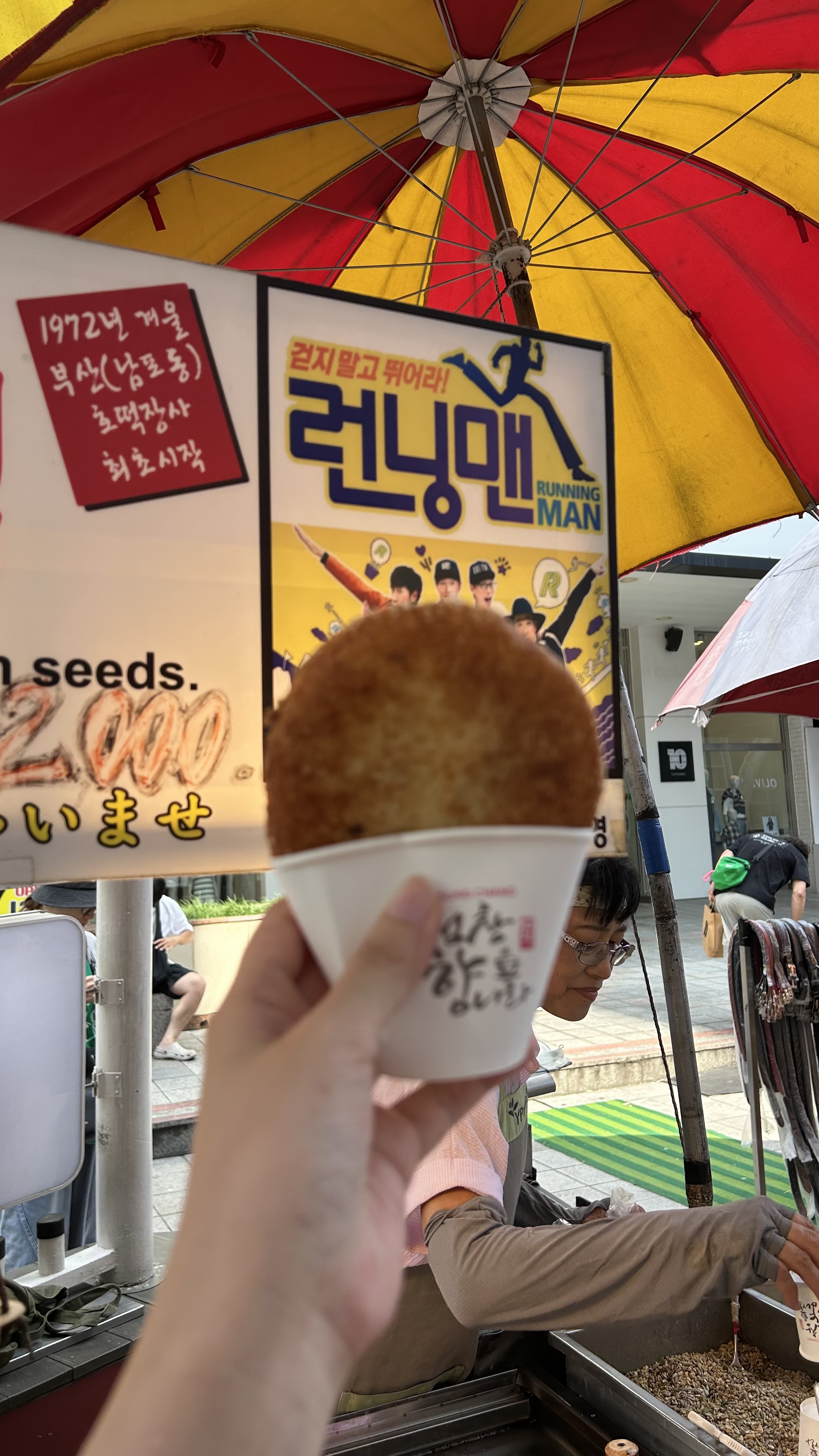
8. I Accidentally Found a Running Man Hotteok Stall
I was not even searching for a famous stall, but a Running Man sign immediately made me stop.
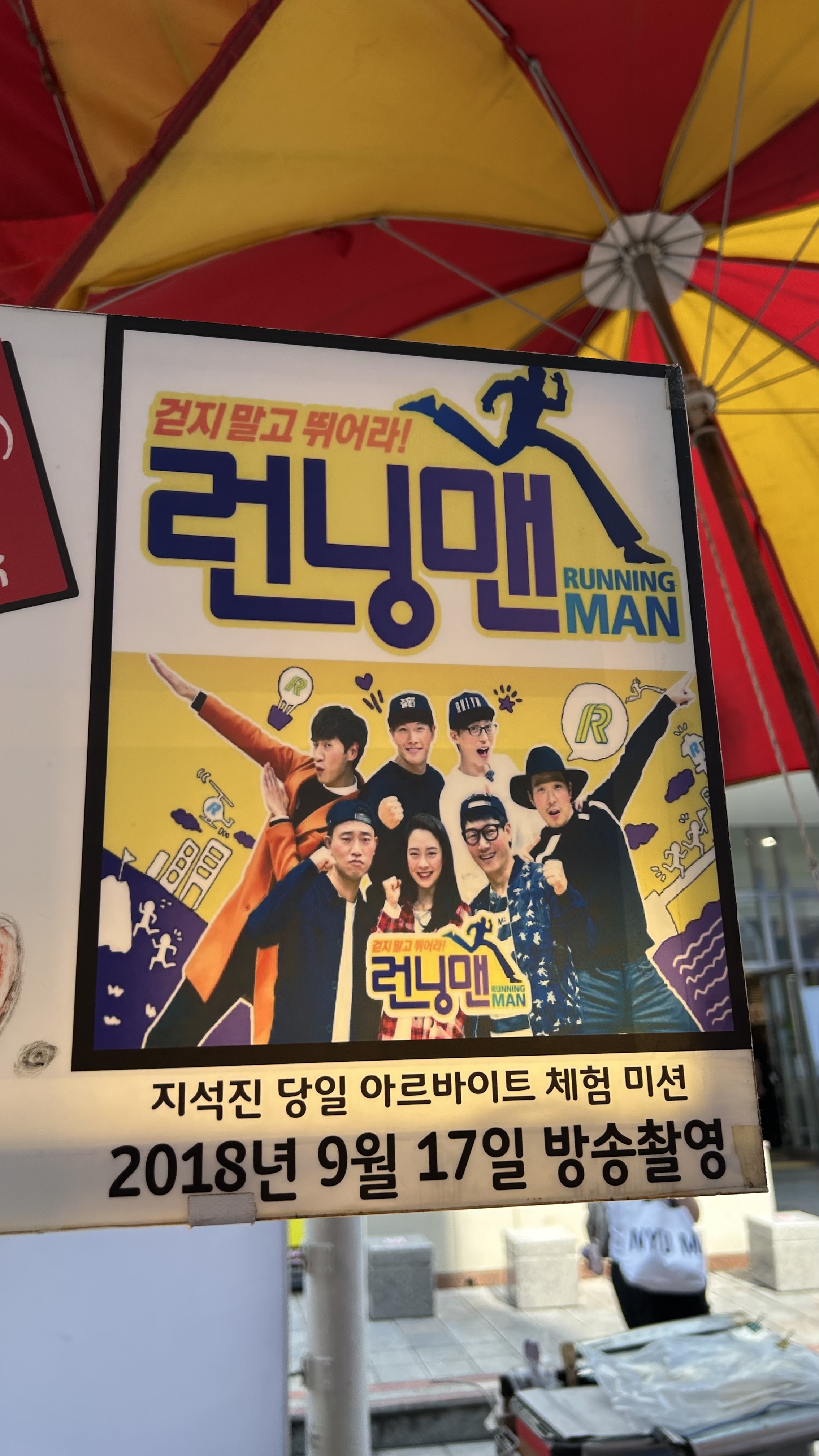
The hotteok was another accidental discovery. We were walking around after bingsu when I noticed a stall displaying a Running Man connection. Running Man is one of Korea's most famous variety shows, so obviously that was enough to make me stop and investigate.
There really is a documented Running Man episode where Ji Suk-jin was left in Busan and had to sell hotteok as part of a mission. That happened in a 2018 episode. I would describe it as a television part-time-job mission rather than saying he was once a normal employee of a hotteok shop.
The stall I visited displayed the Running Man connection, although I have not independently confirmed that this exact stall was the exact filming location from that episode. Either way, seeing the sign is what convinced me to try my first Busan-style hotteok.
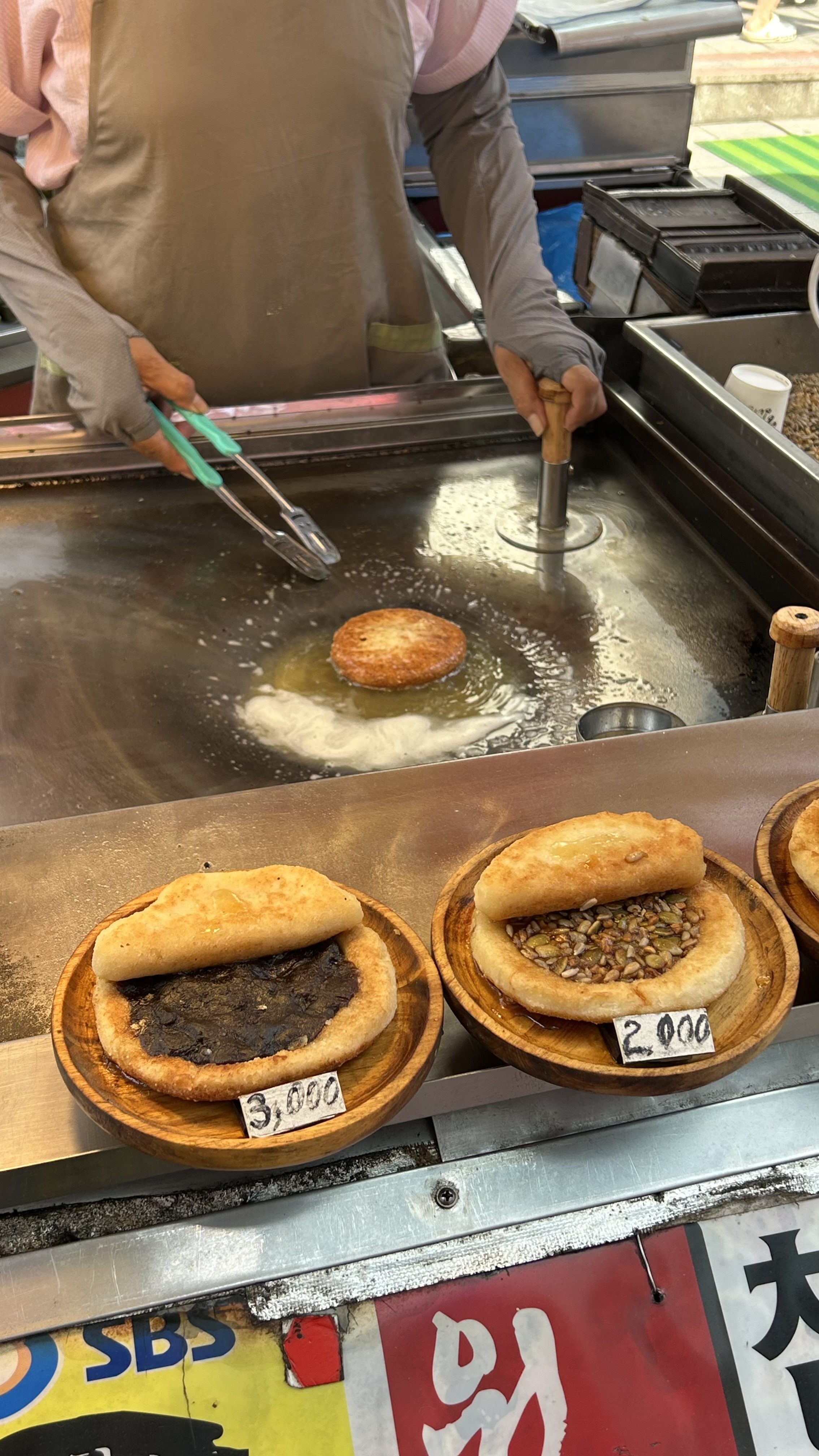
The thing that surprised me was the way it was opened after cooking and filled. Busan is especially known for ssiat hotteok, or seed hotteok, and official Busan tourism information specifically highlights Nampo's seed hotteok among BIFF Square's famous street foods.
I had fun trying it, but this is another place where my Seoul preference won. I actually prefer the hotteok I normally get in Seoul. I like the familiar chewy, sugary version more than this one. That does not make Busan seed hotteok bad. It just means a famous regional food does not automatically become your personal favorite.
9. We Still Had to Get Busan Fish Cake
At this point we had eaten seafood, ice, hotteok and somehow still decided Busan eomuk was necessary.
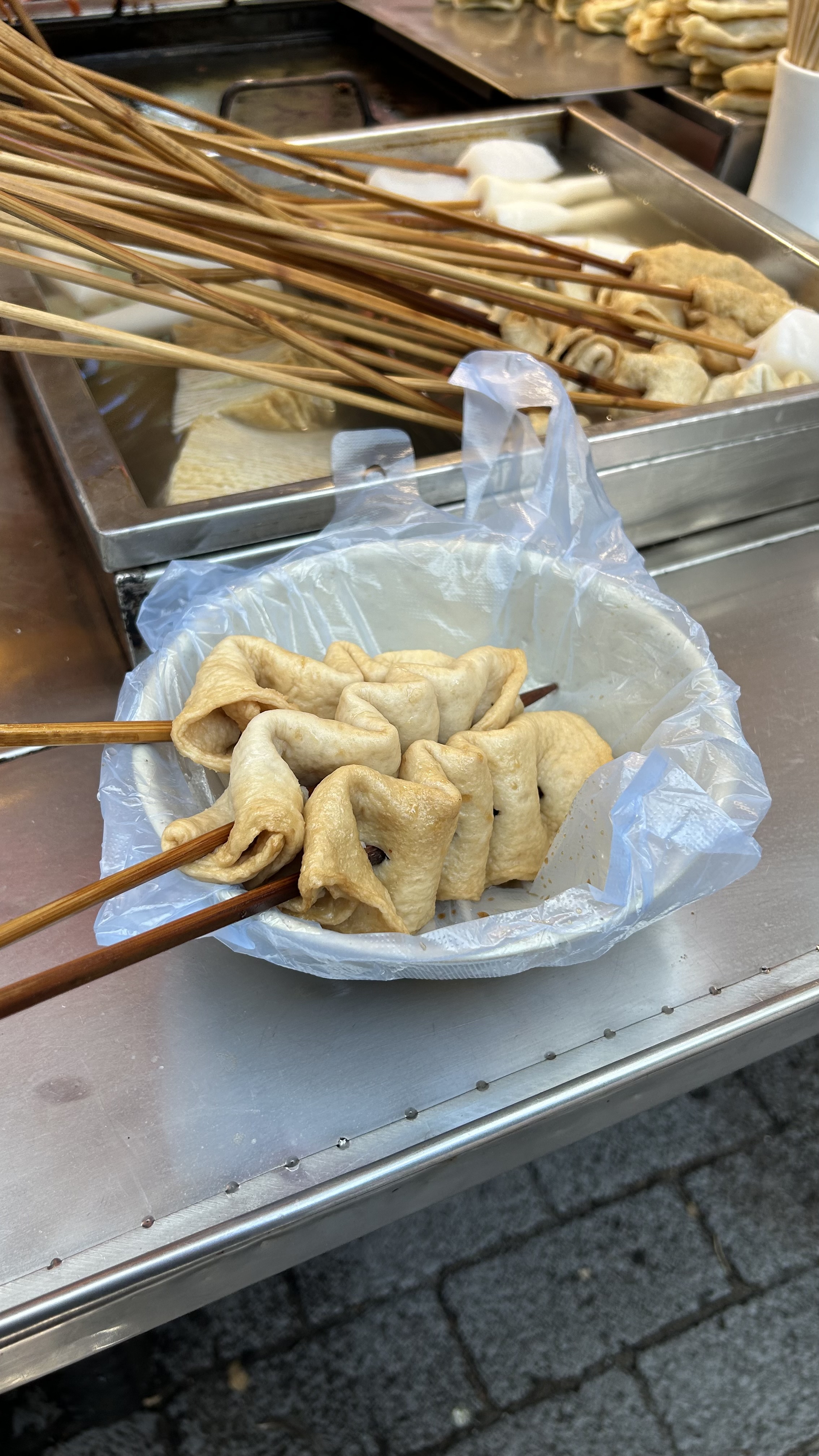
After the hotteok, we passed even more food stalls, and at that point eating again was becoming slightly ridiculous. But Busan is so closely associated with fish cake that skipping it felt wrong.
So yes, we had fish cake too.
This is one regional-food stereotype that actually has historical context behind it. Busan's tourism organization describes the city as a major home of eomuk culture, helped by its identity as a port city with abundant access to fish. Around Nampo and BIFF Square, fish cake skewers are also one of the standard street-food sights.
By this point I was not evaluating the fish cake like a professional critic. I was just happy, full and enjoying the fact that what started as a trip to one seafood market had turned into an entire Busan snack route.
That is how I would recommend doing this area. Do not think of Jagalchi as one attraction that you enter, eat at and immediately leave. Jagalchi, Nampo, BIFF Square and the surrounding market streets work better as one wandering food afternoon.
10. FAQ: Visiting Jagalchi Market and Eating Around Nampo
Where is Jagalchi Market in Busan?
Jagalchi Market is currently listed at 52 Jagalchihaean-ro, Jung-gu, Busan. Official Visit Busan information says it is about a six-minute walk from Jagalchi Station Exit 10 or Nampo Station Exit 2 on Busan Metro Line 1.
What time does Jagalchi Market open?
Visit Busan currently lists Jagalchi Market's operating hours as 5:00 AM to 10:00 PM, with closures on the first, third and fifth Tuesdays of each month. Individual businesses can operate differently, so check current information before making a special trip.
How does buying seafood at Jagalchi Market work?
During my visit, I chose seafood from a vendor downstairs, paid for the seafood itself and told the vendor how I wanted it prepared. The vendor then directed us upstairs, where the seafood was served and we paid the separate table and applicable cooking or preparation charges.
How much is the table fee at Jagalchi Market?
Our table fee was ₩5,000 per person during my visit and included water, utensils, sauces and side dishes. This should not be treated as a fixed market-wide price because Jagalchi contains separate vendors and restaurants, and official tourism information says fees differ by store.
Is Jagalchi Market cheap?
It can be good value depending on what you order, but I would not assume it is automatically a bargain meal. You need to consider the seafood price plus any table and preparation charges. Ordering several premium seafood items can make the total rise quickly.
Is Jagalchi Market worth visiting if I do not want a huge meal?
Yes. I actually think ordering one or two seafood items is a good way to experience it. You can walk through the live seafood stalls, try something fresh upstairs and then continue into Nampo or BIFF Square for hotteok, fish cake or other snacks.
What should I eat near Jagalchi Market?
Beyond fresh seafood, the wider Nampo and BIFF Square area is good for street food. Busan's tourism site specifically highlights seed hotteok and fish cake around BIFF Square. We also stopped for bingsu during our own food crawl.
What is Busan ssiat hotteok?
Ssiat hotteok is Busan's well-known seed-filled version of Korean hotteok. The cooked pancake is opened and filled with seeds, giving it a noticeably different texture from the simpler syrup-filled hotteok commonly sold elsewhere in Korea.
Did a Running Man member really sell hotteok in Busan?
Yes. Reporting about a 2018 Running Man episode confirms that Ji Suk-jin stayed behind in Busan and sold hotteok as part of a mission. The stall I visited displayed a Running Man connection, although I have not independently confirmed that the exact stall was the exact filming location.
11. Sources and Planning Notes
Everything about my seafood order, the prices I personally paid, the ₩5,000-per-person table charge during our visit, my opinion of the sashimi and grilled fish, the bingsu, hotteok, fish cake and the experience with the vendor is based on my own visit.
The market-wide details below are kept separate because opening hours, closures, store fees and individual stall practices can change.
Visit Busan currently lists the market at 52 Jagalchihaean-ro, Jung-gu, with operating hours of 5:00 AM to 10:00 PM and closures on the first, third and fifth Tuesdays of each month. Its official listing also states that store fees differ rather than publishing one universal Jagalchi price.
Visit Busan: BIFF Square and Nampo Food Area
Busan's official tourism site identifies Nampo seed hotteok, tteokbokki and fish cake skewers among the foods commonly found around BIFF Square. That makes the area very easy to combine with Jagalchi rather than treating the market as a standalone stop.
Visit Busan: Why Fish Cake Is a Busan Specialty
Running Man report: Ji Suk-jin's Busan Hotteok Mission
Reporting on the 2018 episode confirms that Ji Suk-jin remained in Busan and sold hotteok to complete a mission. The stall I visited displayed a Running Man connection, but I have not found enough reliable information to claim that the exact stall in my photos was definitively the exact filming location.
One other thing I noticed during this Busan day was how often my taste preference came back to sweetness. If you have ever had the same reaction to food in Korea, I wrote a separate article about it:
Read: Why Does Modern Korean Food Taste So Sweet?
Seafood availability, fish prices, table charges, cooking fees, individual stall hours and street-food vendors can all change. Ask the vendor for the seafood price and any additional charges before ordering, and check current market information before visiting if your schedule depends on a specific opening day.
Planning More Food Stops Around Korea?
Join The Seoul Edit for the cafés, restaurants, markets, Korean food, neighborhoods and random things I actually try while living and traveling around Korea.
Planning a trip to Seoul?
12. Final Thoughts
Jagalchi ended up being one of my favorite parts of our Busan trip because we had not planned it to death beforehand. We walked in confused, got immediately surrounded by seafood vendors and then learned how the market worked from a random uncle because I could not stop staring at sea urchin.
The meal itself was worth it, especially the grilled fish. The sashimi was fresh, but the grilled rockfish was the thing I would personally reorder first. I also liked that buying the seafood downstairs and then eating it upstairs made the meal feel connected to the market rather than like we had simply walked into another restaurant.
I would just go in understanding the pricing structure. Your seafood price is not necessarily your final total once table and preparation charges are included. If your goal is simply to get extremely full for the lowest possible price, Jagalchi would not be my first recommendation. If your goal is to pick something fresh, experience a working seafood market and try a couple of things you actually care about, I think it is much more fun.
After that, keep walking. Our mediocre-to-me bingsu, the Busan seed hotteok I still prefer Seoul hotteok over, the Running Man sign and the completely unnecessary final fish cake all became part of the same memory.
That is also why I wanted to put a Busan article on a Seoul blog. I obviously spend most of my time writing about Seoul, but I live in Korea, not inside one city boundary. If I go somewhere else and have a day this fun, you are getting the story too.